News
Paramount’s ‘Depravity’ Trailer is a Twisty Thriller

Spooky season has officially started and we are getting a lot of scary content in our inbox. For instance, this trailer for Depravity, Paramount’s twisted serial killer thriller starring Taylor John Smith, Victoria Justice, Devon Ross, and Dermot Mulroney.
From what we can tell, it feels like a cross between Don’t Breathe and strangely, Die Hard. But we won’t leave you with conjecture, here is the official synopsis:
When three residents suspect their reclusive neighbor is a serial killer, they break into his apartment only to uncover a hidden fortune in stolen art. But their discovery turns into a nightmare as they’re ensnared in a sadistic game of survival, where every corner hides a new horror. Outsmart the killer or become his next victim. From the writer of The Fighter and The Finest Hours.
Available on Digital October 15.





News
Resident Evil Drops First Teaser Trailer
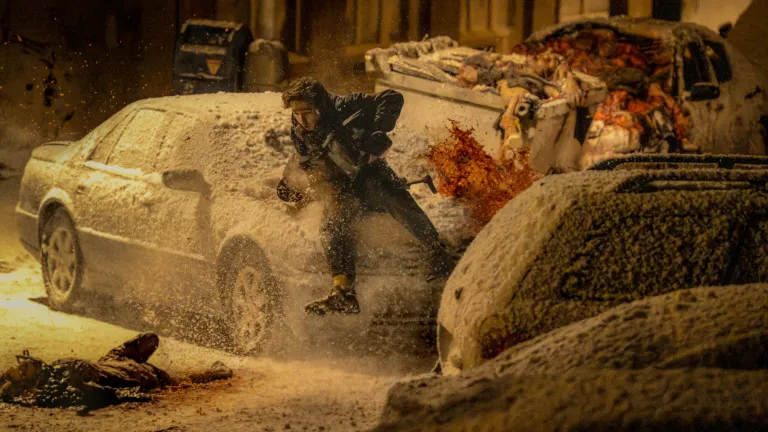
The first teaser for Zach Cregger‘s Resident Evil is here, and it does not look like anything this franchise has produced before. It does however, look exactly like what Cregger makes. The film opens September 18, 2026 in theaters and IMAX via Sony.
The Setup
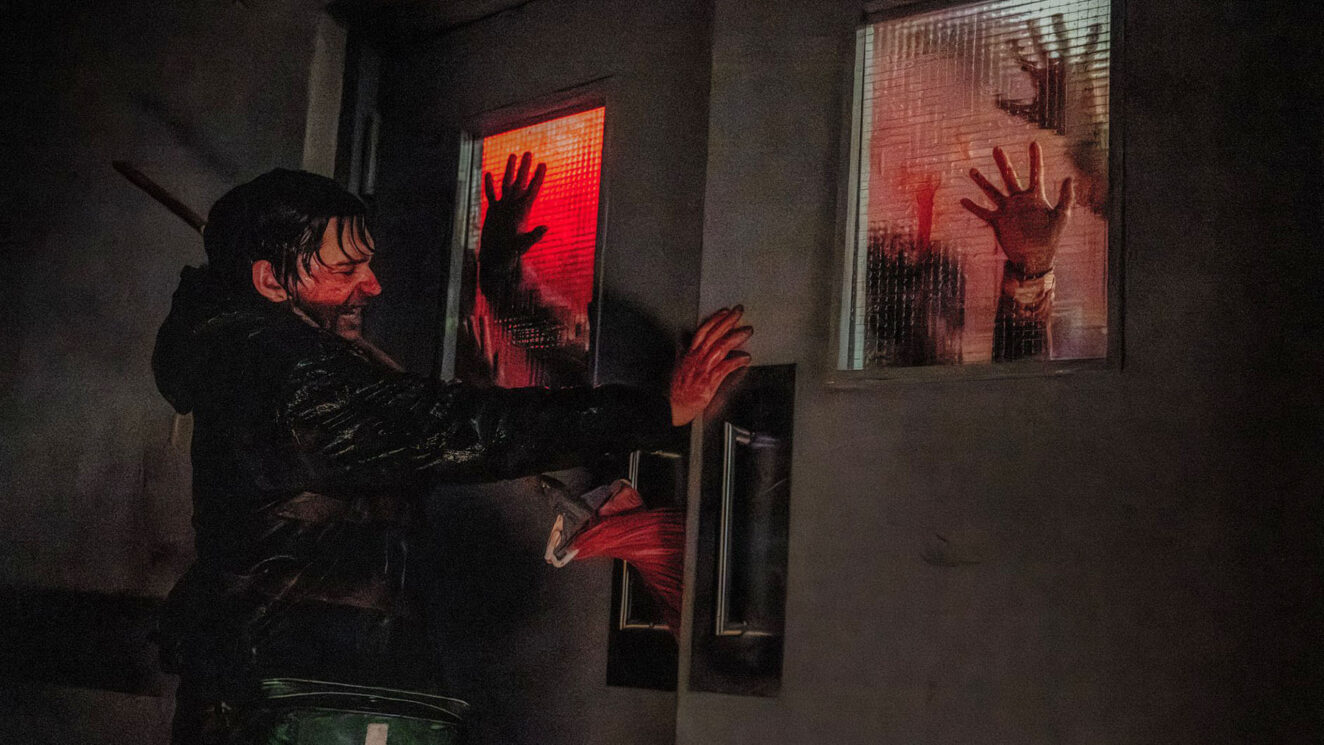
Austin Abrams plays Bryan, a medical courier who arrives at an empty house in the middle of a snowy night, calls someone to say he may not be able to speak to them again, and then spends the rest of the teaser discovering what he is actually surrounded by.
The film does not use Leon S. Kennedy or Jill Valentine, and it has no connection to the Paul W.S. Anderson films that ran from 2002 to 2016. Cregger has said he deliberately avoided retelling game stories because the fans already have those. He wanted a new entry point: a wrong place, wrong night, no-exit setup, built from inside the mythology rather than around its most familiar edges.
Paul Walter Hauser appears alongside Abrams. Zach Cherry, Kali Reis, and Johnno Wilson round out the cast. The screenplay was co-written with Shay Hatten, who wrote John Wick: Chapters 3 and 4. Resident Evil is a co-production of Constantin Film, Vertigo Entertainment, and PlayStation Productions. Filming took place in Prague.
The Director

Two films in and Cregger has already done more to define the shape of contemporary horror than most directors manage across an entire career. Barbarian (2022) did things with a Detroit Airbnb that nobody saw coming, and its specific talent was making every assumption you walked in with feel like the setup for a trap.
Weapons (2025) followed with a 94% on Rotten Tomatoes and a story about an entire classroom of children disappearing on the same night that kept moving across genres without losing its grip on any of them. Both films are built around the idea that the most effective horror is structural, arriving through architecture you do not recognize until it is already over your head.
Resident Evil is a franchise built around viral outbreaks, Umbrella Corporation negligence, and the specific horror of institutions doing monstrous things behind clean branding. Cregger makes films about exactly that kind of failure. The overlap is not subtle. It is, in retrospect, the obvious hire.
What This Is
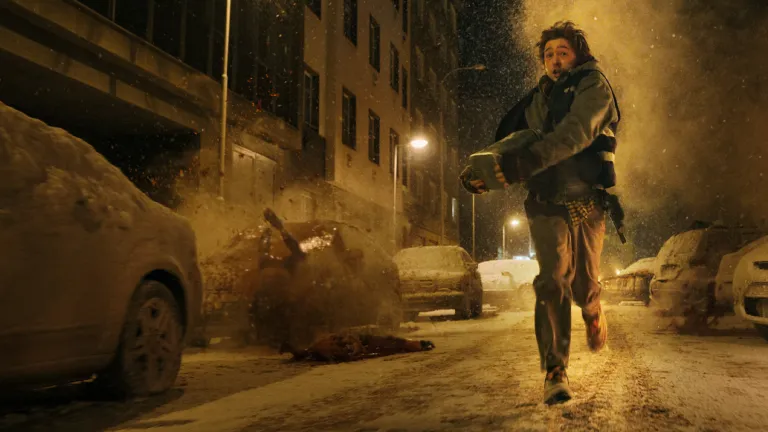
Every previous live action Resident Evil film existed somewhere on a spectrum from stylish action to full camp, with Milla Jovovich carrying most of the weight across a run that lasted fourteen years. That franchise was not trying to be scary. The Cregger teaser is. It is dark and still and operates as if something has already gone wrong before anything has technically happened yet, which is the register that both Barbarian and Weapons lived in and that the games, at their best, have always understood.
Cregger has confirmed this is an original story with no connection to the previous films. That is either a promise or a warning depending on how much you loved the Anderson era. For everyone else it is the best news the franchise has had in a while.
News
The Vampire Lestat Is Playing a Real Concert in NYC — And Yes, It’s Exactly as Wild as It Sounds
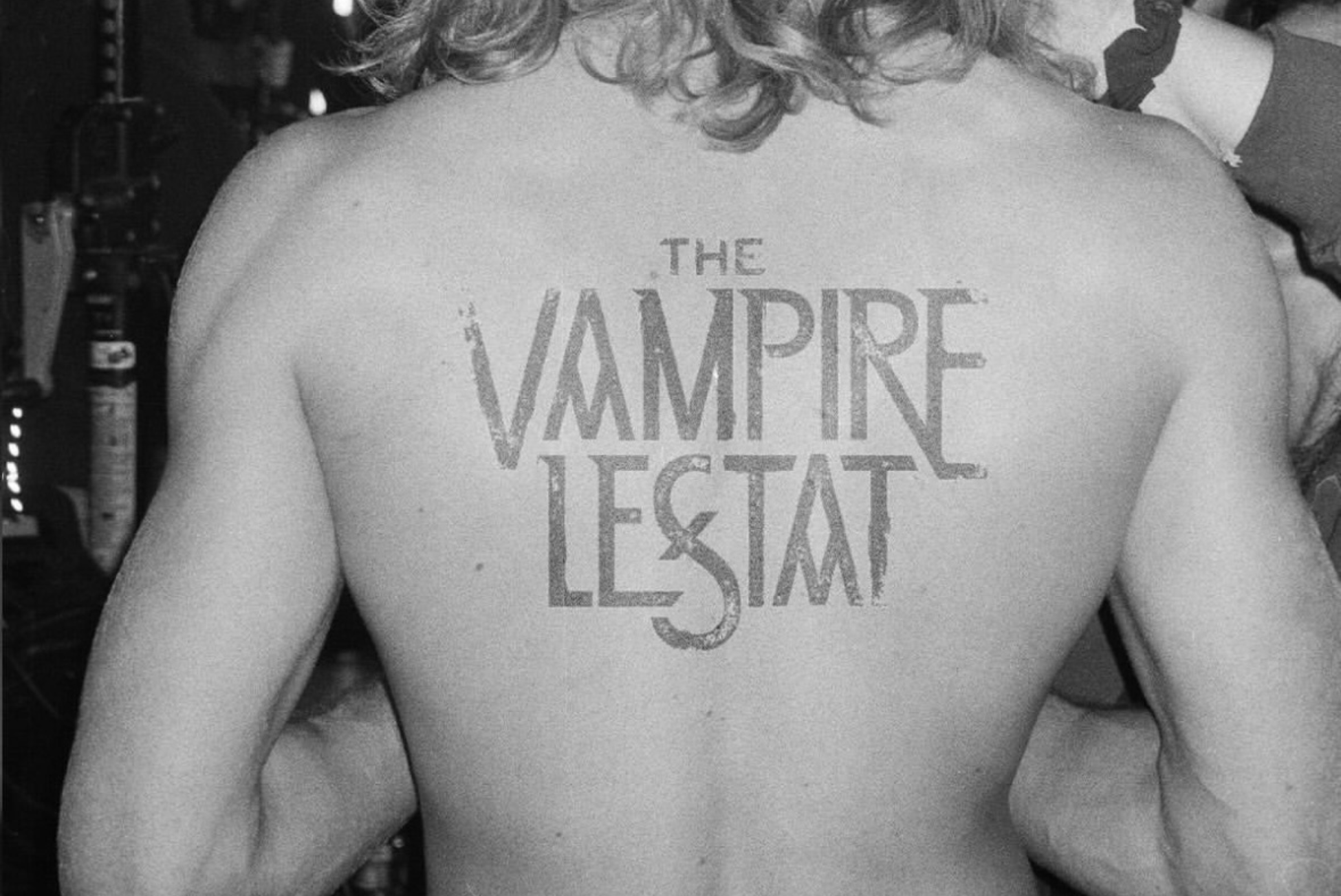
In what might be the most Lestat-move imaginable, Lestat de Lioncourt is stepping fully into the real world — and no, I’m not kidding. He’ll be joining us mere mortals with a one-night-only concert on June 2, 2026, at the Beacon Theatre in New York City. Just one performance, because anything less would be completely out of character for the king of the vampire world.
This is, to be quite frank, a huge deal. For longtime fans of Interview with the Vampire and The Vampire Lestat — and even for newer audiences just discovering the chaos of Anne Rice’s vampiric world — a real, live Lestat concert has been something of a collective dream. And now, somehow, it’s a reality.
To catch everyone up, AMC Networks premiered Interview with the Vampire in the fall of 2022, starring Jacob Anderson and Sam Reid as Louis de Pointe du Lac and Lestat de Lioncourt, respectively. The series adapts Anne Rice’s iconic 1976 novel, which was later brought into the cultural mainstream with the 1994 film starring Brad Pitt and Tom Cruise.
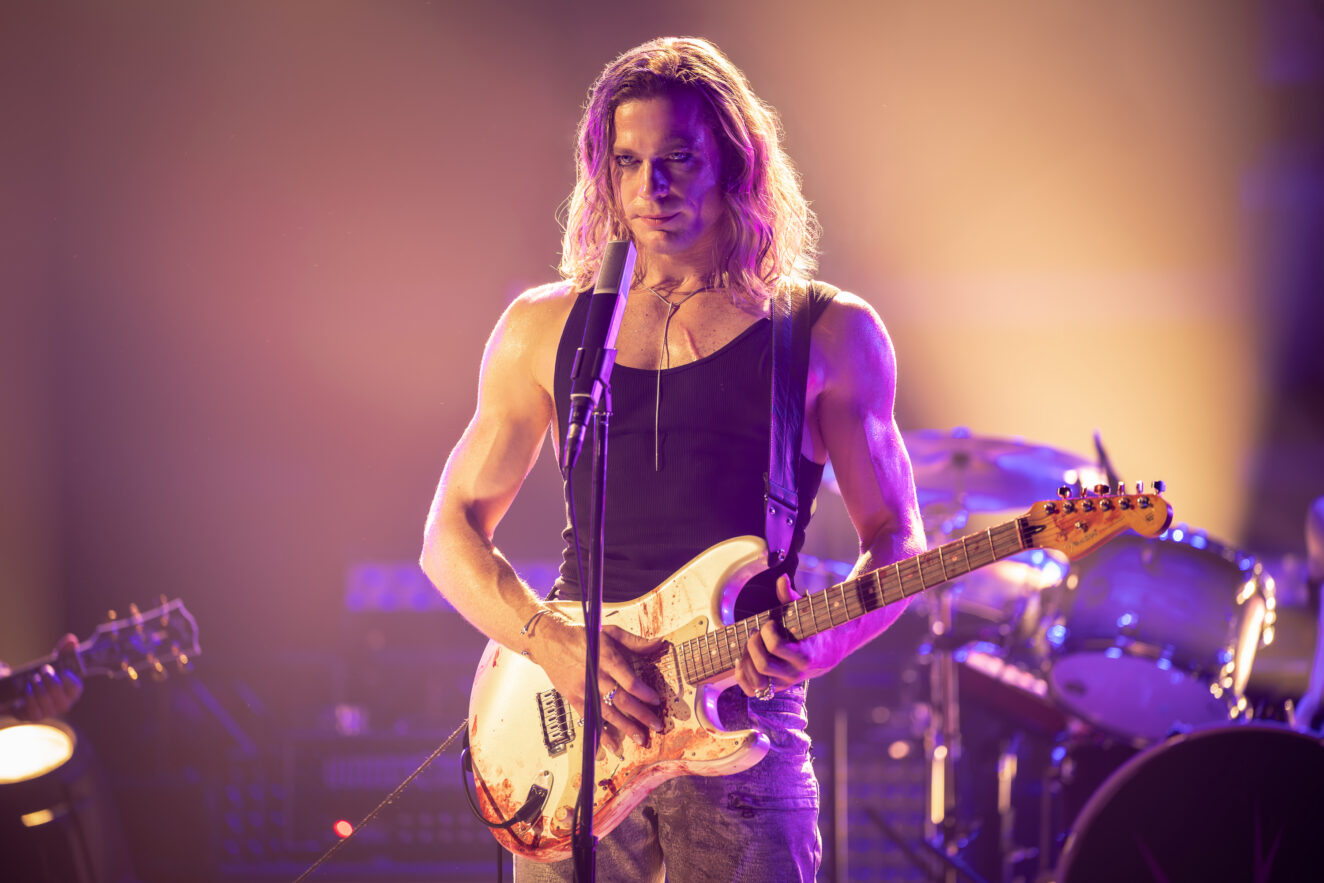
Since its debut, the series has only grown in acclaim. Season two, which aired in May 2024, further cemented its reputation, with both seasons landing near-perfect scores and averaging an astonishing 99% on Rotten Tomatoes. It’s the kind of reception most shows can only dream of.
Now, in 2026, the story continues on. The third season, now officially titled The Vampire Lestat, is set to premiere on June 7, and if early signs are anything to go by, it’s already shaping up to be something massive. The official trailer, released on April 22, is already closing in on six million views on YouTube, a number that feels less surprising the more you watch it.
For those unfamiliar with this era of the story, the premise is as unhinged as it is perfect: after the events of Interview with the Vampire (yes, within the universe itself), Lestat responds by… becoming a world-famous rockstar.
Naturally. Logically. Understandably.
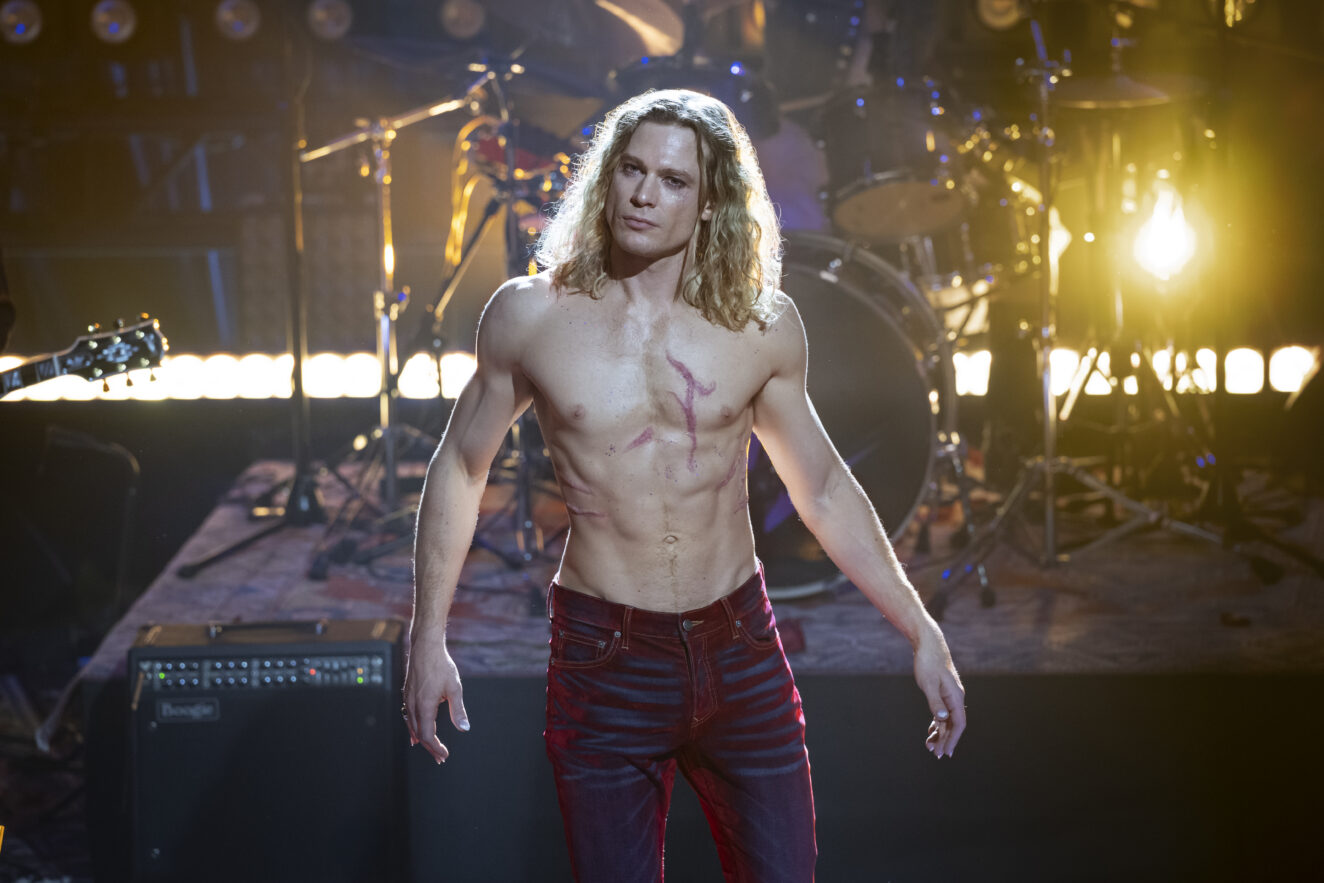
AMC has fully embraced this direction, leaning into the meta of it in a way that’s both playful and deeply intentional. Promotional materials have taken on a mockumentary style, blurring the line between actor and character, fiction and reality. Even more impressively, The Vampire Lestat exists as an actual musical act, with official artist pages and released singles — including “Long Face,” “All Fall Down,” and a cover of Billy Idol’s “Dancing With Myself” — all attributed simply to The Vampire Lestat.
Sam Reid, notably, is nowhere to be found in the credits, which is why, if you’ve come across any of my music-focused articles on this, you’ll notice I’ve committed to the bit and started writing about the band as though it’s entirely real. Because, at this point, it kind of is.
It’s an incredibly clever, almost nostalgic approach that calls back to the old Anne Rice days, back when you could call a phone number and leave messages for Lestat himself, or later, watch Rice answer fan questions on Facebook entirely in his character. It created this strange, delightful space where he felt like someone you could actually reach.
Now, however, that idea is being taken even further.
Just five days before the premiere of The Vampire Lestat, AMC is bringing the concept into the physical world with something unprecedented: a real concert. One night and one night only.
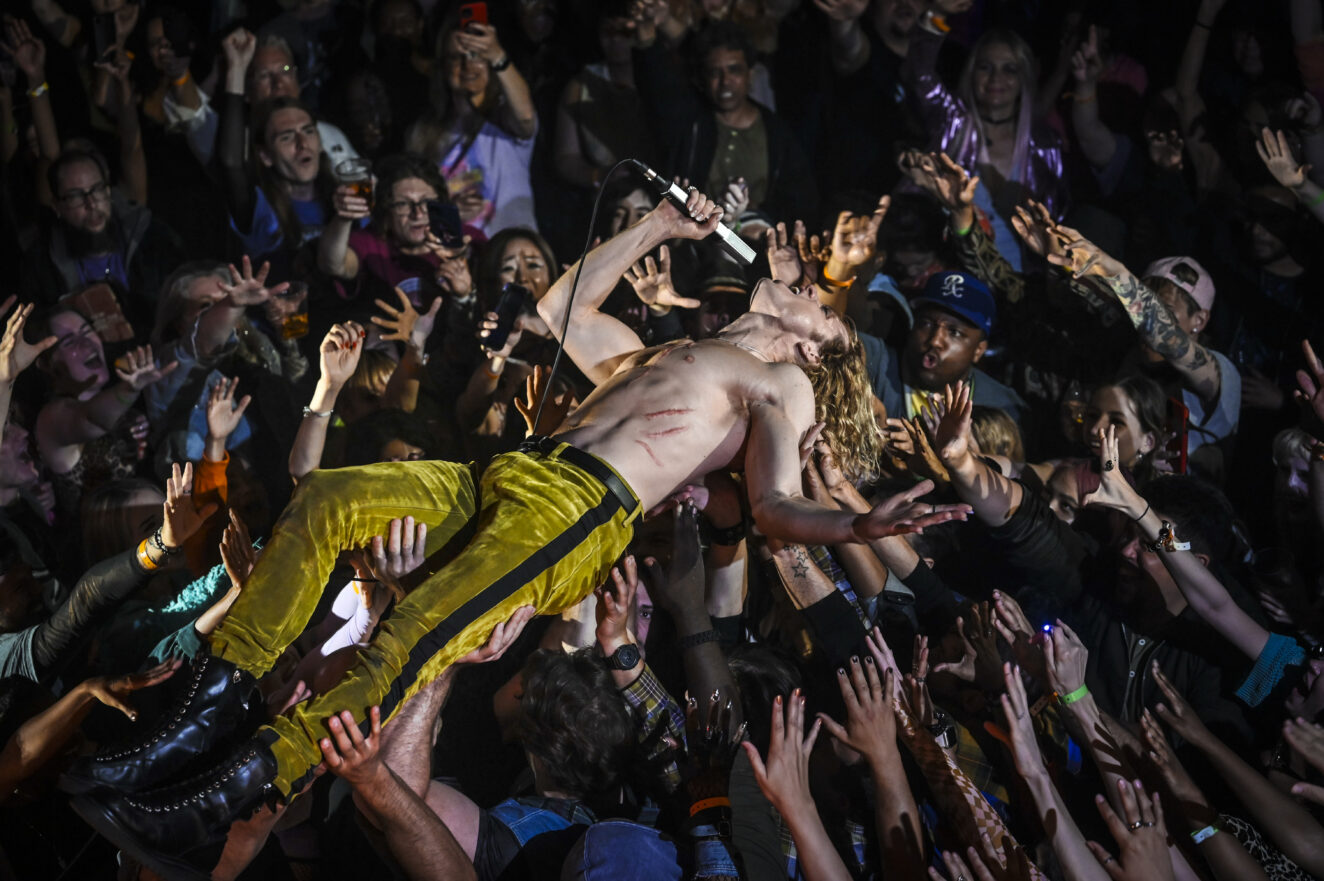
And for longtime readers, there’s an added layer of significance here. In the original 1985 novel The Vampire Lestat, Lestat only ever holds one concert during his rockstar era. Everything else exists through recordings, music videos, and a harrowing reputation, but that single performance, held in San Francisco on Halloween night in 1985, becomes something else entirely.
And if you want to know exactly why it’s such a big deal… Well, you’re either going to have to wait and see how the series adapts it, or read it for yourself ahead of time. Trust me, no matter what you do, it’ll be worth it.
So it feels only fitting that there is just one concert; one night where the fourth wall finally gives way, and The Vampire Lestat becomes musically, spectacularly, and dangerously real.
Lestat de Lioncourt is finally stepping off the page, and I, for one, fully intend to be there to see it.
Because if there were ever a moment that demanded to be witnessed firsthand in the life of an Anne Rice fan, it’s this one. A single night where Lestat exists not just in story, or on screen, but in our world — and if that’s the case, it would be a shame not to meet him there.
More information is sure to follow, but keep an eye here at iHorror for updates on the concert, the music, and the upcoming premiere of The Vampire Lestat on June 7.
News
The History of Deals with the Devil: From Faust to The Witch
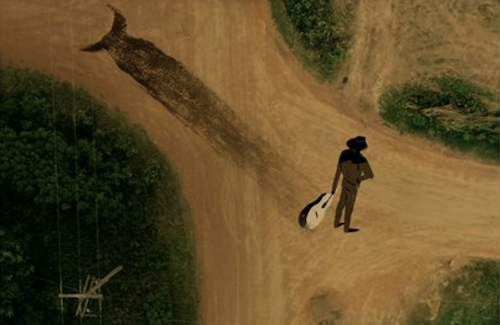
Every culture on earth has invented a version of the same story. Someone makes a deal with darkness, gets exactly what they asked for, and loses everything that made them want it in the first place. This is either the oldest cautionary tale in human history or the universe’s way of saying that wanting things too much is the problem. Possibly both.
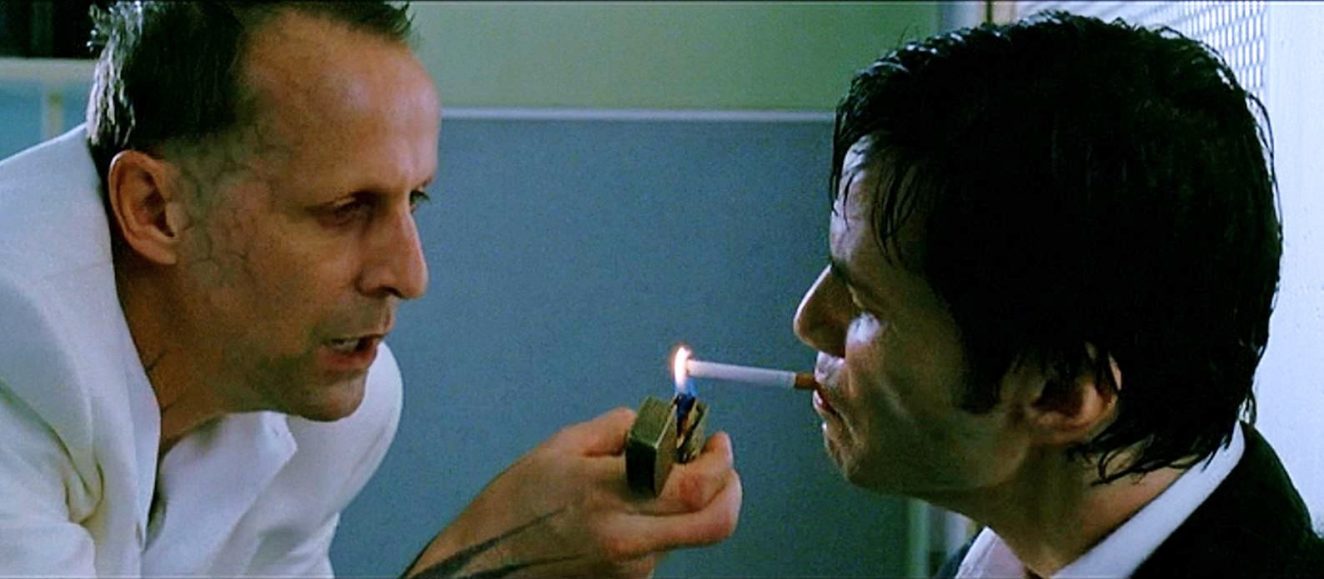
The template is so reliable it has survived more reinventions than most genres, showing up in ancient folklore, theater from the sixteenth century, Mississippi Delta blues, and a 1997 Al Pacino film where the devil runs a Manhattan law firm, which is honestly the most plausible setting the story has ever found.
Doctor Faustus and the Original Paperwork
The deal with the devil as Western storytelling knows it starts with the German legend of Johann Georg Faust, a real historical figure from the early 1500s whose reputation for dark arts grew considerably after his death. By the time Christopher Marlowe adapted him into Doctor Faustus around 1592, Faust had already become shorthand for a man who traded his eternal soul for power and forbidden knowledge.
Marlowe’s Faustus gets twenty-four years of demonic assistance, summons Helen of Troy, and spends the entire back half of the play desperately not thinking about what comes next. He traded his immortal soul for the intellectual equivalent of a Wikipedia subscription.
Goethe’s Faust, published in two parts in 1808 and 1832, complicated the template. Goethe’s version ends with Faust being saved, which is either deeply reassuring or a massive loop in the contract depending on how you read it. The devil, Mephistopheles, loses on a technicality. Lawyers have been insufferable about this ever since.
The word “Faustian” entered the language as shorthand for any bargain where you get what you want at a cost that turns out to be everything. It is used now to describe political compromises, corporate mergers, and at least three separate think pieces per year about social media.
The Crossroads
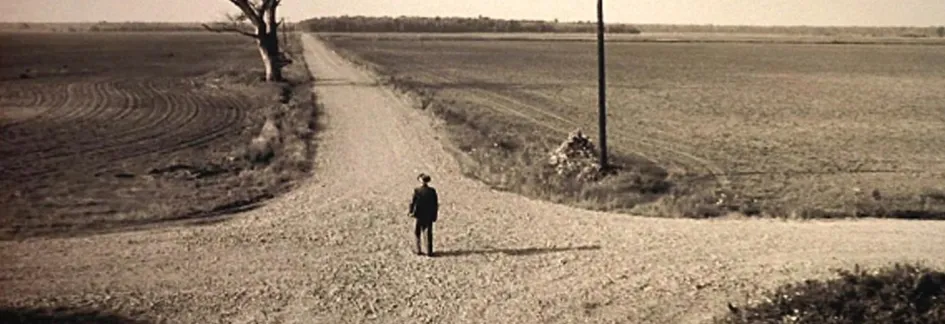
On the other side of the Atlantic, the deal with the devil found a different address. American blues mythology, particularly the tradition of the Mississippi Delta, attached the story to a specific location. The crossroads, where two roads meet at midnight, and where a man could wait for the devil to appear and tune his guitar.
The musician most associated with this mythology is Robert Johnson, who recorded twenty-nine songs in 1936 and 1937, including “Cross Road Blues” and “Me and the Devil Blues,” and died in 1938 at twenty-seven under circumstances that remain unclear. He was a remarkable guitarist who appeared to have improved dramatically in a very short period of time. The crossroads story about him developed and calcified after his death, told and retold until it became inseparable from his music. Robert Johnson himself never claimed any of it.
The person who actually did claim it was a different man entirely. Tommy Johnson, a Delta blues musician with no relation to Robert, reportedly told people on multiple occasions that he had met the devil at a crossroads at midnight, handed over his guitar, and gotten his talent in return. Tommy Johnson is considerably less famous than Robert Johnson, which is maybe the devil’s way of making a point about contract terms.
The crossroads mythology fed directly into O Brother, Where Art Thou? (2000), where the Coen Brothers dropped it into the middle of a Depression-era Odyssey adaptation because if you are already rewriting Homer you might as well rewrite American folklore while you are in there. It lives in every story about fame that arrives too fast, talent that appears from nowhere, and deaths at twenty-seven. The 27 Club has been run through the Robert Johnson mythology so many times that the connection has become its own piece of pop culture, self-sustaining and impossible to dislodge.
The Devil Grows Up
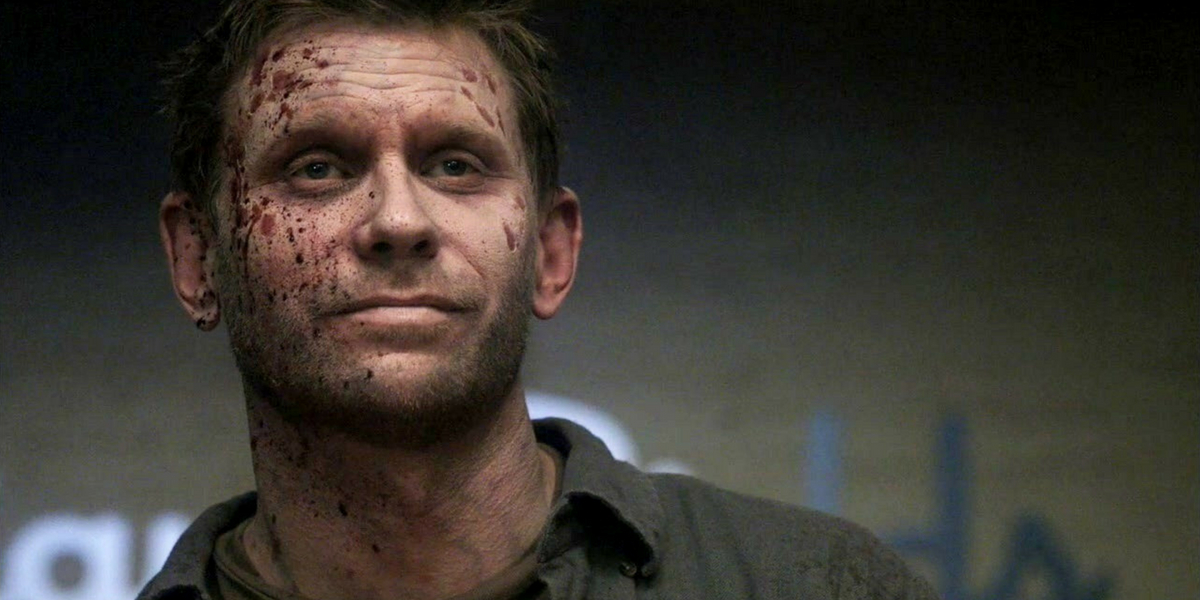
The devil of medieval Christianity and the devil of the crossroads deal mythology are related but not identical. The biblical Satan is primarily an adversary, an accuser, a figure whose role in early scripture is closer to a prosecuting attorney than a red-skinned tempter in a top hat.
The smooth-talking deal maker who shows up at crossroads and in horror films is a mash up of all of this. The biblical adversary, the folk devil, and a few centuries of storytelling that collectively decided the most interesting version of evil was one that made you an offer. The modern devil does not attack. He negotiates. And he always has better real estate.
Hollywood Signs the Contract
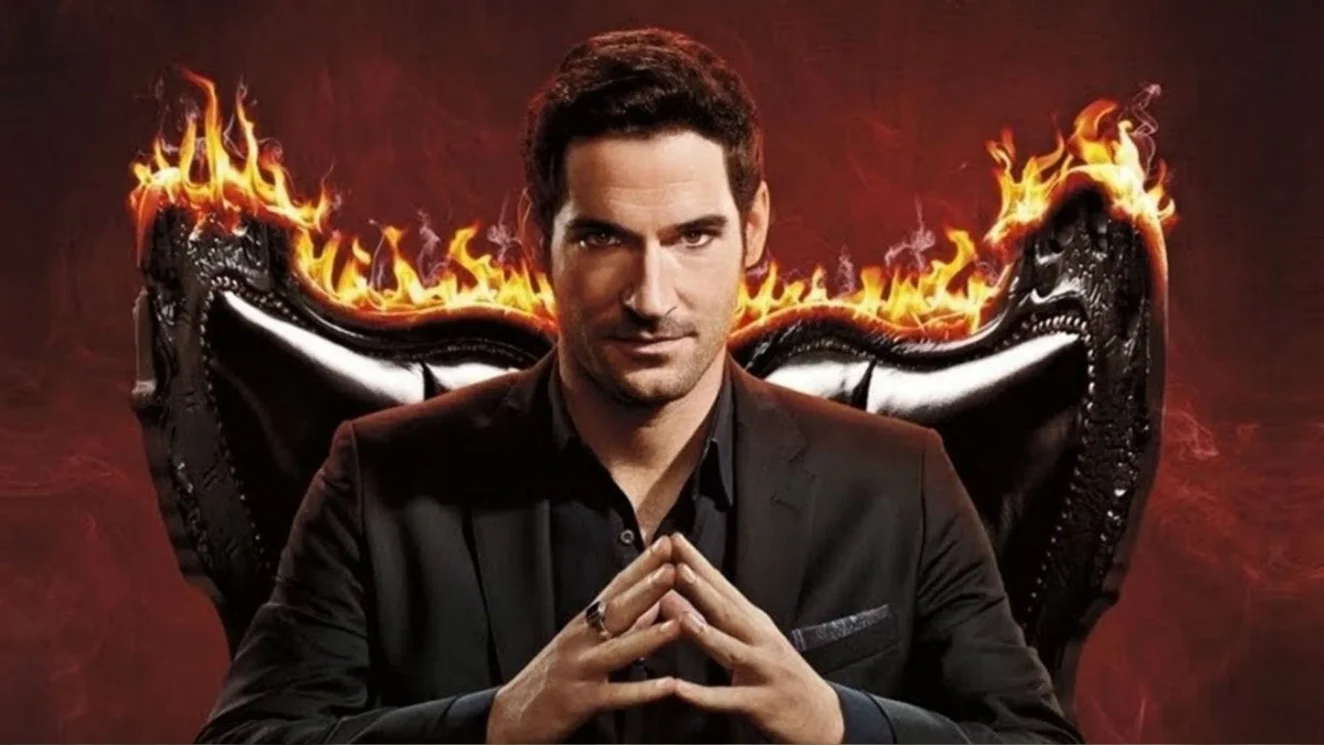
Hollywood has been making devil movies for as long as Hollywood has existed, and the quality varies in ways that suggest not all of those productions made favorable deals.
Angel Heart (1987) is the best film about a deal with the devil that never once uses the phrase. Mickey Rourke plays a private detective hired by a man named Louis Cyphre (Robert De Niro) to find a missing person, and the movie spends ninety minutes letting you work out what Louis Cyphre is an anagram of while everything gets worse. De Niro arrives in a cream suit eating hard-boiled eggs and the film is essentially already over.
The Devil’s Advocate (1997) casts Al Pacino as the literal devil running a Manhattan law firm and hiring Keanu Reeves as his star attorney. This works completely. New York in the nineties, of course the devil ran a law firm. The casting of Pacino is either inspired or the only possible answer to the question of which living actor could play Satan and make it seem like he was doing you a favor.
Crossroads (1986) sends Ralph Macchio into the Mississippi Delta to hunt down a lost Robert Johnson song and ends with a guitar duel between Macchio and Steve Vai, who plays the devil’s champion. The film climaxes with a Juilliard-trained classical guitarist defeating a blues devil deal using a Bach-influenced technique, in the Mississippi Delta, in front of a crowd that does not find this strange. Nobody in the film finds this strange.
Drag Me to Hell (2009) is Sam Raimi’s argument that you do not need to want power or knowledge or fame to end up on the wrong side of a supernatural contract. Christine Brown wanted a promotion. She denied a mortgage extension to an elderly woman. The punishment is an eternity of damnation. The moral is that the universe does not proportion its consequences to the scale of the ambition, which is either a theological horror show or a description of most Tuesdays.
And then there is The Witch (2015), where Robert Eggers quietly made the deal the ending rather than the premise. Thomasin does not go looking for the devil. The devil comes to her farm in 1630s New England, destroys her family, and waits. The offer, when it comes, is delivered by a goat named Black Phillip. “Wouldst thou like to live deliciously.” The audience agreed that yes, they probably would.
The Terms

What the deal with the devil has always been about, underneath the sulfur and the crossroads and the cream suits, is the terror of wanting something badly enough to pay any price for it. Faust wanted knowledge. Tommy Johnson wanted to play guitar better than anyone alive. Thomasin wanted to be free. The horror is not the devil. The horror is that the offer sounds reasonable and the terms are always printed small.
Every generation rewrites the story because every generation needs to. The template survives because the wanting does not stop.

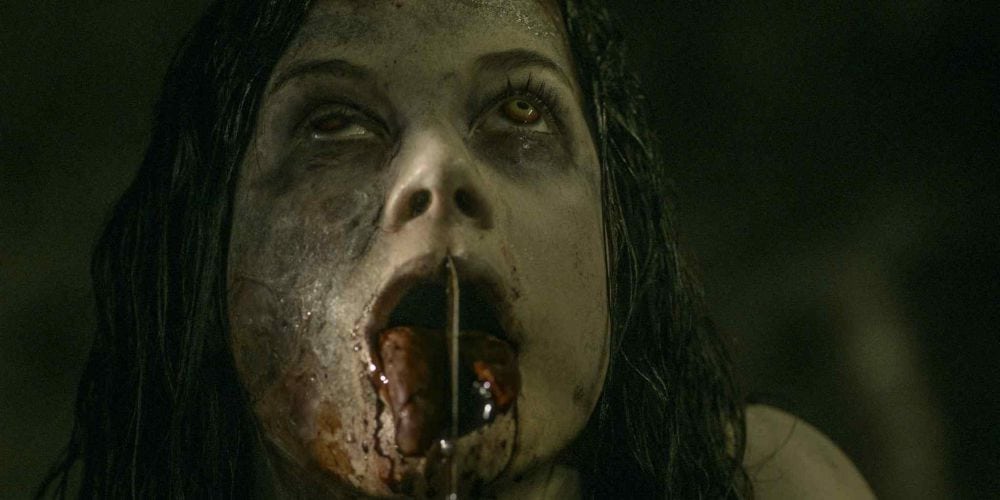
The Evil Dead Burn Trailer Is Here and It Is Everything

The Evil Dead Universe Now Includes a Mummy Film

“It’s My Era. I’m a Rockstar Now.” The Official ‘The Vampire Lestat’ Trailer Is Here

The Practical Magic 2 Teaser Trailer Is Finally Here

This Week in Horror: DC Goes Full Body Horror, A24 Has Its Chainsaw Man, and The Bone Temple Is Finally Yours

The Vampire Lestat Releases Cover of Billy Idol’s “Dancing With Myself”

The HUNGRY Red Band Trailer Is Here and We Need to Stop Laughing at the Hippo

‘The Vampire Lestat’ Trailer: What “Dancing With Myself” Reveals About Lestat

Samara Weaving and Kyle Gallner Star in Romantic Crime Thriller ‘Carolina Caroline’ [Trailer]

Shudder’s May Is the Best Month They’ve Had in a While.

ShoStak Opens the Door for Filmmakers to Build and Own Their Stories

Resident Evil Drops First Teaser Trailer

The Vampire Lestat Is Playing a Real Concert in NYC — And Yes, It’s Exactly as Wild as It Sounds

The History of Deals with the Devil: From Faust to The Witch

‘ZombieCON Vol. 1’ Gets the Con Right. The Zombies Arrive When They Want To.
Shudder’s May Is the Best Month They’ve Had in a While.

‘Don’t Die’ Is a Good Friday Night Horror Film And That Is Enough.

Content Is Now on Digital. Watch It Twice.

[Exclusive Clip] ‘From the Beyond: High Strangeness in the Bennington Triangle’

‘Behind the Mask’: Nathan Baesel Exclusive Interview!
‘The Vampire Lestat’ Trailer: What “Dancing With Myself” Reveals About Lestat
This Week in Horror: DC Goes Full Body Horror, A24 Has Its Chainsaw Man, and The Bone Temple Is Finally Yours
-
 News6 days ago
This Week in Horror: DC Goes Full Body Horror, A24 Has Its Chainsaw Man, and The Bone Temple Is Finally Yours
-
 Music6 days ago
The Vampire Lestat Releases Cover of Billy Idol’s “Dancing With Myself”
-
 Editorial5 days ago
‘The Vampire Lestat’ Trailer: What “Dancing With Myself” Reveals About Lestat
-
 Trailers7 days ago
Samara Weaving and Kyle Gallner Star in Romantic Crime Thriller ‘Carolina Caroline’ [Trailer]
-
 News3 days ago
Shudder’s May Is the Best Month They’ve Had in a While.
-
 News7 days ago
ShoStak Opens the Door for Filmmakers to Build and Own Their Stories
-
 News6 days ago
Astrolatry Built a Ten-Foot Practical Penis Scorpion
-
 Movie Reviews3 days ago
‘Don’t Die’ Is a Good Friday Night Horror Film And That Is Enough.
You must be logged in to post a comment Login