Strange and Unusual
Man Arrested for Allegedly Taking a Severed Leg From Crash Site And Eating It


A local California news station reported late last month that a man was being held in custody for allegedly taking the severed leg of a deceased train wreck victim and eating it. Be warned, this is a very disturbing and graphic story.
It happened on March 25 in Wasco, Calif. in a horrible Amtrak train accident a pedestrian was struck and killed and one of his legs was severed.
According to KUTV a man named Resendo Tellez, 27, stole the body part from the impact site.
A construction worker named Jose Ibarra who was an eyewitness to the theft revealed to officers one very grim detail.
“I’m not sure from where, but he walked this way and he was waving a person’s leg. And he started chewing on it over there, he was biting it and he was hitting it against the wall and everything,” said Ibarra.
Caution, the following picture is graphic:

Police found Tellez and he willingly went with them. He had outstanding warrants and now faces charges of stealing evidence from an active investigation.
Ibarra says Tellez walked past him with the detached limb. He describes what he saw in lurid detail, “On the leg, the skin was hanging. You could see the bone.”
The Burlington Northern Santa Fe (BNSF) police arrived on the scene to begin their own investigation.
According to a follow-up report by KGET News, Tellez was known throughout the neighborhood as homeless and non-threatening. A liquor store employee said she knew of him because he slept in a doorway near the business and was also a frequent customer.
Court records say that Tellez took the detached lower limb, “because he thought the leg was his.”
There are also reports that a video exists of the incident. It was circulating on social media, but we won’t provide it here.
The Kern County Sherriff’s office had no follow-up report as of this writing.



Strange and Unusual
Real Space Egg Hatches, Causing Viral Internet Chaos

Project Hail Mary is actually a documentary? We wish. But the internet got a little something to tease the idea when pictures of a space egg went viral, showing tendrils emerging from its cracks. Where’s Tom Cruise?
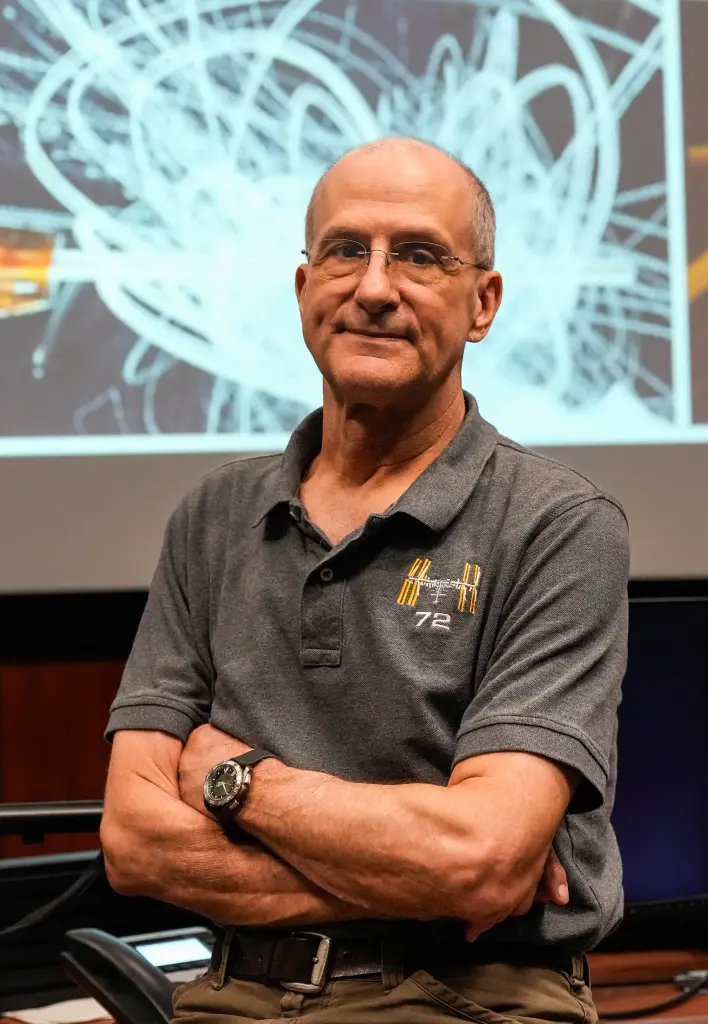
Actually, it’s not War of the Worlds. The egg is actually an experiment in agriculture being conducted on the International Space Station (ISS). In an X post (see below) apparantly a lot of people didn’t read the caption at first and thought the photo was some kind of extra-terrestrial being. Ironically, it’s one of the most terrestrial beings; it’s a potato.
“This is an early purple potato, complete with spot of hook Velcro to anchor it in my improvised grow light terrarium,” NASA astronaut and scientist Don Pettitt explained. “I flew potatoes on Expedition 72 for my space garden, an activity I did in my off-duty time.”
The spud is a personal project Pettitt is working on aboard the ISS.

“How did it compare to growing potatoes on earth?” asked someone in the feed. “Does the potato know how to send the plant above the soil and the roots/tuber down into the soil in microgravity?”
Pettit’s answer: “The roots would grow in all directions absent gravity, and all plants I have ever grown in space have grown far slower than they would have on Earth. I have more pictures I will share later.”
So, although a space egg that looks like the one from the poster for Alien isn’t as nefarious as some think, it’s still interesting because in space, the reason they can’t hear you scream might be because you’re eating a loaded baked potato.
Spudnik-1, an orbiting potato on @Space_Station!
— Don Pettit (@astro_Pettit) March 20, 2026
I flew potatoes on Expedition 72 for my space garden, an activity I did in my off-duty time. This is an early purple potato, complete with spot of hook Velcro to anchor it in my improvised grow light terrarium.
Potatoes are one… pic.twitter.com/MXsoV20vJ8
Strange and Unusual
Children Uncover Human Remains; Fifth Find This Month

Children in Dijon, France, have become unexpected archeologists after they found a human skeleton buried in the dirt near a playground. Even stranger, the skeletons are sitting in an upright position, which has some real archeologists scratching their heads. But this isn’t an isolated incident; there have been four other such discoveries this month already.
But before you say serial killer or cold case, there might be an explanation. According to People, these skeletons could belong to a group of humans called the Gauls.
Archaeoanthropologist Annamaria Latron pointed out something interesting, “This seated position is atypical,” she said in Le Monde,
She adds: “We are more used to burials of reclining individuals, in general, on their backs, with the lower limbs extended and not bent like this.”
Reports say all of the remains are male who were between about 5-foot-3 and 5-foot-9, with well-preserved teeth and bone density that suggests intense physical activity.

“We do not have a preferred hypothesis,” Latron contends. “We’re missing the surface layer, which was above the tombs. Being an archaeologist can be a very frustrating profession.”
If you’re looking for a more sinister story about bones, you could check out the 1999 movie The Bone Collector starring Denzel Washington and Angelina Jolie.
Header photo credit: Gallic burial site in central Dijon, France. Frédéric BOURIGAULT
Strange and Unusual
“Super Lice” Are Now the Norm in Many U.S. Cities
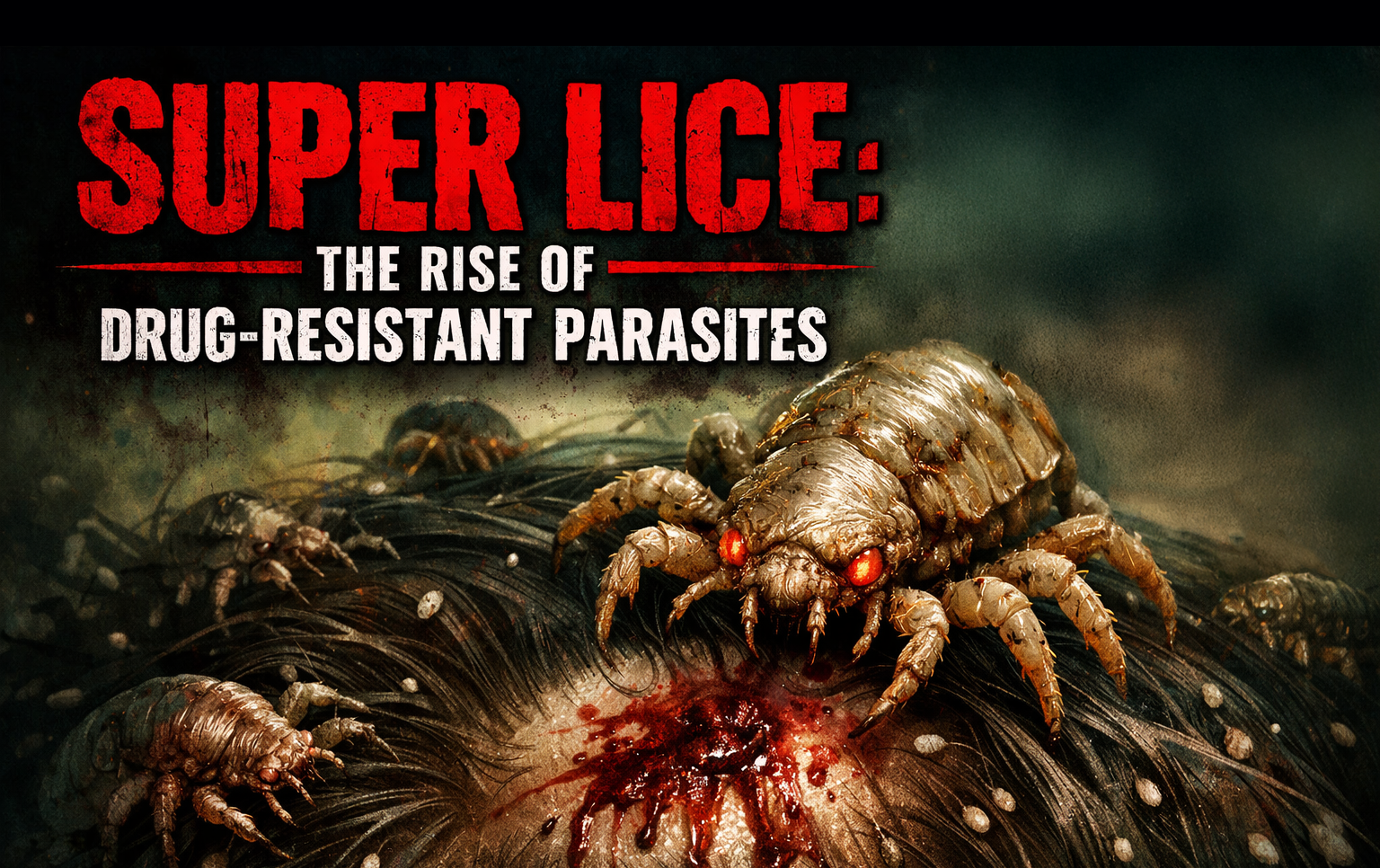
Medical experts are claiming that some head lice have developed a resistance to over-the-counter pesticides used to treat infestations. They are being called “super lice,” and their presence is a growing concern.
Getting head lice in grade school is almost a rite of passage for some kids. But parents may want to take note, a new breed of these horrifying parasites are hard to kill.
According to Daniel Harel, CEO of Lice Busters NYC, this shift has changed how families should approach lice treatment.
“Most over-the-counter treatments fail because lice have built resistance over the years,” Harel says. “Parents often assume they applied the product wrong, but the real issue is that the lice themselves have evolved.”
The blood-sucking pests are mostly contracted through skin-to-skin contact or via shared hats or hair accessories. They latch onto hair follicles and feed on blood from the scalp, quickly laying their eggs, causing a full-blown infestation.
They inject a chemical in their saliva when they bite which causes a skin reaction making the host scratch incessantly. A head full of these monsters can create a “crawling” sensation, adding another layer to the creep factor.
Procreation is done by laying eggs, or nits, which stick to the hair shaft and hatch in about a week. They’ll mature in about another week and start the whole process over again. By the time the host realizes they’re infected, a full-blown colony has formed.
Traditionally, either a buzz haircut or a readily available and FDA-approved over-the-counter shampoo solves the problem, but thanks to evolution, regular lice have become “super lice” and don’t die even with a thorough cleaning.
Super lice are not biologically changed; it’s their tolerance to poison that has. If one louse survives the pesticide, it can transfer that gene to its offspring, creating generations of resistant bugs.
“In places like New York City, families should assume they are dealing with treatment-resistant lice,” Harel explains. “That’s simply the reality of how lice have evolved.”
The question becomes: If poison doesn’t work, how do you deal with these seemingly unstoppable vermin?
“Manual removal works because it doesn’t depend on pesticides,” Harel says. “If every louse and nit is removed from the hair, the infestation is over.”
Experts say the key is recognizing that many traditional treatments are no longer reliable and focusing on methods that eliminate lice completely.
“Parents often feel like they did something wrong when treatments fail,” Harel says. “But the reality is that the lice have changed. Once families understand that, the solution becomes much clearer.”



The Evil Dead Burn Trailer Is Here and It Is Everything

This Week in Horror: CinemaCon Delivered, Nicolas Cage Is Coming Back, and Someone Let Ti West Near a Christmas Story

Chucky Is Going Back to Theaters, and Don Mancini Says It’s Going to Be Scary Again

The Evil Dead Universe Now Includes a Mummy Film

The Practical Magic 2 Teaser Trailer Is Finally Here

10 Horror, Thriller, and True Crime Series to Watch This Spring

7 Horror and Mystery Films That Explore Jack the Ripper

“It’s My Era. I’m a Rockstar Now.” The Official ‘The Vampire Lestat’ Trailer Is Here

Sacrificios Review: Some Miracles Have a Price Tag

The HUNGRY Red Band Trailer Is Here and We Need to Stop Laughing at the Hippo

Thinestra Review: Almost as Sharp as It Thinks It Is

This Week in Horror: DC Goes Full Body Horror, A24 Has Its Chainsaw Man, and The Bone Temple Is Finally Yours

The Vampire Lestat Releases Cover of Billy Idol’s “Dancing With Myself”

Astrolatry Built a Ten-Foot Practical Penis Scorpion

Samara Weaving and Kyle Gallner Star in Romantic Crime Thriller ‘Carolina Caroline’ [Trailer]

ShoStak Opens the Door for Filmmakers to Build and Own Their Stories

The Clayface Teaser Just Made October Feel Very Far Away

‘Behind the Mask 2’ Slays Kickstarter

The Best Possible Person Is Directing A24’s Texas Chainsaw Massacre
“It’s My Era. I’m a Rockstar Now.” The Official ‘The Vampire Lestat’ Trailer Is Here

ITCH Is the Outbreak Film That Actually Gets Under Your Skin
The Evil Dead Burn Trailer Is Here and It Is Everything
-
News4 days ago
The Evil Dead Burn Trailer Is Here and It Is Everything
-
 News4 days ago
The Evil Dead Universe Now Includes a Mummy Film
-
 News5 days ago
The Practical Magic 2 Teaser Trailer Is Finally Here
-
 Lists5 days ago
10 Horror, Thriller, and True Crime Series to Watch This Spring
-
 Trailers3 days ago
“It’s My Era. I’m a Rockstar Now.” The Official ‘The Vampire Lestat’ Trailer Is Here
-
 News5 days ago
The HUNGRY Red Band Trailer Is Here and We Need to Stop Laughing at the Hippo
-
 News2 days ago
ShoStak Opens the Door for Filmmakers to Build and Own Their Stories
-
 Trailers2 days ago
Samara Weaving and Kyle Gallner Star in Romantic Crime Thriller ‘Carolina Caroline’ [Trailer]
You must be logged in to post a comment Login