Movie Reviews
‘In the Earth’ Offers Psychedelic Folk Horror [Sundance Review]
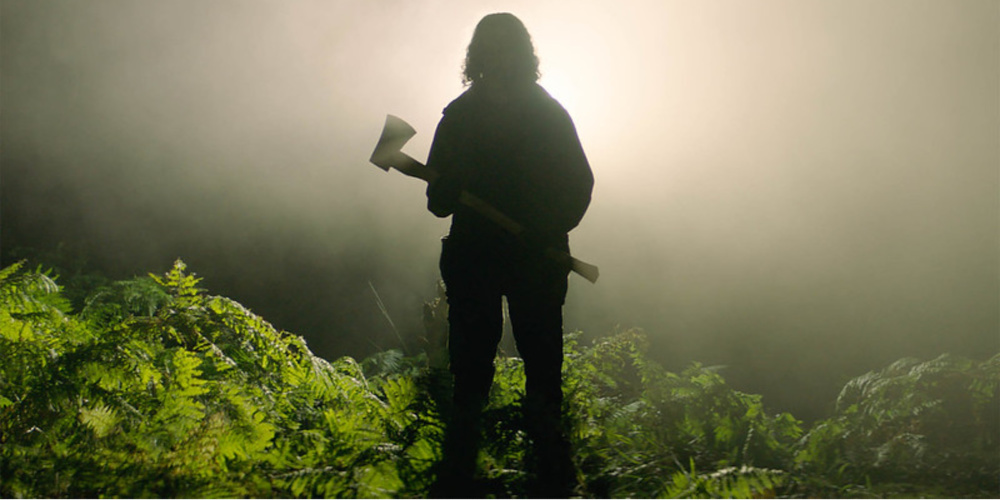
It isn’t easy finding the point where folk horror and psychedelic horror collide, but writer/director Ben Wheatley’s In the Earth, which debuted last night at the Sundance Film Festival, does it beautifully.
Conceived, written, and filmed during the pandemic–as so many films in 2020 were–In the Earth does not ignore Covid-19, nor does it make it central to the plot. Instead, the pandemic sits on the periphery as something the characters are entirely aware of despite so many other things going on. What’s more, while many of the films created during the pandemic have come with a closed, almost claustrophobic feel, Wheatley impresses by taking us all outside…then making us regret it.
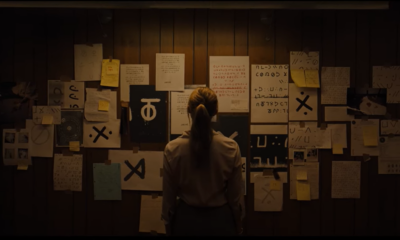
As the film opens, Dr. Martin Lowery (Joel Fry) arrives at a research waypoint. His destination is deep in the Arboreal Forest, and soon he and park guide Alma (Ellora Torchia) head into the woods to meet with Lowery’s colleague (Hayley Squires). After they’re attacked in the night, however, they find themselves at the mercy of Zach (Reece Shearsmith), a man living off-grid in the woods whose reasons are deadly.
Wheatley is no stranger to unusual genre work. His previous credits include producing The Greasy Strangler as well as directing Kill List. He also directed Netflix’s new adaptation of Rebecca starring Armie Hammer and Lily James. Still, it felt like he pulled out all the stops as this film gets underway.
The crux of this story lies in the attempt to communicate with nature itself.
Zach has become convinced that Parnag Fegg, a nature spirit who watches over these particular woods, is real and that he can garner favor by worshipping the deity through art and supplication. Alma, meanwhile, has dug into the Malleus Maleficarum, combining pagan rituals with science in an attempt to tap into the “brain” or “mind” of the forest.
What they both manage to induce is a psychedelic landscape where science and magic are the same thing, and if Parnag Fegg exists, it’s entirely possible he’s very, very angry.
Surprisingly, while Censor, which also played the festival, came with a warning about extreme violence and gore, that film had nothing on Wheatley’s creation. There are brutal moments in this film in which the filmmaker teases the audience, threatening to show us more than what we’re ready to see before pulling back in such a way that we’re never entirely sure what we witnessed.
That feeling of unease creeps into the rest of the film, as well. The visuals and sounds of the film bring a feeling of sitting in a chair with a leg that you know could break at any moment.
What saves the film, and the audience, are the performances by Wheatley’s cast. This is top-notch talent bringing their A-game to every scene, no matter what they’re playing. Among them, I found Squires particularly good. There had to have been times while reading the script that she turned to the writer/director and asked, “And what is this all supposed to mean again?” but she never faltered in the performance. You will believe, at the very least, that she believes what she’s talking about and that is saying something.
Overall, In the Earth plays like the spiritual relative of films like Mandy and Color Out of Space with a healthy dose of The Ritual thrown in for good measure. If any, or all, of those films interest you, you will definitely want to check this one out.
I think what sells the film best, however, is that it is about seeking order in chaos, reason in the face of the unimaginable. And that is a feeling we as a collective species have come to know all too well in the last year.
Keep your eyes peeled for In the Earth as a larger release later this year, and stay tuned to iHorror for more Sundance coverage in the week to come!
Featured Photo Courtesy of Sundance Institute | photo by Neon
'Civil War' Review: Is It Worth Watching?
Follow our new YouTube channel "Mysteries and Movies" here.



Movie Reviews
‘Skinwalkers: American Werewolves 2’ is Packed with Cryptid Tales [Movie Review]
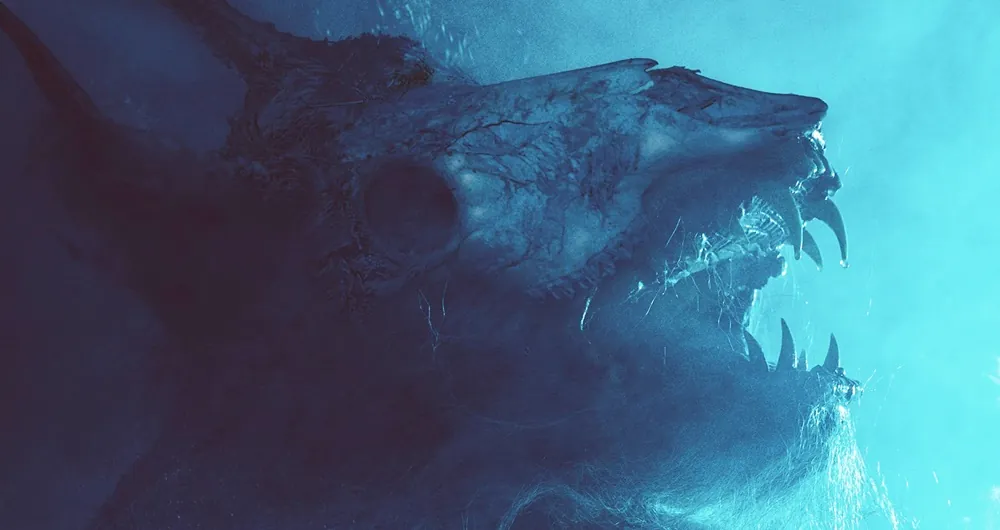
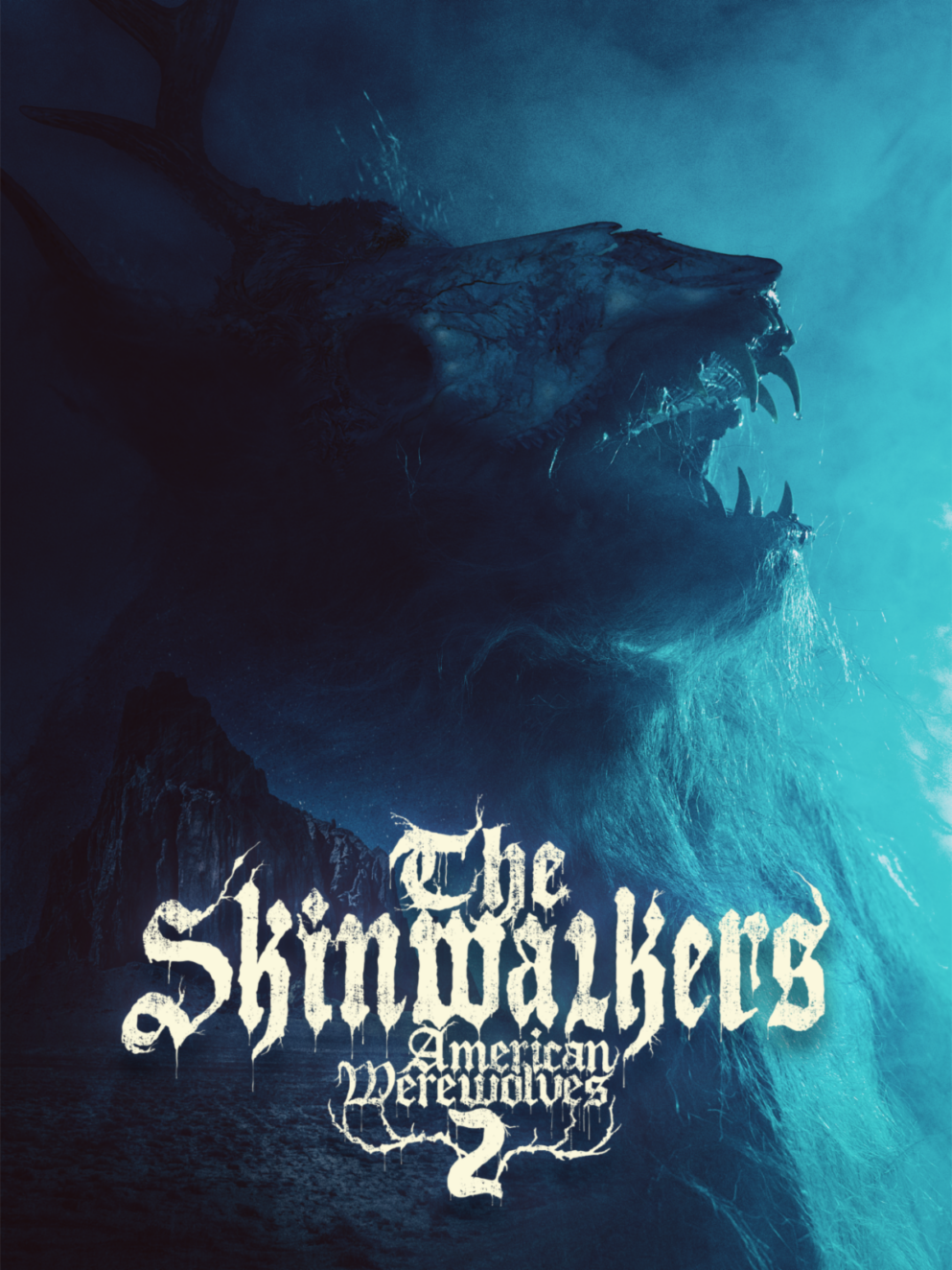
As a longtime werewolf enthusiast, I’m immediately drawn to anything featuring the word “werewolf”. Adding Skinwalkers into the mix? Now, you’ve truly captured my interest. Needless to say, I was thrilled to check out Small Town Monsters’ new documentary ‘Skinwalkers: American Werewolves 2’. Below is the synopsis:
“Across the four corners of the American Southwest, there is said to exist an ancient, supernatural evil that preys on the fear of its victims to gain greater power. Now, witnesses lift the veil on the most terrifying encounters with modern-day werewolves ever heard. These stories intertwine legends of upright canids with hellhounds, poltergeists, and even the mythical Skinwalker, promising true terror.”
Centered around shapeshifting and told through firsthand accounts from the Southwest, the film brims with chilling stories. (Note: iHorror has not independently verified any claims made in the film.) These narratives are the heart of the film’s entertainment value. Despite the mostly basic backdrops and transitions—notably lacking in special effects—the film maintains a steady pace, thanks largely to its focus on witness accounts.
While the documentary lacks concrete evidence to support the tales, it remains a captivating watch, especially for cryptid enthusiasts. Skeptics may not be converted, but the stories are intriguing.
After watching, am I convinced? Not entirely. Did it make me question my reality for a while? Absolutely. And isn’t that, after all, part of the fun?
‘Skinwalkers: American Werewolves 2’ is now available on VOD and Digital HD, with Blu-ray and DVD formats offered exclusively by Small Town Monsters.
'Civil War' Review: Is It Worth Watching?
Follow our new YouTube channel "Mysteries and Movies" here.
Movie Reviews
‘Slay’ is Wonderful, It’s Like if ‘From Dusk Till Dawn’ Met ‘Too Wong Foo’
Before you dismiss Slay as a gimmick, we can tell you, it is. But it’s a damn good one.
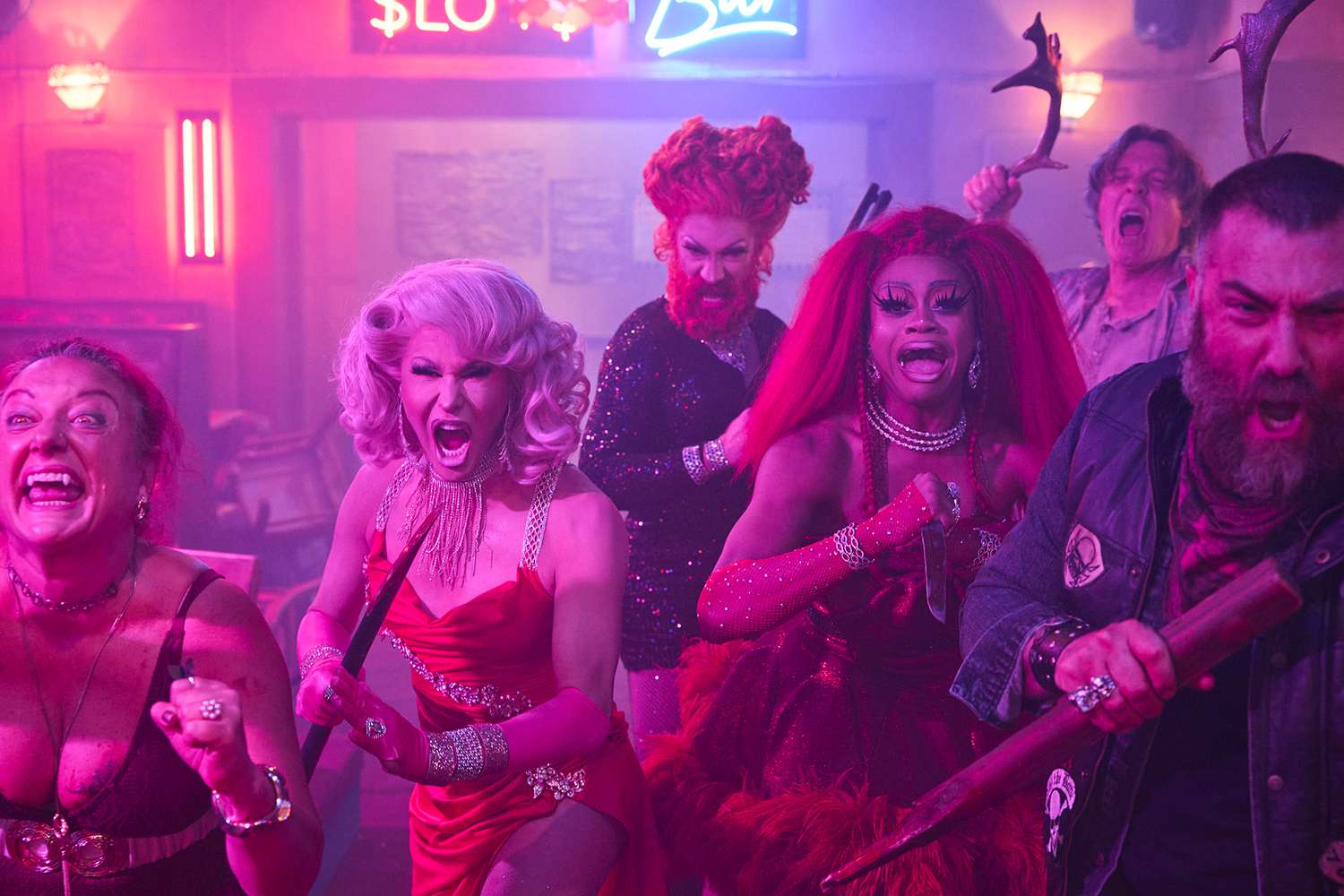
Four drag queens are mistakenly booked at a stereotypical biker bar in the desert where they have to combat bigots…and vampires. You read that right. Think, Too Wong Foo at the Titty Twister. Even if you don’t get those references, you will still have a good time.
Before you sashay away from this Tubi offering, here is why you shouldn’t. It’s surprisingly funny and manages to have a few scary moments along the way. It’s a midnight movie at its core and if those bookings were still a thing, Slay would probably have a successful run.
The premise is simple, again, four drag queens played by Trinity the Tuck, Heidi N Closet, Crystal Methyd, and Cara Mell find themselves at a biker bar unaware that an alpha vampire is on the loose in the woods and has already bitten one of the townsfolk. The turned man makes his way to the old roadside saloon and begins turning the patrons into the undead right in the middle of the drag show. The queens, along with the local barflies, barricade themselves inside the bar and must defend themselves against the growing hoard outside.
The contrast between the denim and leather of the bikers, and the ball gowns and Swarovski crystals of the queens, is a sight gag I can appreciate. During the whole ordeal, none of the queens gets out of costume or sheds their drag personas except at the beginning. You forget they have other lives outside of their costumes.
All four of the leading ladies have had their time on Ru Paul’s Drag Race, But Slay is a lot more polished than a Drag Race acting challenge, and the leads elevate the camp when called for and tone it down when necessary. It is a well-balanced scale of comedy and horror.
Trinity the Tuck is primed with one-liners and double entendres which rat-a-tat from her mouth in gleeful succession. It’s not a cringy screenplay so every joke lands naturally with a required beat and professional timing.
There is one questionable joke made by a biker about who comes from Transylvania and it isn’t the highest brow but it doesn’t feel like punching down either.
This might be the guiltiest pleasure of the year! It’s hilarious!
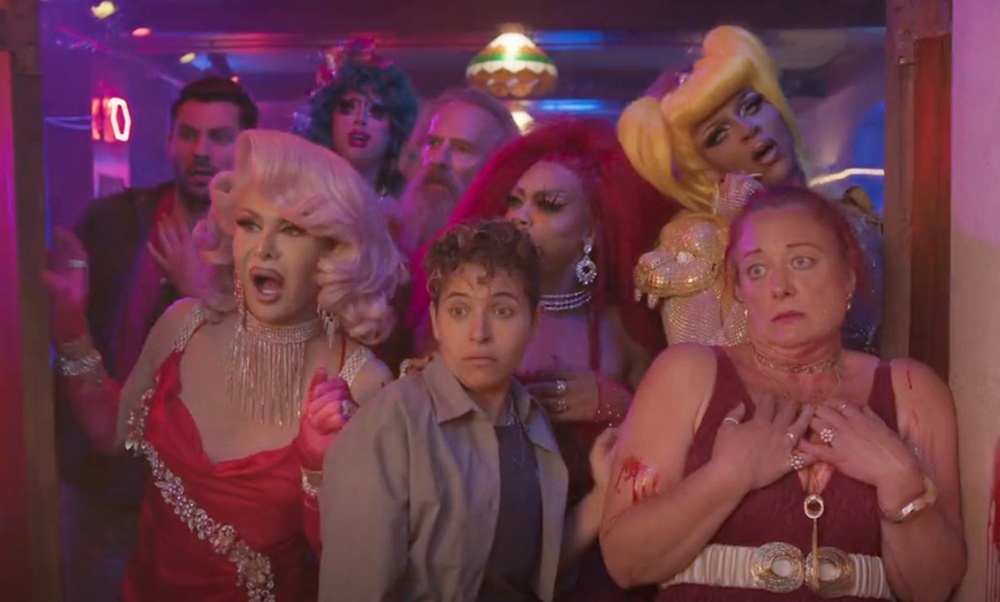
Heidi N Closet is surprisingly well cast. It’s not that it’s surprising to see she can act, it’s just most people know her from Drag Race which doesn’t allow much range. Comically she’s on fire. In one scene she flips her hair behind her ear with a large baguette and then uses it as a weapon. The garlic, you see. It’s surprises like that that make this film so charming.
The weaker actor here is Methyd who plays the dimwitted Bella Da Boys. Her creaky performance shaves a little off the rhythm but the other ladies take up her slack so it just becomes part of the chemistry.
Slay has some great special effects too. Despite using CGI blood, none of them take you out of the element. Some great work went into this movie from everyone involved.
The vampire rules are the same, stake through the heart, sunlight., etc. But what’s really neat is when the monsters are killed, they explode into a glitter-tinted dust cloud.
It’s just as fun and silly as any Robert Rodriguez movie with probably a quarter of his budget.
Director Jem Garrard keeps everything going at a rapid pace. She even throws in a dramatic twist which is played with as much seriousness as a soap opera, but it does pack a punch thanks to Trinity and Cara Melle. Oh, and they manage to squeeze in a message about hate during it all. Not a smooth transition but even the lumps in this film are made of buttercream.
Another twist, handled much more delicately is better thanks to veteran actor Neil Sandilands. I’m not going to spoil anything but let’s just say there are plenty of twists and, ahem, turns, which all add to the fun.
Robyn Scott who plays barmaid Shiela is the standout comedian here. Her lines and gusto provide the most belly laughs. There should be a special award for her performance alone.
Slay is a delicious recipe with just the right amount of camp, gore, action, and originality. It’s the best horror comedy to come along in a while.
It’s no secret that independent films have to do a lot more for less. When they are this good it’s a reminder that big studios could be doing better.
With movies like Slay, every penny counts and just because the paychecks might be smaller it doesn’t mean the final product has to be. When the talent puts this much effort into a film, they deserve more, even if that recognition comes in the form of a review. Sometimes smaller movies like Slay have hearts too big for an IMAX screen.
And that’s the tea.
You can stream Slay on Tubi right now.
'Civil War' Review: Is It Worth Watching?
Follow our new YouTube channel "Mysteries and Movies" here.
Movie Reviews
Review: Is There ‘No Way Up’ For This Shark Film?
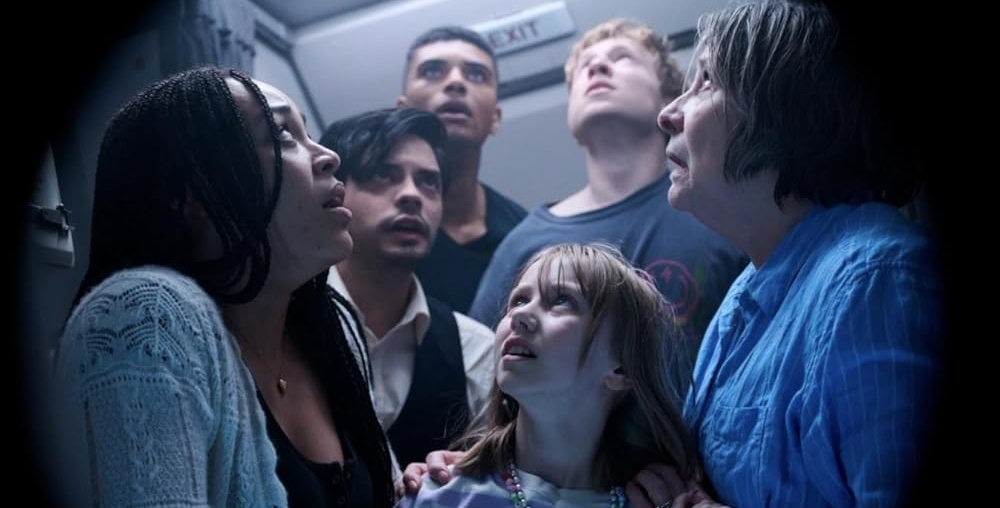
A flock of birds flies into the jet engine of a commercial airliner making it crash into the ocean with only a handful of survivors tasked with escaping the sinking plane while also enduring depleting oxygen and nasty sharks in No Way Up. But does this low-budget film rise above its shopworn monster trope or sink beneath the weight of its shoestring budget?
First, this film obviously isn’t on the level of another popular survival film, Society of the Snow, but surprisingly it isn’t Sharknado either. You can tell a lot of good direction went into making it and its stars are up for the task. The histrionics are kept at a bare minimum and unfortunately the same can be said about the suspense. That isn’t to say that No Way Up is a limp noodle, there is plenty here to keep you watching until the end, even if the last two minutes is offensive to your suspension of disbelief.
Let’s start with the good. No Way Up has plenty of good acting, especially from its lead Sophie McIntosh who plays Ava, a rich governor’s daughter with a heart of gold. Inside, she is struggling with the memory of her mother’s drowning and is never far from her overprotective older bodyguard Brandon played with nannyish diligence by Colm Meaney. McIntosh doesn’t reduce herself to the size of a B-movie, she is fully committed and gives a strong performance even if the material is trodden.
Another standout is Grace Nettle playing the 12-year-old Rosa who is traveling with her grandparents Hank (James Caroll Jordan) and Mardy (Phyllis Logan). Nettle doesn’t reduce her character to a delicate tween. She’s scared yes, but she also has some input and pretty good advice about surviving the situation.
Will Attenborough plays the unfiltered Kyle who I imagine was there for comic relief, but the young actor never successfully tempers his meanness with nuance, therefore he just comes across as a die-cut archetypical asshole inserted to complete the diverse ensemble.
Rounding out the cast is Manuel Pacific who plays Danilo the flight attendant who is the mark of Kyle’s homophobic aggressions. That whole interaction feels a bit outdated, but again Attenborough hasn’t fleshed out his character well enough to warrant any.
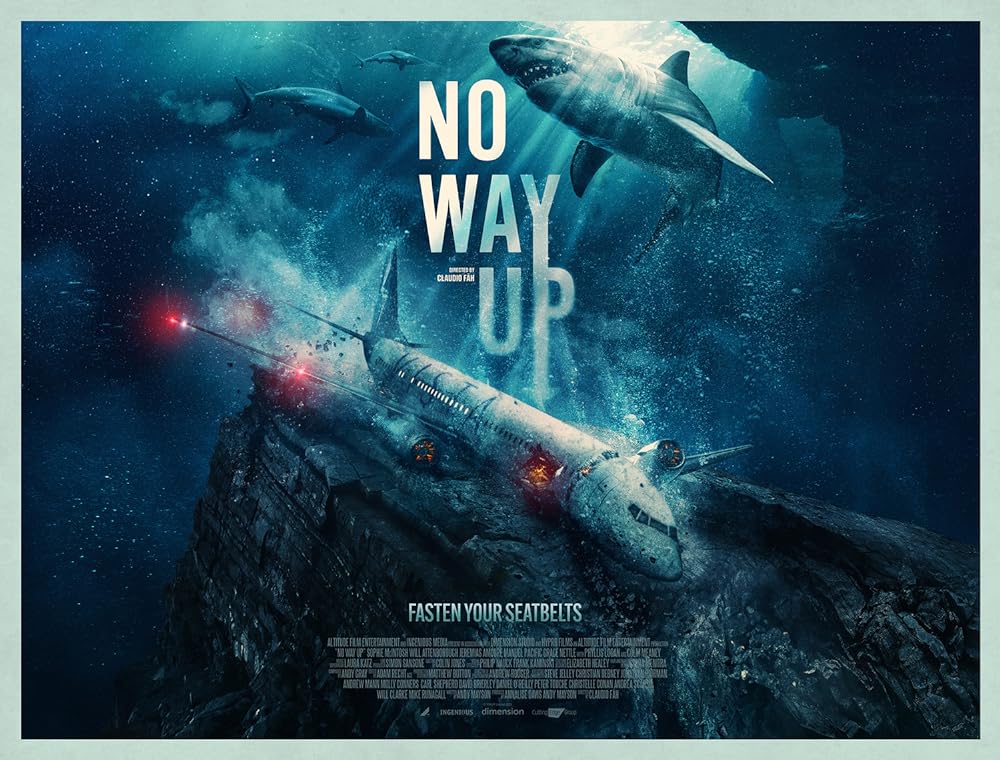
Continuing on with what is good in the film are the special effects. The plane crash scene, as they always are, is terrifying and realistic. Director Claudio Fäh has spared no expense in that department. You have seen it all before, but here, since you know they are crashing into the Pacific it’s more tense and when the plane hits the water you’ll wonder how they did it.
As for the sharks they are equally impressive. It’s hard to tell if they used live ones. There are no hints of CGI, no uncanny valley to speak of and the fish are genuinely threatening, although they don’t get the screentime you might be expecting.
Now with the bad. No Way Up is a great idea on paper, but the reality is something like this couldn’t happen in real life, especially with a jumbo jet crashing into the Pacific Ocean at such a fast speed. And even though the director has successfully made it seem like it could happen, there are so many factors that just don’t make sense when you think about it. Underwater air pressure is the first to come to mind.
It also lacks a cinematic polish. It has this straight-to-video feel, but the effects are so good that you can’t help but feel the cinematography, especially inside the plane should have been slightly elevated. But I’m being pedantic, No Way Up is a good time.
The ending doesn’t quite live up to the film’s potential and you will be questioning the limits of the human respiratory system, but again, that’s nitpicking.
Overall, No Way Up is a great way to spend an evening watching a survival horror movie with the family. There are some bloody images, but nothing too bad, and the shark scenes can be mildly intense. It is rated R on the low end.
No Way Up might not be the “next great shark” movie, but it is a thrilling drama that rises above the other chum so easily thrown into the waters of Hollywood thanks to the dedication of its stars and believable special effects.
No Way Up is now available to rent on digital platforms.

'Civil War' Review: Is It Worth Watching?
Follow our new YouTube channel "Mysteries and Movies" here.




Woman Brings Corpse Into Bank To Sign Loan Papers

Brad Dourif Says He’s Retiring Except For One Important Role

Man Arrested for Allegedly Taking a Severed Leg From Crash Site And Eating It

Part Concert, Part Horror Movie M. Night Shyamalan’s ‘Trap’ Trailer Released

Another Creepy Spider Movie Hits Shudder This Month

Original Blair Witch Cast Ask Lionsgate for Retroactive Residuals in Light of New Film

Perhaps the Scariest, Most Disturbing Series of The Year

Spider-Man With a Cronenberg Twist in This Fan-Made Short

7 Great ‘Scream’ Fan Films & Shorts Worth a Watch

Cannabis-Themed Horror Movie ‘Trim Season’ Official Trailer

Spirit Halloween Unleashes Life-Size ‘Ghostbusters’ Terror Dog

‘Evil Dead’ Film Franchise Getting TWO New Installments

Fede Alvarez Teases ‘Alien: Romulus’ With RC Facehugger

‘Invisible Man 2’ Is “Closer Than Its Ever Been” to Happening

Jake Gyllenhaal’s Thriller ‘Presumed Innocent’ Series Gets Early Release Date

Trailer for ‘The Exorcism’ Has Russell Crowe Possessed

Win a Stay at The Lizzie Borden House From Spirit Halloween

’28 Years Later’ Trilogy Taking Shape With Serious Star Power

Watch ‘The Burning’ At The Location Where It Was Filmed

‘Longlegs’ Creepy “Part 2” Teaser Appears on Instagram

Exclusive Sneak Peek: Eli Roth and Crypt TV’s VR Series ‘The Faceless Lady’ Episode Five

‘Blink Twice’ Trailer Presents a Thrilling Mystery in Paradise
-
 News6 days ago
Original Blair Witch Cast Ask Lionsgate for Retroactive Residuals in Light of New Film
-
 News4 days ago
Perhaps the Scariest, Most Disturbing Series of The Year
-

 Movies5 days ago
New F-Bomb Laden ‘Deadpool & Wolverine’ Trailer: Bloody Buddy Movie
-

 Lists4 days ago
Thrills and Chills: Ranking ‘Radio Silence’ Films from Bloody Brilliant to Just Bloody
-
 News5 days ago
Russell Crowe To Star in Another Exorcism Movie & It’s Not a Sequel
-
 Movies5 days ago
‘Founders Day’ Finally Getting a Digital Release
-
 Movies5 days ago
New ‘The Watchers’ Trailer Adds More to the Mystery
-

 Movies4 days ago
The Original ‘Beetlejuice’ Sequel Had an Interesting Location
You must be logged in to post a comment Login