Interviews
iHorror Exclusive: CEO of Terror Films Talks 10 Years of Indies

Going up against big studios to take your seat at the box office table is a gargantuan task. It’s like David going up against Goliath with a slingshot.
But Terror Films Releasing (TFR) has been doing just that for a decade. The horror film production and distribution company led by Joe Dain hasn’t stopped momentum and you’ve probably enjoyed at least a few of their offerings in the past. Films like Hell House LLC or Be My Cat, or The Taking of Deborah Logan come to mind.
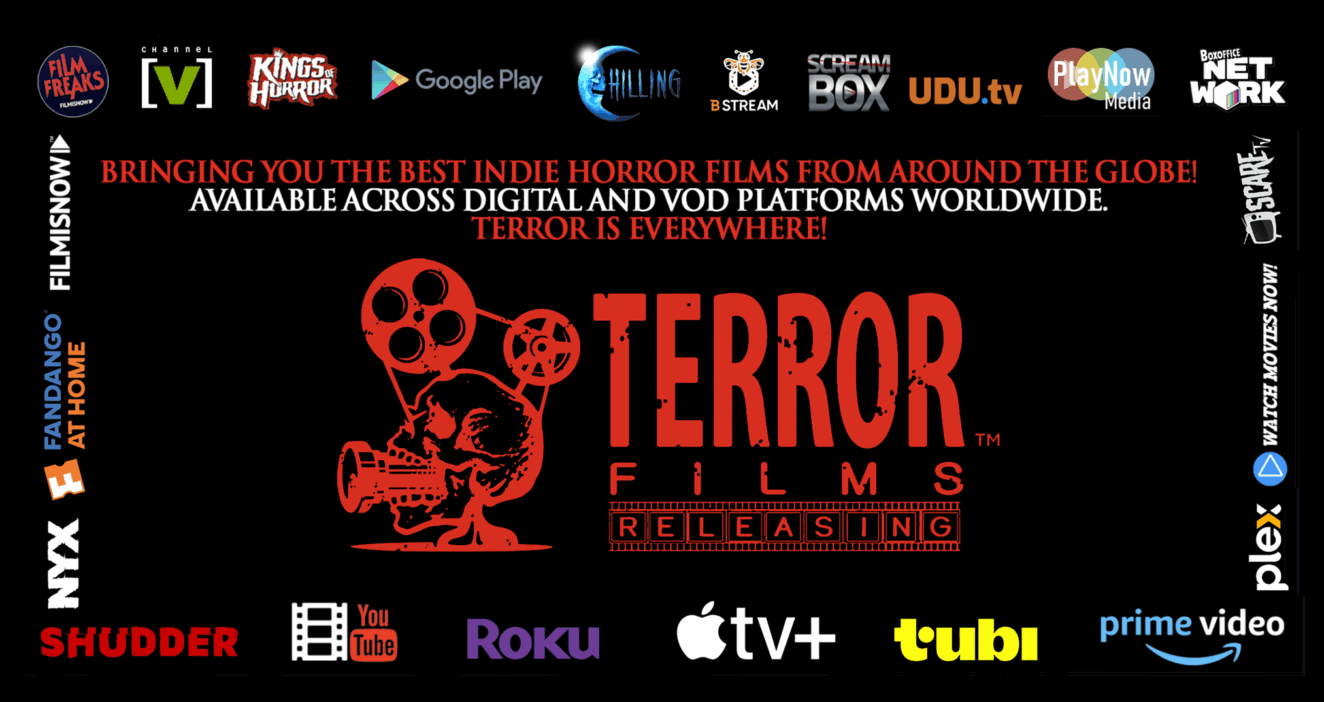
With over 150 movies released in the last decade, including five Hell House LLC films, seven original films, (with an 8th in post), over 40 direct platform partnerships worldwide (and counting), multiple merchandise partners including their own shop, their Official AVOD YouTube Channel, Shocks and Docs which boasts nearly 80,000 subscribers amassed over the last several years, a recent acquisition of the 10/31 Halloween anthology film franchise.
Producer Rocky Gray shared his thoughts on deciding to sell the 10/31 franchise to TFR:
“When I set out to find digital distribution for my first Halloween anthology film, 10/31, Terror Films was at the top of my list and lucky for me, they accepted me. I have continued to be a part of the Terror Films family of filmmakers ever since, releasing all of the 10/31 films proudly under the Terror Films banner.
Now five years and four films later, Terror Films is the exclusive owner of the digital rights to all of the 10/31films, and I couldn’t be more excited to see where they take it. Happy Anniversary Terror!”
There is also a twenty-picture folklore documentary film partnership with Small Town Monsters. Head of Small Town Monsters, Seth Breedlove, had this to say about the 20-picture deal:
“We’re thrilled to be teaming up with Terror Films again. About eight years back, we signed one of our first distribution deals with them, and looking at how far things have come since then, I can honestly say we owe a lot to that partnership. Those early releases found an audience in part due to the work that Terror Films put in.
Breedlove adds: “Getting the chance to expand the reach of our newer titles with them feels a bit like coming full circle. The difference now is that we know we’re working with people who care about the films and the filmmakers behind them—something that’s getting harder to find these days.”
Terror Films Releasing is showing no signs of slowing down, and if you ask CEO, Joe Dain, they are just getting started. iHorror had an opportunity to speak with Dain about Terror Films beginnings and what’s next for the indie genre label:
iHorror: Congratulations on a decade of horror! When did you first become interested in horror films?
Joe Dain: When I was a kid, my Dad always had on classic movies from the 40’s and 50’s. He loved horror films like The Attack of the 50FT Woman, The Mummy, Creature From the Black Lagoon and pretty much anything starring Bela Lugosi, so I was exposed to horror movies at an early age. As I got older, I watched and fell in love with horror films that are now considered iconic and classics in their own right, from Friday the 13th, Nightmare on Elm Street, Rosemary’s Baby, Poltergeist, Psycho, The Omen, IT (Both the TV and new version), The Exorcist, Jaws, and The Shining to name a few. I mean, honestly the list goes on and on, which is why I find it amusing and even a bit perplexing when someone asks me what my “favorite” horror movie is.
I don’t know how it’s even possible to realistically settle on one film when there are so many good ones. Even considering a film I recently watched, like Bring Her Back with Sally Hawkins and Jonah Wren Phillips, who gave an utterly terrifying and disturbing performance as Oliver! I loved it. Again, I could keep listing movies that have resonated with me, but this article would quickly become more like an essay!
How did Terror Films Releasing start?
My colleague and business partner Jim Klock and I had been working together for several years at another company, which was producing mostly star driven, yet riskier elevated art house films. While Jim oversaw Acquisitions and Development, I was in charge of overseeing Production and Finance. This also meant dealing with foreign sales agents, as well as being involved in many of our domestic distribution deals for our films. It was around 2014 that I first started to really notice a shift in the market.
Movie stars were not landing us the foreign sales they once did and the advances from domestic distributors started to dwindle as well. It was around this time that I pitched to the team of pivoting into digital distribution and specifically horror. Having spent almost 5 years as the head of production for Full Moon Features (Ghoulies, The Puppet Master Franchise) and having produced some hilarious films like The Gingerdead Man starring Gary Busey and Tommy Chong in Evil Bong, I got to experience first-hand the incredible fandom within the horror community. After going over the pros and cons, we placed the wheels into motion and haven’t looked back since.
What has been your most successful film to date?
Many would say the Hell House LLC franchise, and to a degree, they would not be wrong. However, we’re also talking 5 films over the last decade. Between the filmmaker’s story telling abilities combined with our marketing efforts and platform relationships, we’ve been able to turn that little indie franchise into a juggernaut no one could have foreseen. That said, we’ve been able to partner with some incredibly talented filmmakers over the last decade and have quite a few success stories in our library.
From our own originals like The Chosen, which was licensed by Netflix, (a near impossibility to pull off today), or Trace, which premiered as an exclusive on Redbox when that actually meant something. Even our original anthology Patient Seven, after almost a decade, continues to be one of our best performing films quarter after quarter.
However, it’s the films we have acquired over the years that have helped us build our reputation as a reliable source of eclectic, indie horror films. From Inner Demon, Savageland, The House on Pine Street, Dead Body, Talon Falls, Be My Cat: A Film for Anne, The Taking of Deborah Logan, have all been successful in their own right. We’ve had sleeper hits like House of Purgatory, Night of Something Strange, Last Radio Call, The Trip, Life of Belle and Dark Entities, just to name a few, which horror fans have embraced.
At the end of the day, I don’t think it’s that easy to define success because it can mean different things to different filmmakers. For many, yes, it’s making money. After all, we are in business to make money for our filmmakers, but for some it’s the level of exposure from press outlets, positive reviews, festival accolades, or how many platforms we’ve managed to get their film on, including what some filmmakers consider the holy grail of horror platforms, the ever-elusive licensing deal with Shudder.
In this ever-challenging landscape where horror content is over saturated in the market and overloading the platforms, it’s no small feat to help these indie horror films find their way and actually make money for our filmmakers. Nothing makes me happier than when we are sending filmmakers royalty payments quarter after quarter.
In what ways are independent films better than big studio blockbusters?
Indie horror has the ability to break barriers and go places many Studio level films can’t or won’t go, which can often be to cookie cutter and safe. Whereas indie horror can often be edgier, and in many cases, scarier because there is no budget for extravagant make up effects or CGI and rather the filmmakers have to get creative and rely on the one and only rule that matters when making a horror film, scare the shit out of the audience. Whether that’s through solid storytelling, good acting, good old fashion jump scares, blood and guts scares, or one of my favorite approaches – the less is more scares where you allow the audience to freak themselves out.
That said, we’ve seen major movie exhibitors take chances on indie horror films over the years. Everyone always thinks of The Blaire Witch Project and Paranormal Activity, and for good reason but if you look closely, there are more that have broken down that door like, Saw, Open Water, It Follows, Skinamarink, and let’s not forget how Terrifier 3 blew the doors off the Box Office.
These are just a few examples of indie films with small budgets but made a big impact and found a wide screen audience. Love or hate them, for those of us in the true indie horror space, we need to celebrate their accomplishments because every time this happens, it opens the door for the entire indie horror community. Even for us, Hell House LLC: Lineage on a meager $175,00 budget and a very limited release, has managed to rake in over $650,000 in the box office. That’s a huge accomplishment.
Terror Films catalog is massive, what criteria do you look for when deciding to distribute a film? How about produce one?
We actually only have 152 movies currently released. That may seem like a lot, but it averages out to about 15 movies per year over the last decade. Now, of course this does not include the films no longer under the banner due to terms ending or the films yet to be released, but when most indie distributors are releasing anywhere from 50 to as high as 125 films per year into the streaming space, I’d say we’re more on the boutique side than most. Over the years we’ve certainly said no to as many films we’ve said yes too but it’s not because we think we have it all figured out.
Trust me, we’re the first to admit that we (nor anyone) in this business knows anything. If we did, there would never be a failed film again. When it comes to selecting films, Jim is at the helm of that. He’s always the first one to watch a film submitted to us and I mean he actually watches them all the way through. When I asked him why he watches them all the way through, he simply said, “you never know when it might get good and catch you by surprise”. Aside from trying to select films that have a solid beginning, middle and end and are ideally technically well executed, we also do our best to pick films that are different than anything else we have in our library.
This is no easy task when it comes to horror with so many common tropes, but I believe we’ve managed to do a pretty decent job over the years. As far as producing again, we recently started to venture back into that space. Jim worked out a partnership with the gang at The Ninth House and so far, we’ve produced 3 films with them, including Restitution, which we released the end of 2024 and Terror Tales: Poetry & Death Volume 1, a horror anthology we released on October 10th, with part 2 set to be released early next year.
How is your company different than others?
I’d say there are multiple things that make us stand out from other boutique distributors in the indie streaming space. First and foremost, we’re a horror company that has spent the last decade building a recognizable brand so if you have a film that fits within the horror genre, being under our banner automatically elevates your film’s awareness with the horror audience. We’re at a place now that there really isn’t a horror news outlet that matters who doesn’t cover us.
I mentioned earlier that we’re not a high-volume distributor and that matters to a lot of our filmmakers. Because we’re more curated and have so many great films, we spend time actually promoting them over the entire course of their term with us. This has allowed us to hold the line and not become what I often refer to as a content dump company. We foster every film and continue to place them on new platforms any chance we can, and we promote, promote, promote. We drop trailers, posters, stills, clips, and push for reviews.
When a film starts to go live across the platforms, we launch paid boosted ads on Facebook, TikTok, Instagram, Google Ads, etc. We keep a full-page ad in every edition of Scream Magazine, which all of our films get promoted in. We do paid ads with platforms like Rue Morgue and Fangoria in order to tap into their hundreds of thousands of followers. More importantly, not a single dime that we spend on marketing is rolled over to our filmmakers. That’s our skin in the game.
It’s our way of thanking them for taking a chance on us when we know they have other options. We also sponsor film festivals, show up at the horror conventions, do podcasts, participate in filmmaker forums and create promotional banners and videos, all in an effort to keep the brand relevant, which in turn helps our filmmakers. On top of all of this, we are an employee-owned company which means everyone on the team has a vested interest in the company’s success, which is based on our filmmakers having success. We’re in it together.
Why do you think horror fans are so passionate about their genre?
It certainly varies person to person, but horror films are not only entertaining, they can so often be an escape mechanism. They allow us to disconnect from our lives for that 90 minutes or so. I personally think it’s fun to be scared and get that adrenaline rush. I’ve even found they can help me destress. Horror films can also cross genres like no other genre, managing to be scary, funny and even dramatic and somehow pull it off. There is nothing better to me than that feeling of fear you have right after the credits roll on a horror film that causes you to turn on all of the lights in your house.
Is there one movie in your collection that people may have overlooked you feel deserves a closer look?
This is a great question and one we discuss internally when we see some of these awesome films under our banner struggling to find the audience. There are more than several I’d love the horror fans to give a chance. I won’t name them all, but here are some: Worst Laid Plans, Derelicts, Head, Beyond the Chamber of Terror, Sapien, Grieve, Zero Hour, and I Dream of Psychopomp. That said, I would encourage indie horror fans to check out all of our films. We have such a wide variety of them from so many talented filmmakers!
What are your feelings on AI? Not as an effects tool, but using it to write full screenplays?
AI is here whether we like it or not. It’s transforming every industry, not just ours. It’s driving innovation and creating new opportunities. It has the ability to improve all of our skill sets and make our lives easier but with any new technology, we either have to get on board, learn to use it in a way that makes sense for us, or risk falling behind.
It’s a personal choice all of us need to make for ourselves, that includes whether someone chooses to use it as a screen writing tool, or for marketing, or to create poster art or even assist with filmmaking, but I use the word “tool” for a reason. AI should be used to enhance natural human ability and creativity, not replace it. It’s far from perfect and still requires human involvement and inspiration. We also caution filmmakers on submitting completely AI generated art or films with AI generated scenes as we’re seeing more and more platforms reject these in the QC process.
We recently had a film that we could not get past the QC at Tubi due to an AI generated segment. In addition, every single AI generated poster has to be rebuilt on our end to pass the QC because those files are almost never layered and that’s something we’re having to do internally. So again, AI can be great as a tool, but it should never be the heart and soul of someone’s work.
What’s the most important thing you’ve learned about filmmaking/distribution in the past 10 years?
I said this earlier and what I’ve learned is that no one knows a damn thing in this business. I’m not suggesting that experience doesn’t count for something. I’ve learned a lot along the way from my many mistakes as well as from listening to those smarter than me. I’m always happy to share any advice or guidance I can, but it doesn’t mean it will help with someone else’s journey in this crazy business.
There is no formula to success, no handbook or course or film guru whose advice you can follow and be successful. At the highest levels in this industry, we’re taking what we’ve learned and making educated guesses at best. There is no one or right way to make a movie and there is certainly no one or right way to distribute a movie that will guarantee success, whether that is with a distributor or by self-releasing. It simply doesn’t exist and anyone saying otherwise is full of crap. Follow your gut, take risks, avoid the nay sayers, do your homework and educate yourself but above all, do this because you love it. You won’t survive this industry if you don’t love what you’re doing.
If there is one bit of advice I can share, which I can say without a doubt is actually vital to anyone’s success, is to surround yourself with people who are like-minded, hardworking, dedicated, know more than you and are not afraid to challenge you. TFR would not be standing a decade later if not for Jim Klock, our COO and VP of Acquisitions, Brad Geiszler, our VP of Technical Operations, and Ryan Brookhart, our VP of Graphic Design. These guys have been here since day one and stuck it out when things got rocky but instead of bailing when the waters got rough, they stayed the course. Adding to that is our amazing VP of Marketing and Filmmaker Relations, Sarah Clingenpeel and our VP of Day-To-Day Operations, Frankie Rai. You’re only as good as the people you surround yourself with and Ten Years of Terror is only the beginning!
What’s next for Terror Films Releasing? Any new exciting projects we should watch out for?
Oh man, after 10 years how about a vacation? In all seriousness, one of the most exciting things for us has been the new, direct platform relationships we’ve established in 2025, allowing us to create additional revenue streams for our filmmakers as we venture into 2026 and beyond. I’m also excited about the opportunities we’re seeing in the theatrical space for indie horror specifically. We’re currently working on something for 2026 that could open up the possibility of our films getting exposure theatrically in a way we have not seen since launching the company ten years ago. The landscape is always changing and it’s vital we keep our finger on the pulse and take every opportunity that arises.



Interviews
‘Behind the Mask’: Nathan Baesel Exclusive Interview!
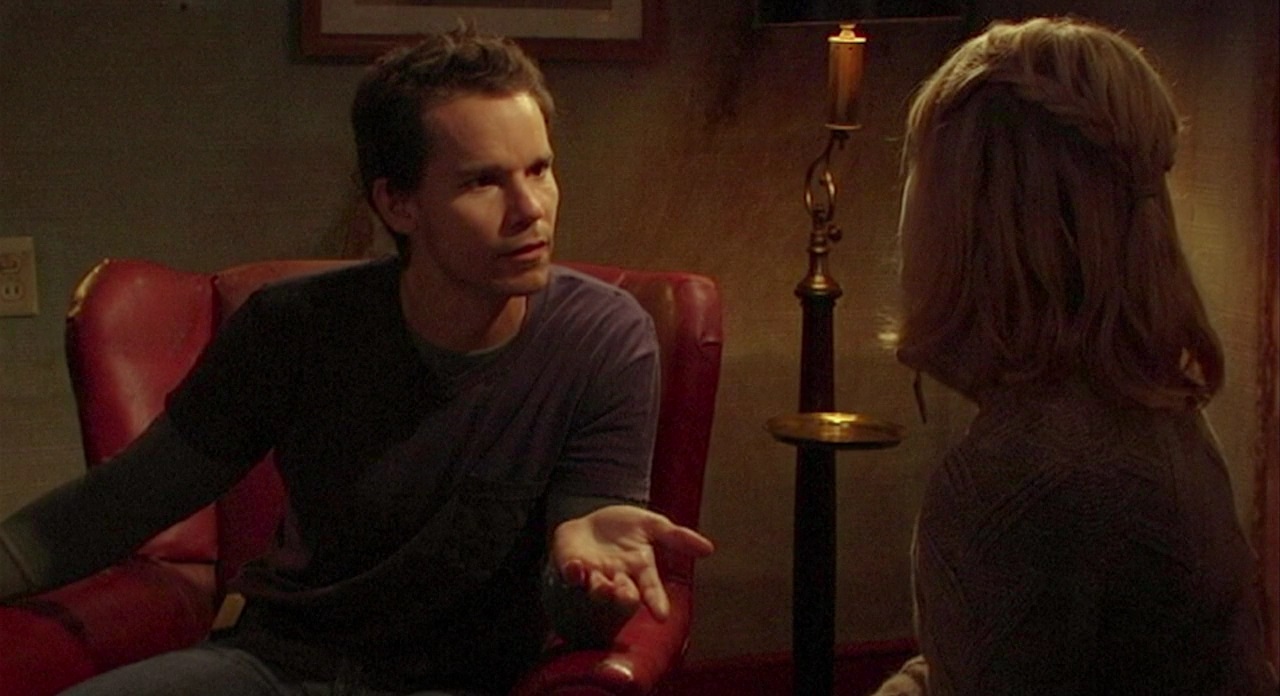
Nathan Baesel portrays the controversial Leslie Vernon in 2006’s Behind the Mask: The Rise of Leslie Vernon. I say controversial because he has all the hallmarks of a savage killer. Vernon is dedicated, well organized, and ready to add his name to the top of the slasher ranks. However, he is also a quirky and likable. He is the type of guy you wouldn’t mind sitting down and having some beers with.
We at iHorror had the chance to catch up with Nathan during his busy schedule of conventions and promotion for the long anticipated sequel, Behind the Mask 2: The Return of Leslie Vernon.
Amongst news of the sequel, he talks with us about his interest in horror, his undying appreciation for his fans, and working with veteran Robert Englund.
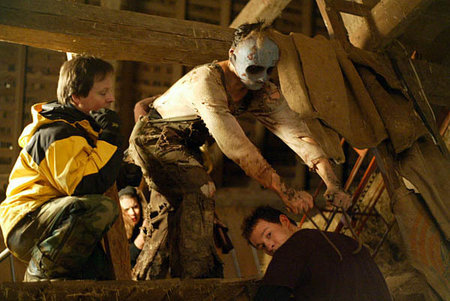
iHorror: Thank you Nathan for talking to us at iHorror.com! Fans are so excited knowing Behind the Mask 2: The Rise of Leslie Vernon is FINALLY being made! Many of us have been waiting a very long time. Certainly no longer than you, director Scott Glosserman, and writer David J. Stieve!
Nathan Baesel: Thank YOU! It’s only happening because fans have been keeping it alive and part of the conversation all this time.
The Movie that Started it all
iHorror: The original is such a classic. The script, the execution, the balance of horror, comedy, and the respect and understanding of the genre; it all makes a movie like no other.
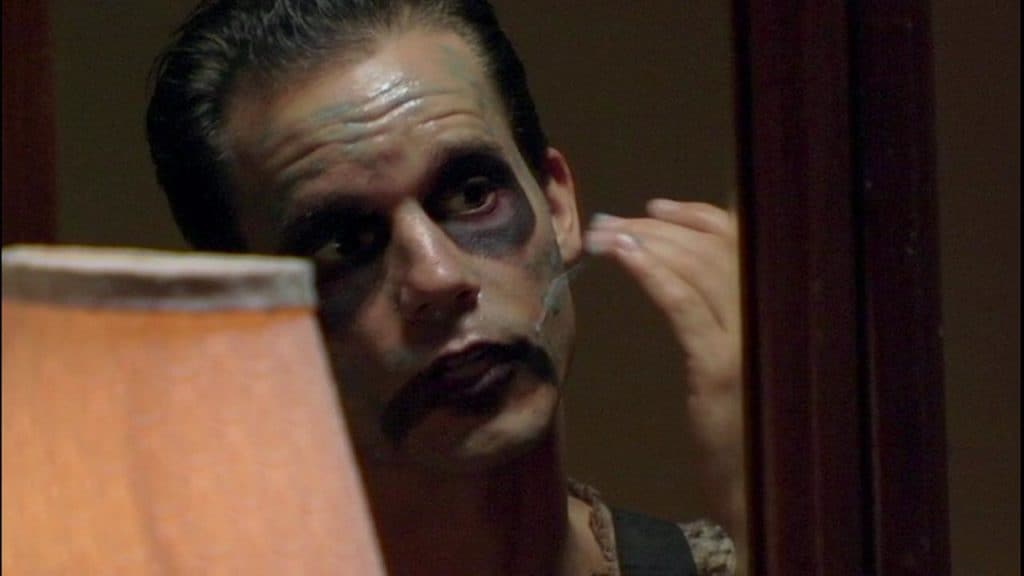
Are you a fan of the horror movies referenced in the original? Or did you have to dive into research mode when preparing for the role?
Nathan Baesel: Summer 1986 I watched A Nightmare on Elm Street which taught me a healthy respect for the genre, like nearly drowning teaches a healthy respect for the ocean. Child’s Play and a few others topped off my education, but after we made BTM I discovered Svengoolie and was able to introduce my sons (and myself) to the classics. I’ve been a student of the genre ever since.
iHorror: What were your original thoughts while reading the script?
Nathan Baesel: It was so clean. It was informative without being too wordy, it was funny and scary, everything planted at the beginning paid off at the end and I understood everyone’s motivations throughout. I knew instinctually how to play that script and, besides needing an acting job, I was especially hungry to do BTM because I didn’t know if I’d ever come across a script that good again.
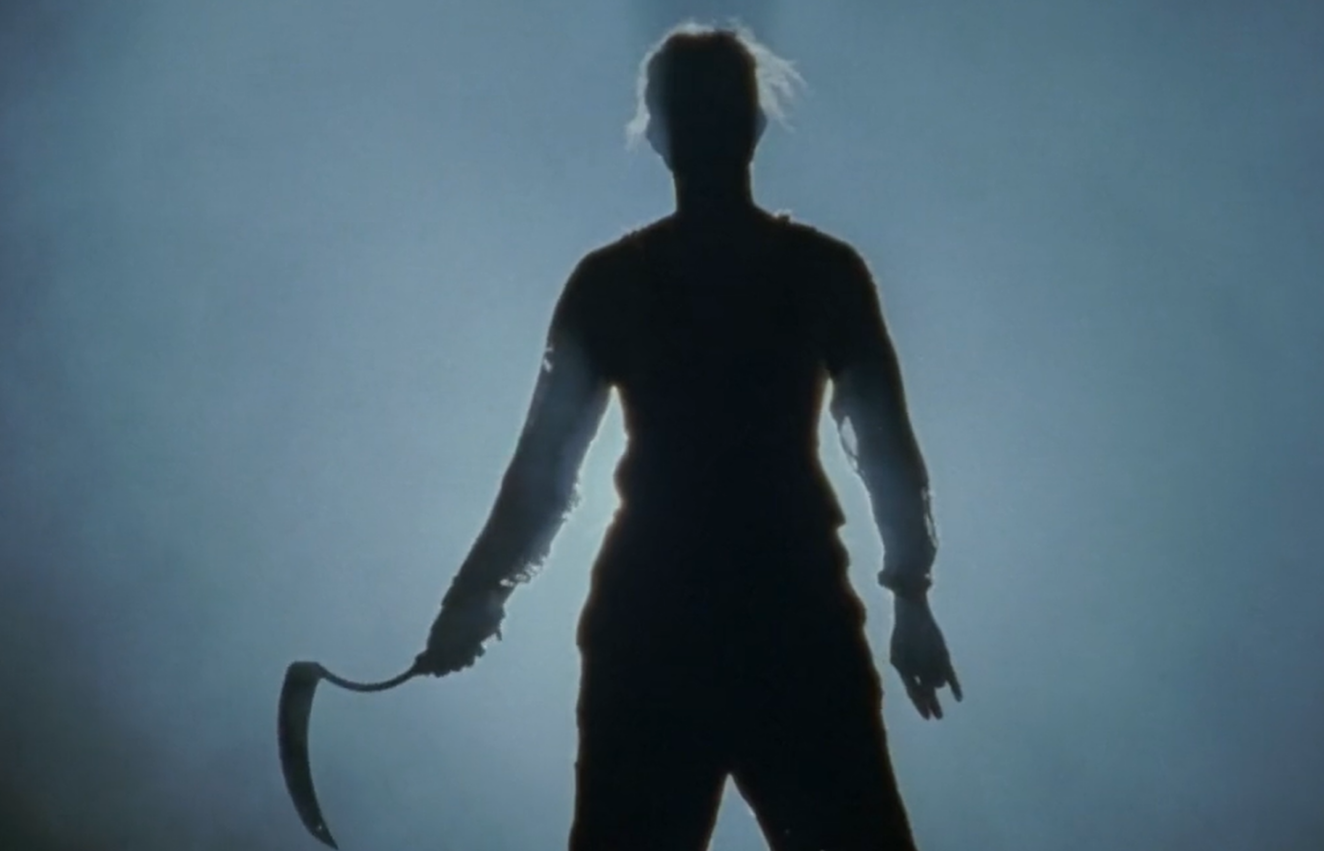
iHorror: I never thought I’d describe a slasher killer as lovable, but Leslie Vernon truly is! Where did you find your inspiration for his unique personality and quirky behavior?
Nathan Baesel: My inspiration was all the guys auditioning before me that I could hear on the other side of the casting office’s paper-thin walls. Their choices were “angry” and “menacing” and “evil” and they sounded silly and unbelievable from the waiting room. On my turn, the contrarian in me tried to steer things in the opposite direction and see if there was anything to be mined. It turned out all gems.
iHorror: What is one particular scene you feel captures the character of Leslie Vernon?
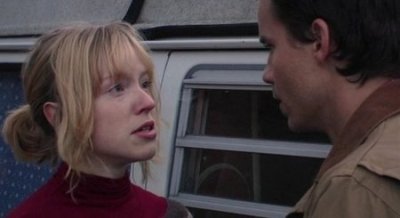
Nathan Baesel: One of the scenes Angela and I auditioned with was the scene next to the van where we catch a glimpse of the man behind the mask. The sudden turn from playful to violent is undeniably menacing but it’s earned and not posturing simply for effect. I was so lucky that Angela was selected to be my playmate because that scene set the high quality of our play for the entire shoot.
Powered by the Fans
iHorror: The movie really found its place among the hearts of horror fans when it was released for home viewing.
You are attending Crypticon in Seattle this upcoming weekend, May 1-3. What has meeting fans at conventions been like for you?
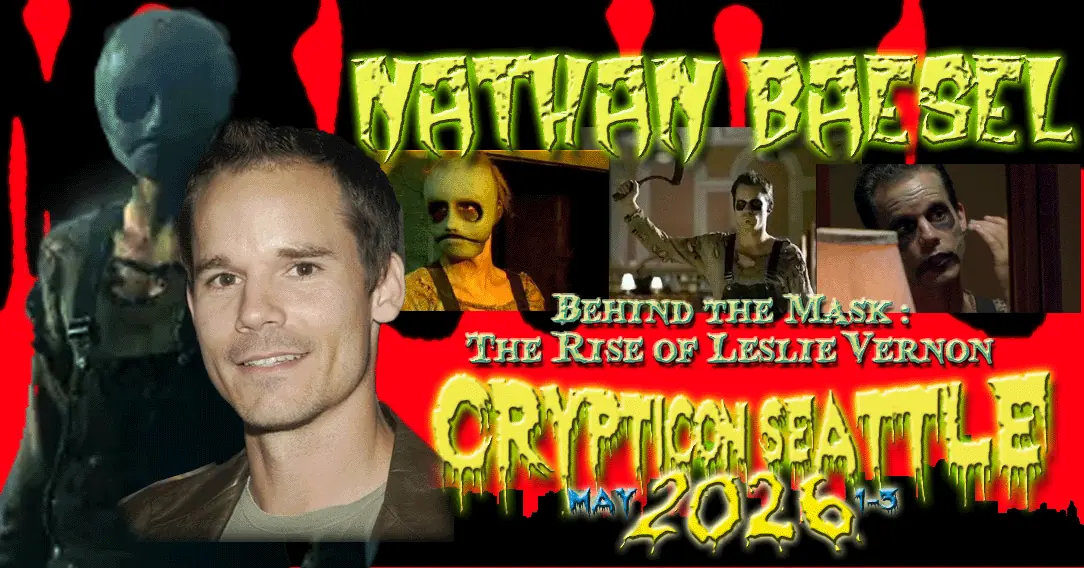
Nathan Baesel: I’m impressed every time by my fortune at having been a valued collaborator on a project that has stayed with people and only gets more attention, more affection. I see all of my appearances as an opportunity to try to give back to folks who have kept us relevant all these years.
iHorror: Have you seen anyone dressed up as Leslie Vernon yet?
Nathan Baesel: Oh yes, I get pics all the time on social media. We had a 20th anniversary screening last week and my buddy Zoran from Kill Count asked if I would mind him attending in costume. I was delighted by the idea and for all the folks taking photos that night, he was far more popular than me.
The Sequel that Will Not Die
iHorror: The internet horror fanbase exploded when the news was announced that the making of Behind the Mask 2: The Return of Leslie Vernon is in development. When did talks about a sequel begin?
Nathan Baesel: Talks have been in varying degrees of seriousness since 2008! So many things needed to be in place to make the massive machine of a production realistic, not the least of which was lots of money. David Stieve wrote countless scripts to accommodate changing times and creative interests. And they were all great scripts! But it wasn’t until the end of last year with the current draft completed that the sequel machine really started back up.
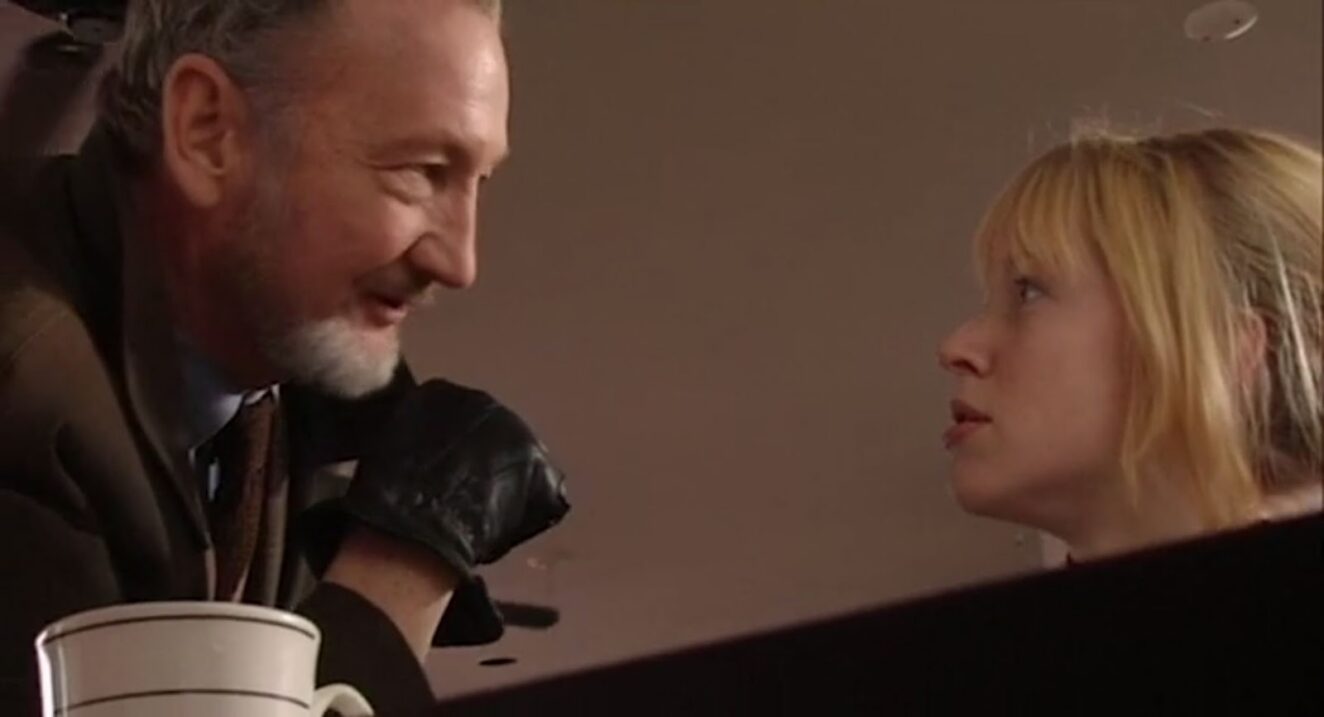
iHorror: Robert Englund has been announced to return to the sequel as Doc Halloran. Furthermore, director Scott Glosserman said Robert will have a much meatier role this time around. What do you hope to see in the development of Doc Halloran’s character?
Nathan Baesel: Robert is such a special presence and utilizing him to the max is what fans want from us and it’s exactly what they’ll get. Halloran gets a lot of light moments which are such a delight with Robert’s expert delivery but Halloran is a harbinger of doom and he’s back to make sure everyone knows something wicked this way comes.
iHorror: When you were filming the original, was there anything you wished you knew about your character that will possibly be revealed in the sequel?
Nathan Baesel: I suppose I wish that I knew how to be truly present and appreciative of the good thing we had. But I’ve needed every one of those 20 years since to learn how to do that and now I’m getting the gift of a second chance.
Full Steam Ahead
iHorror: Where can we keep up to date with news of the sequel as well as your future projects besides the Facebook group for Behind the Mask 2: The Return of Leslie Vernon.
Nathan Baesel: I try to keep my Instagram and Facebook pages current but you can jump on our Kickstarter to help make this magic.
iHorror: Thank you so much for taking time to talk to us at iHorror, and we cannot wait to see Behind the Mask 2: The Return of Leslie Vernon!
Nathan Baesel: We are all massively appreciative of you and everyone helping to keep the Leslie love alive. Thank you and we’ll see you on the big screen!
Interviews
‘The Serpent’s Skin’ and Who Gets to Hold the Camera

Alice Maio Mackay, Alexandra McVicker, and Avalon Fast on what it means to be trans in horror, and why The Serpent’s Skin is arriving right now
Horror has a long, complicated history with trans bodies. Most of it is exploitative. Some of it is genuinely interesting. Almost none of it has been made by trans people. The genre built its mythology around certain kinds of transgression, and trans bodies got folded into that mythology in ways that ranged from lazy to actively harmful. The killer in drag, the twist reveal, the monster whose horror is rooted in a body that doesn’t match expectations.
That history sits in the background of every conversation about trans filmmakers working in horror right now, whether anyone mentions it or not.
Alice Maio Mackay is twenty-one years old and has made six feature films. Her latest, The Serpent’s Skin, opens in theaters across New York, Los Angeles, and a run of cities that surprised even her. Alexandra McVicker, who plays the film’s lead, is a trans actress known from Vice Principals who came out publicly after that role and stepped in front of the camera again for the first time here. Avalon Fast, who plays the other half of the film’s central relationship, is a filmmaker in her own right and found the production arriving at a personally significant moment.
I talked to all three of them before the theatrical run. What follows is about the film, but more than that it’s about what it looks like when trans people are the ones deciding how trans stories get told.
The Demon Comes From Inside
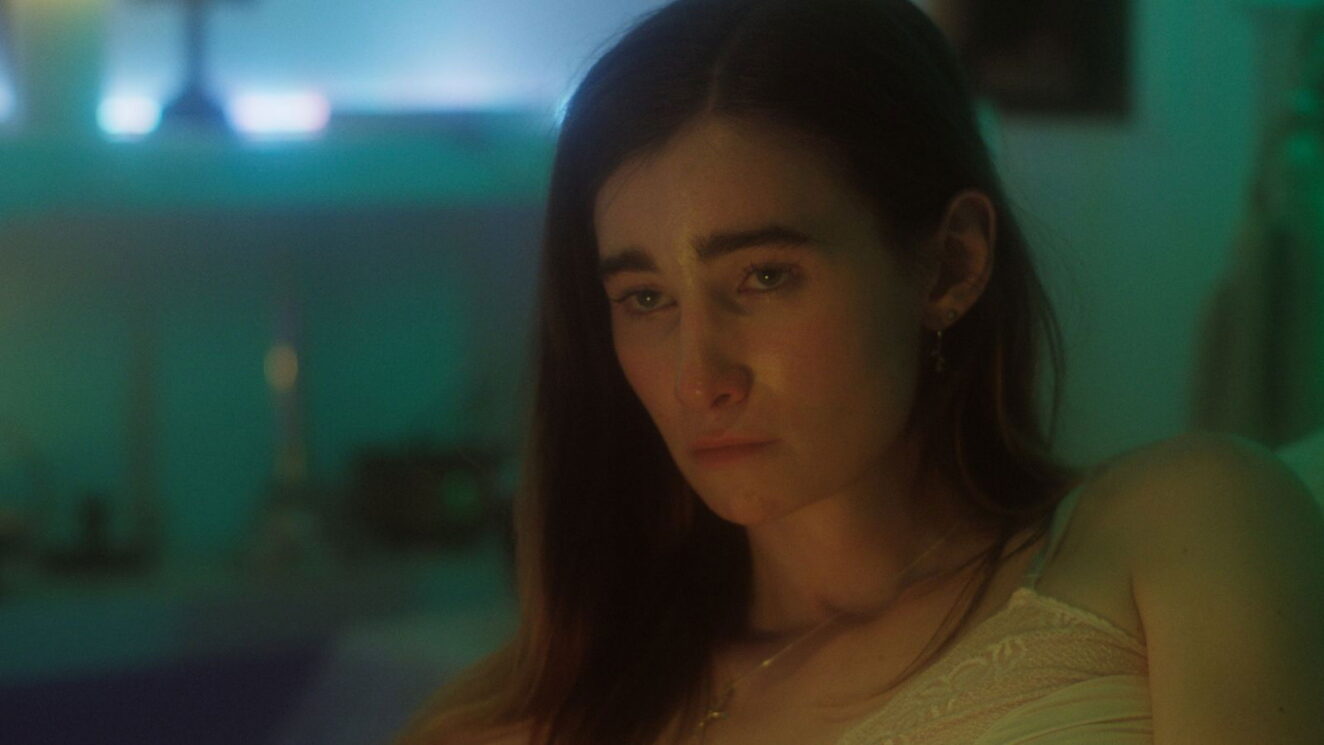
Mackay’s earlier films locate the threat externally. Transphobia becomes a vampire in So Vam, an alien body-horror invasion in T Blockers. The monster is always something coming for the trans characters from outside. In The Serpent’s Skin, for the first time, the demon is summoned from within. It rises from the unresolved insecurities the central characters are carrying into their relationship. I asked her why she made that shift.
“I think it was just time to part from my usual thing. The last few films it’s kind of been like the political landscape, the outside being the evil and the villainous thing, and the characters have to defeat that. This time I wanted to take it inwards. It’s still a political movie, but I wanted the queer characters to look inwards and defeat their own traumas and personal demons, and how those might transpose onto others around them.”
That’s a more exposed kind of filmmaking than locating the danger in the world. The world being the enemy is legible and satisfying. Your own unhealed wounds being the thing that summons the danger is something else.
The film is also consciously in dialogue with the late-90s supernatural girl-power television Mackay grew up watching. Buffy, The Craft, Charmed. Those shows had queerness present but rarely named, power that read feminist without ever quite committing to the word. I asked what she took from them and what she wanted to correct.
“There are issues with some of those shows. Often you look at Buffy and like, Joss Whedon was the creator, there are those kinds of things. But for me I wanted to make the film through the lens of those shows, taking the tropes and sometimes the hidden queerness, and just make that the text. Make it as explicit as possible rather than hiding anything or keeping it to metaphors, which those early shows did with their queer themes.”
That’s the project in a sentence. She takes the nostalgic framework and finishes the sentences those shows left open. The queerness is text, not subtext. The trans identity is the weather the story lives in, not the twist at the end.
The Room That Gets Built
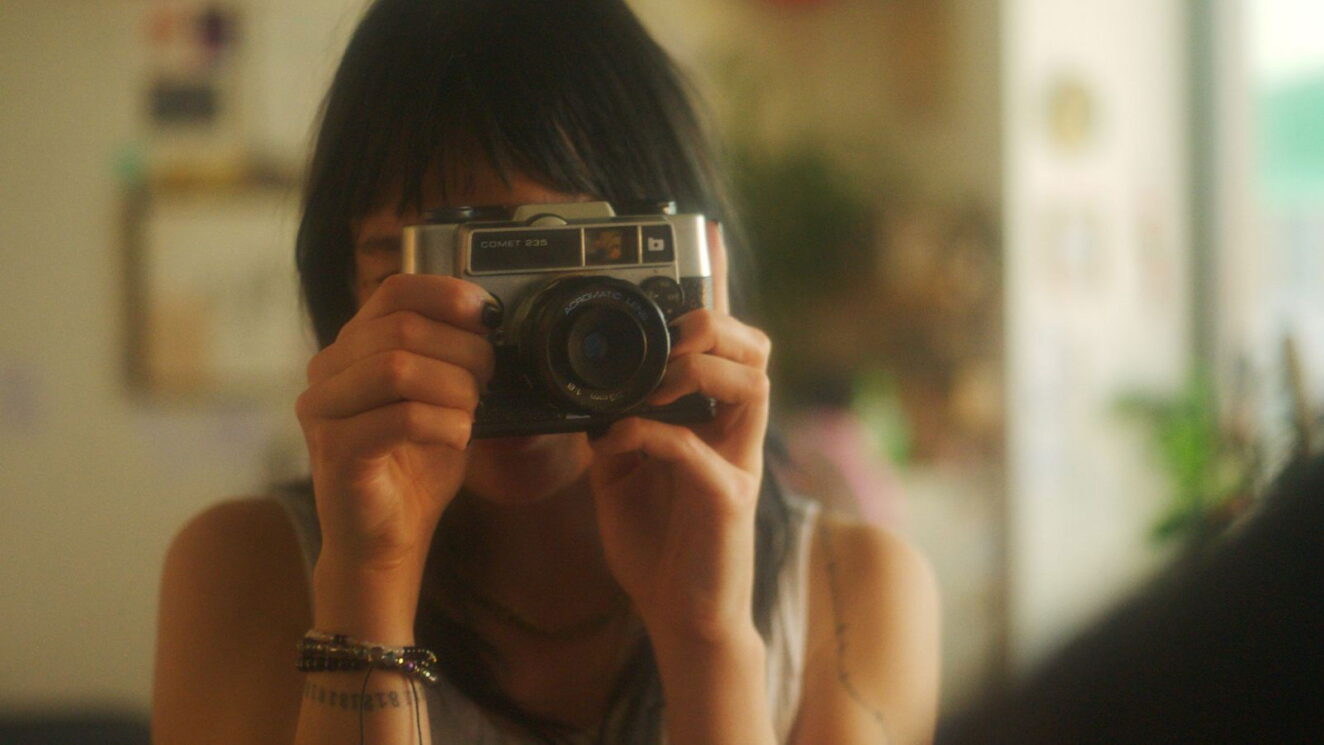
Mackay is public about her commitment to queer and gender-diverse cast and crew on every production. Most interviewers ask her why. The more revealing question is what it actually changes in practice.
“I’ve been on sets that haven’t had those environments and you can still make something great, but you still have to explain why you’re doing something, what this means. Whereas if you have a predominantly trans or queer cast and crew, it kind of eases off the pressure. You all believe in the story, you all understand the themes and elements, no one’s having to stop at a scene and be like: what does this mean.”
Fast, coming to the film as a director herself, described something similar from the other side. Her director brain essentially switched off once she was on set, which she credited to the environment Mackay built.
“I went into this just purely as an actor and that is what I wanted to do, and I really found as soon as I was on set the background of production had nothing to do with me. I didn’t feel any responsibility for it and I was able to just completely be in the world of being an actor. Alex and I were big divas on set. We definitely didn’t have any role in the directing side of things.”
The Weight of Being a Corrective
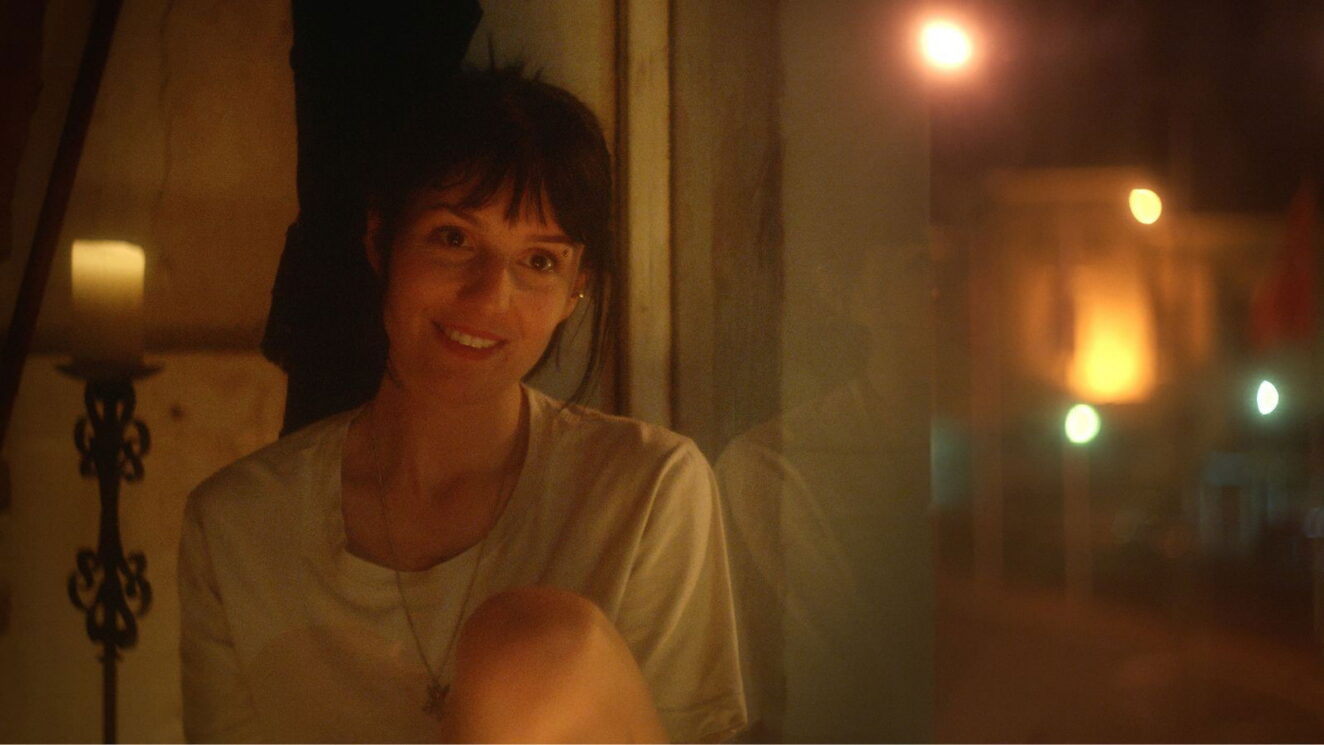
The harder version of this question: horror has a long history of using trans bodies badly. Mackay is part of a generation of trans filmmakers shifting who actually holds the camera. Does she feel that weight?
“I don’t know. I’ve never really felt that pressure, or a pressure in that sense. For me, ever since I was a child I’ve always just wanted to be a storyteller and tell stories. From my first feature to this one, I’ve kind of just wanted to write what I wanted to see reflected on the screen and haven’t really worried too much about outside voices or pressure.”
She didn’t start making films to correct the record. She started making films because she wanted to make films, and the trans experience happened to be her experience, so that’s what ended up on screen. The politics arrived as a consequence of the authenticity, not the other way around.
There’s a follow-up worth pushing on. If the audience is primarily queer people who already agree, is there a risk that the monster-as-transphobia metaphor works too smoothly? That someone can enjoy it without ever having to sit with what it’s actually about?
“I feel like it means a lot, it’s really special, when a trans or queer person has a connection to the films. But my work has played at genre festivals that aren’t queer-specific, and a lot of the audiences range from young to middle-aged men who just love horror. With T Blockers, them coming and being like: I never thought about a trans person in general, seeing them and what they have to deal with. I think that is equally special. I’m not making something educational, but it’s kind of nice having two ends of the spectrum seeing different things and picking up on different parts of the stories.”
She’s not claiming the films convert anyone. She’s saying they work on multiple frequencies, and different audiences catch different signals from the same film.
The First Time on Camera as Yourself
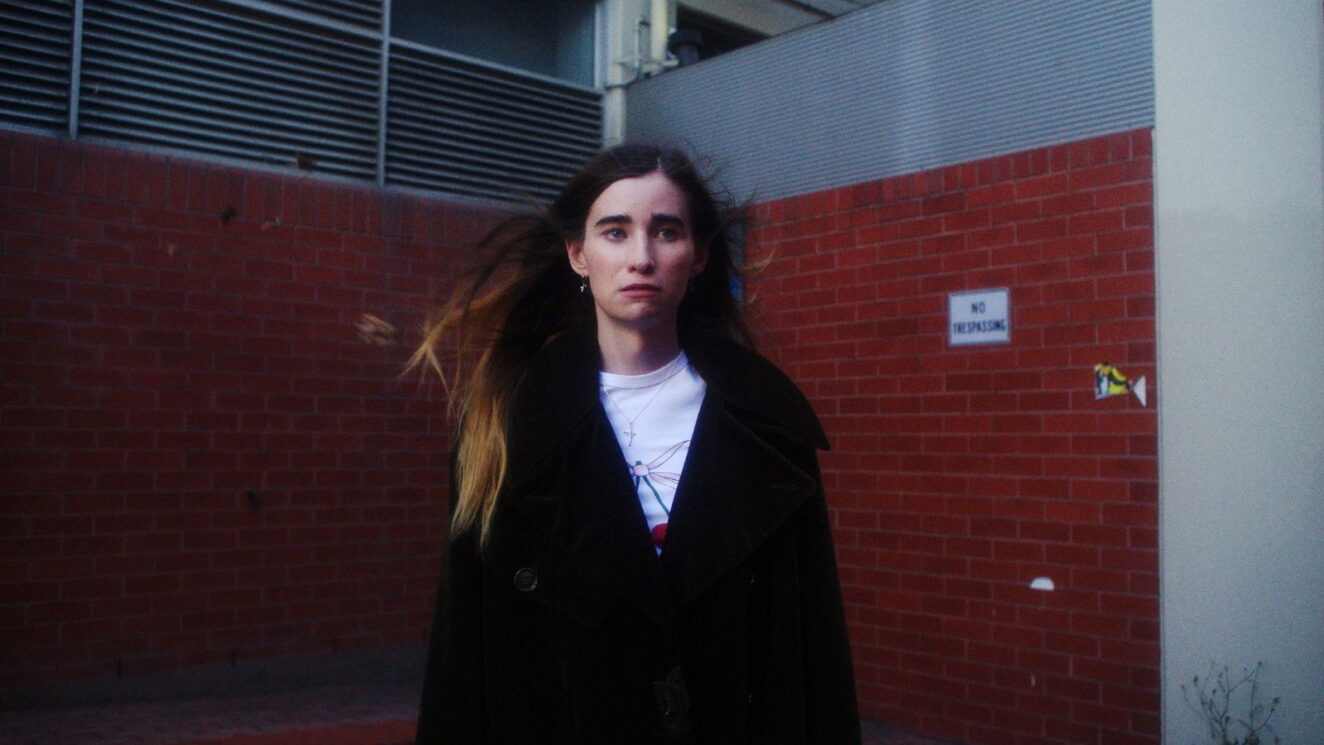
Alexandra McVicker played Robin Shandrell on Vice Principals. She came out as a trans woman after that. The Serpent’s Skin is the first feature she’s made since.
Anna’s story begins with an act of leaving: she gets out of her transphobic hometown and doesn’t look back. There’s an obvious parallel in McVicker’s own life, and she spoke to it directly.
“The theme of leaving an environment that restricted you is very true for me. I was able to explore and understand myself more when I left home, when I wasn’t around my family and the area I grew up in. That was a theme I could relate to for sure.”
On what it was like to step back in front of the camera as herself:
“Acting was such a huge part of my life, and I buried myself in it so deeply before because I felt like it was the only thing I had to explore and feel, to get away from myself a little bit. Outside of acting I didn’t care about life in a lot of ways, because I was so uncomfortable in myself. Now stepping back into acting has been really strange. My life feels so much more full in other ways that sometimes I feel really distracted, and that intense drive that I had before is still there, but it’s not the same.”
What the performance actually does is specific and difficult: she’s playing someone who is hiding, from the inside, while not hiding herself. That distinction carries the film.
Divinely Timed
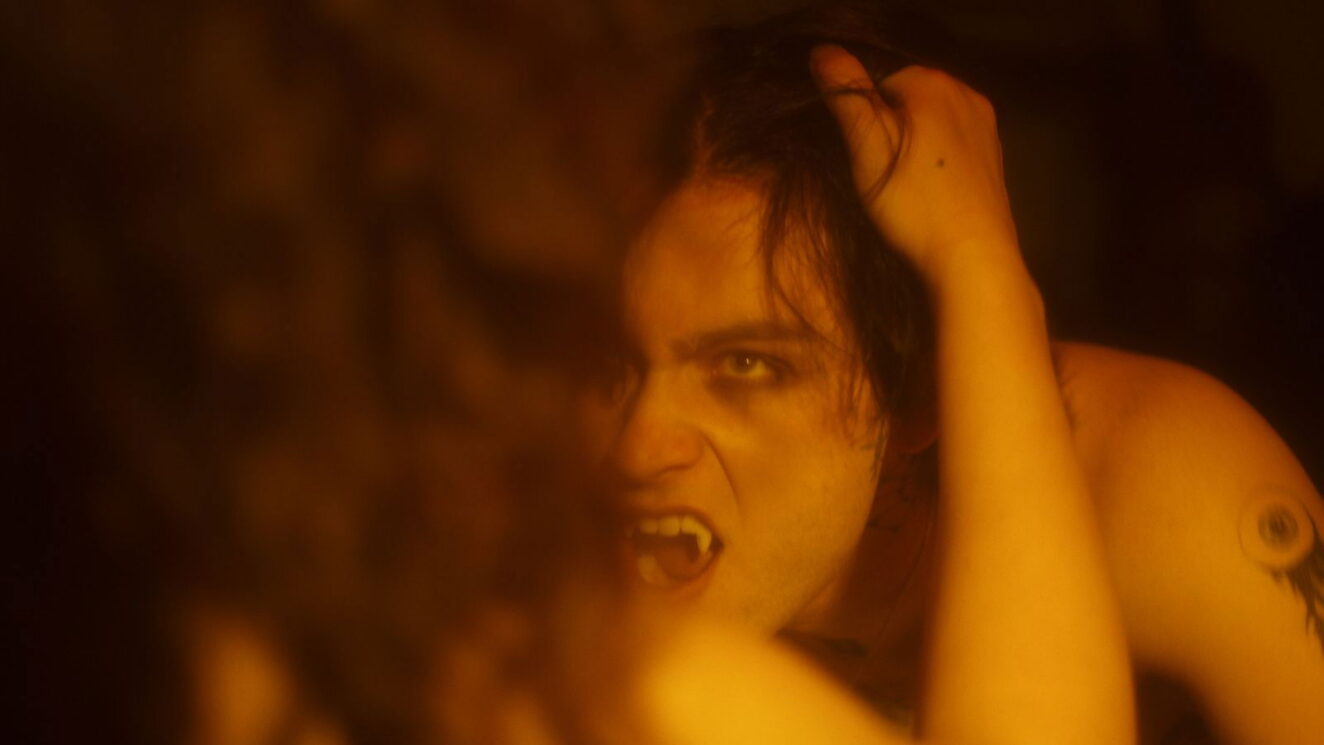
Avalon Fast directed Honeycomb at nineteen and Camp in 2025, both award-recognized. She came to The Serpent’s Skin as a peer of Mackay’s, not just as a cast member.
On what the film meant to her outside of the craft:
“It came at a really important time for me. I wasn’t necessarily closeted before, but I definitely wasn’t open as a queer person. Finding this role and having the opportunity to work with Alice and Alex felt really important to that time, completely removed from being an actor or a director. Just personally, it felt really important, and kind of divinely timed.”
On keeping Gen from going flat, since a grounded and confident character can read as inert without something real underneath:
“There was such a conflict that came up early, and it didn’t have to do with our relationship. It was something inside of me that I’d put onto somebody else, which becomes a deep conflict within the story. I think when you try to be interesting it can come off a little strange. I just tried to be really honest with her character. I resonated with this feeling of having something like evil inside of you. I think it’s a common female, or maybe just a human experience, to feel fundamentally wrong, to have this thing inside of you that you can’t understand.”
Playing Outside New York and LA
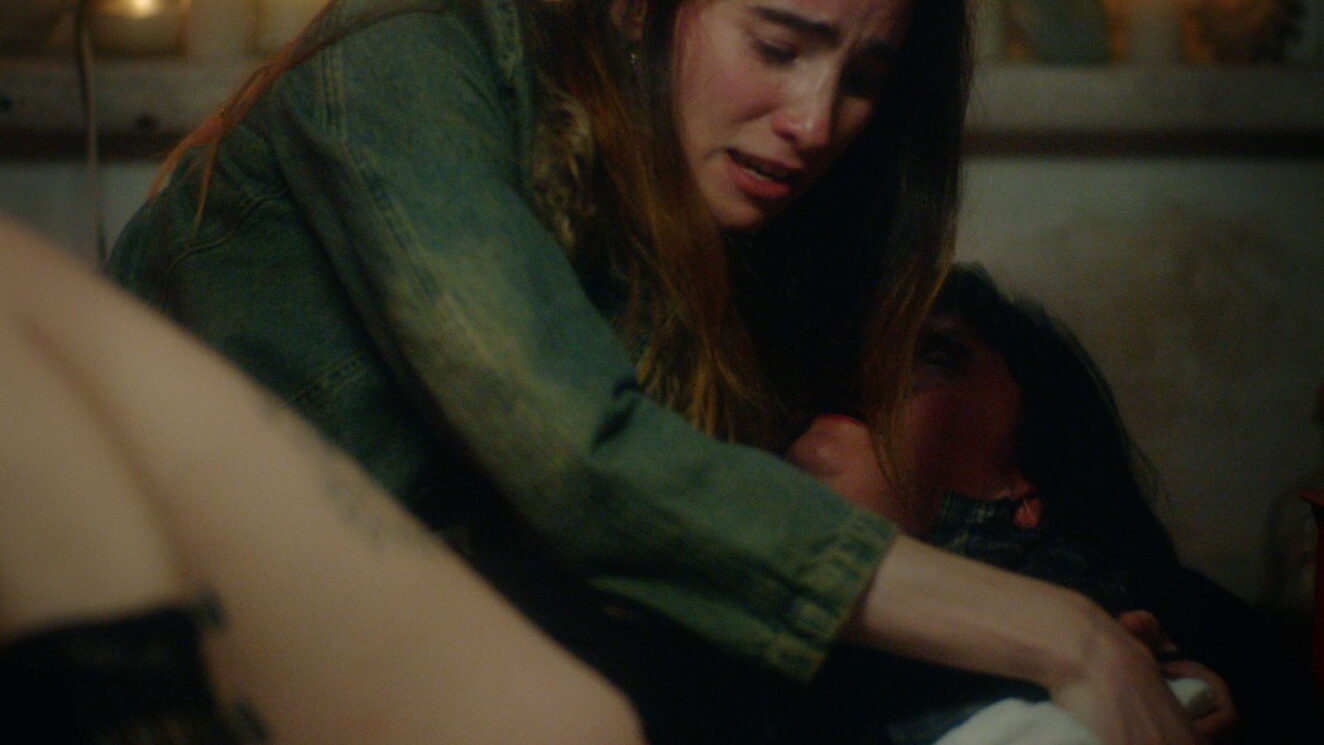
The Serpent’s Skin is opening wider than Mackay expected. It’s playing in Texas. It’s playing in cities that weren’t on the original list. Mackay called it surreal.
“It’s my largest release, and the film is playing in places I wouldn’t expect it to. There’s something really special to me that my film is playing outside of the New York and LA areas. Having that broader reach, I hope outside of queer audiences, cis straight men see the film and find it something different as well.”
Across six features, made between the ages of sixteen and twenty-one, Mackay has built a body of work where the trans experience is never the tragedy, never the twist, never the thing the film is secretly really about beneath the supernatural scaffolding. It is just the story. The horror is horror. The love story is a love story. The monster is a monster.
That sounds simple. It is not simple. Almost no one in the history of the genre has done it.
When McVicker and Fast were each asked what they want someone to carry out of the theater if they saw themselves in the film, they gave answers that rhymed with each other without having coordinated.
McVicker said: stop blocking yourself. Believe that someone else might be able to see you in a light you can’t see yourself in.
Fast said: the possibility of finding a love that feels safe and comfortable, and lets you see parts of yourself you couldn’t see before.
Both were talking about the film. Both were also talking about something else.
—The Serpent’s Skin is now playing in New York and Los Angeles.
Here’s the rundown of the theatrical dates:
3/27 – 4/2 — Brooklyn, NY – Alamo Drafthouse Downtown Brooklyn
As part of Fantastic Fest Presents showcase
** Opening night Q&A w/ Maio Mackay, McVicker, and Fast moderated by Jack Haven (I Saw the TV Glow)
3/28 — Catskill, NY – Community Theater
** Q&A with Maio Mackay moderated by Jane Schoenbrun (I Saw the TV Glow)
4/2 — San Francisco, CA — Roxie Theater
** Q&A with Maio Mackay moderated by Frameline Executive Director Allegra Madsen
4/3 – 4/9 — Los Angeles, CA – Alamo Drafthouse Cinema DTL
** Opening night Q&A with Maio Mackay moderated by Misha Osherovich (Freaky, She’s the He)
4/4 — Los Angeles, CA – Vidiots
** Q&A with Maio Mackay and Vera Drew moderated by comedian Roz Hernandez
4/10, 4/11 — Denver, CO – Sie FilmCenter
4/11 — Boston, MA – Alamo Drafthouse Cinema Boston Seaport
4/11 — Chicago, IL – Alamo Drafthouse Cinema Wrigleyville
4/11 — Dallas, TX – Alamo Drafthouse Cinema Cedars
4/11 — Denton, TX – Alamo Drafthouse Cinema Denton
4/11 — New York, NY – Alamo Drafthouse Cinema Lower Manhattan
4/11 — Yonkers, NY – Alamo Drafthouse Cinema Yonkers
4/11 — Raleigh, NC – Alamo Drafthouse Cinema Raleigh
4/11 — San Antonio, TX – Alamo Drafthouse Cinema Park North
4/11 — San Francisco, CA – Alamo Drafthouse Cinema New Mission
4/11 — Santa Clara, CA – Alamo Drafthouse Cinema Valley Fair
4/11 — Woodbury, MN – Alamo Drafthouse Cinema Woodbury
4/11 — Naples, FL – Alamo Drafthouse Cinema Naples
4/11, 4/13 — Denver, CO – Alamo Drafthouse Cinema Sloans Lake
4/11, 4/14 — Austin, TX – Alamo Drafthouse South Lamar
4/25 — Sacramento, CA – The Dreamland Cinema
5/14 — Sebastopol, CA – Rialto Cinema
6/8 — Portland, OR – Clinton Street Theater
Interviews
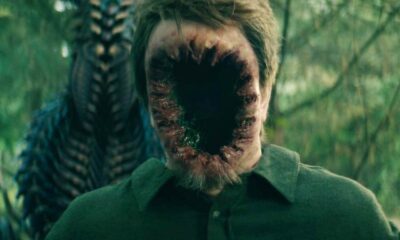
[Interview] The Man Behind the Monsters: Javier Botet Steps Into ‘Do Not Enter’
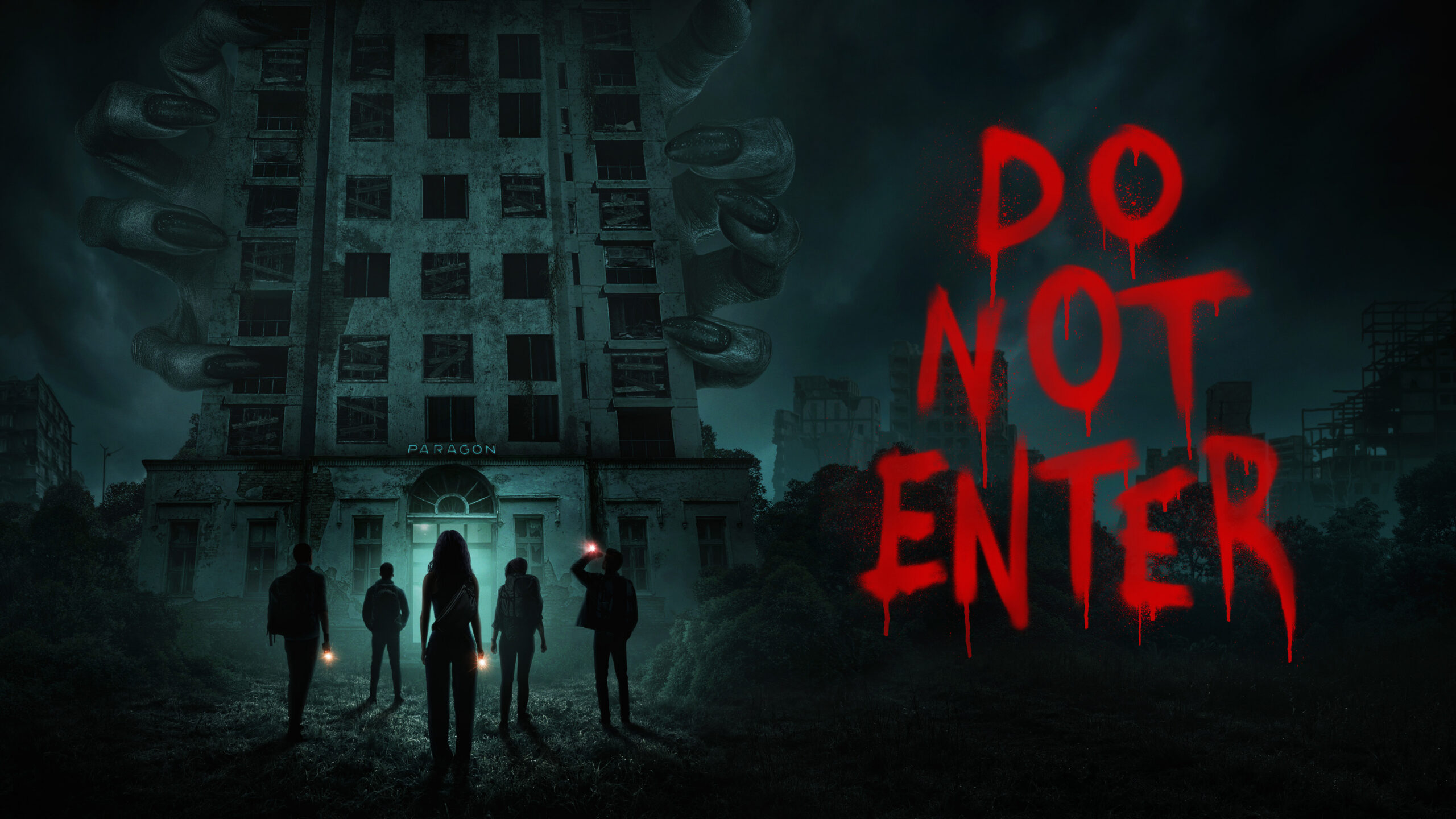
Horror has always thrived on what lingers just out of view; the figures that feel almost human, yet deeply unnatural. Few performers have captured that fear as effectively as Javier Botet, a master of physical horror whose work has helped define modern creature performances.
Known for his uniquely unsettling movement, Botet has built a career transforming the human body into something otherworldly. Living with Marfan syndrome, his elongated frame and flexibility have allowed him to portray some of the genre’s most memorable figures. From [REC] to The Conjuring 2, Mama, Crimson Peak, and IT, his performances go beyond makeup and effects—his creatures feel alive, driven by a physical language that taps into something primal.
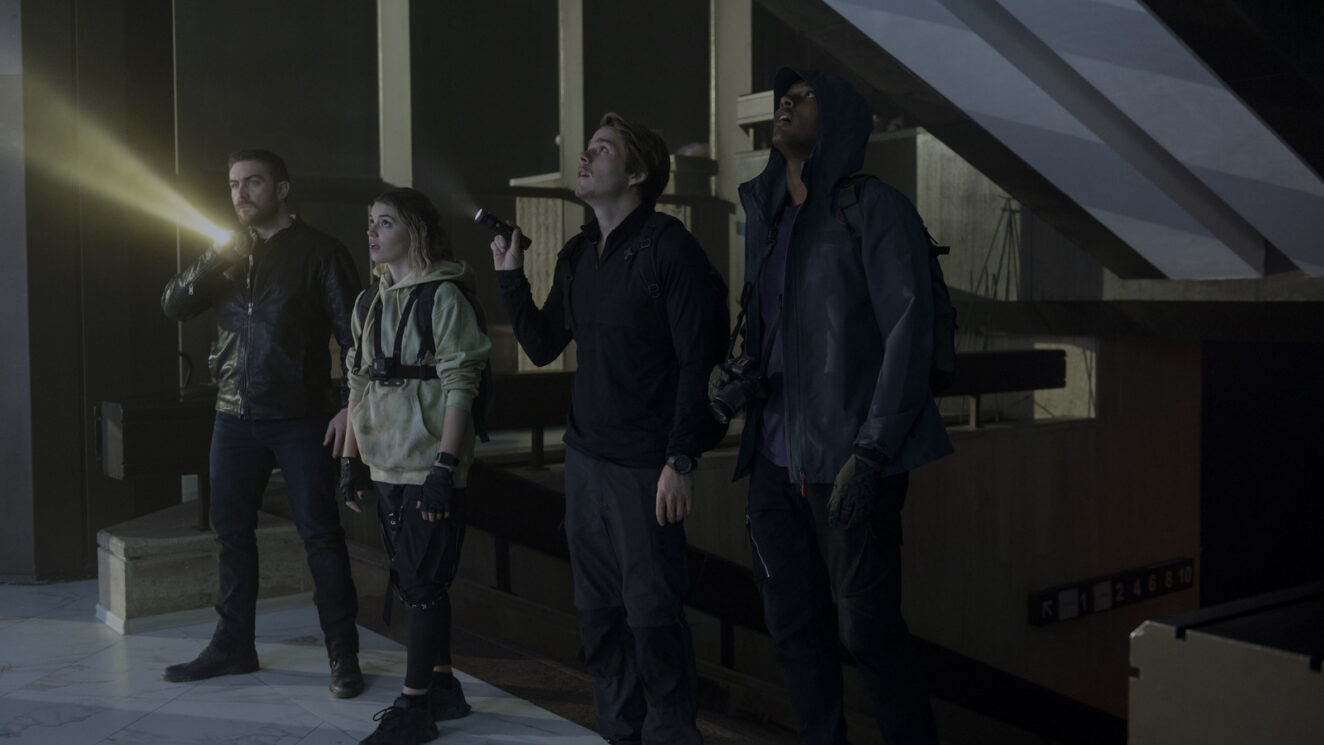
Botet brings that same presence to Do Not Enter, a high-concept horror thriller centered on a group of thrill-seeking urban explorers known as the Creepers. Hoping to grow their following, they livestream their most dangerous stunt yet inside New Jersey’s abandoned Paragon Hotel—a location steeped in mob history, ghost stories, and rumors of a hidden $300 million fortune. But once inside, the stakes escalate quickly. As they fend off deadly rivals, something far more sinister begins to emerge from the shadows—supernatural creatures that test not only their survival, but their sanity and their willingness to pay the ultimate price for fame.
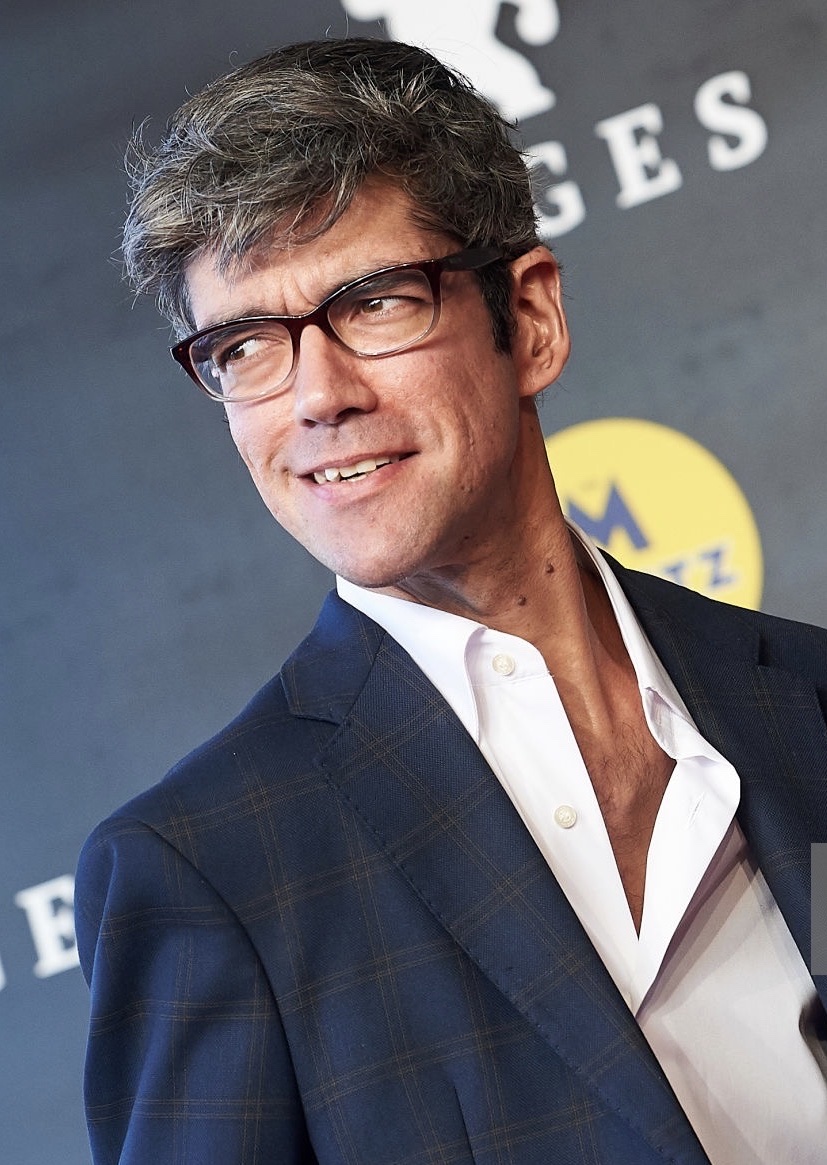
Blending creature horror with modern livestream culture, Do Not Enter leans into tension, isolation, and the consequences of pushing boundaries too far. It’s a natural fit for Botet, whose performances rely on presence, movement, and restraint to create unease long before the terror fully reveals itself.
In an era dominated by digital effects, Botet remains a powerful reminder of the impact of practical performance. His ability to convey fear through the smallest physical details continues to elevate the films he inhabits, grounding even the most supernatural concepts in something tangible.
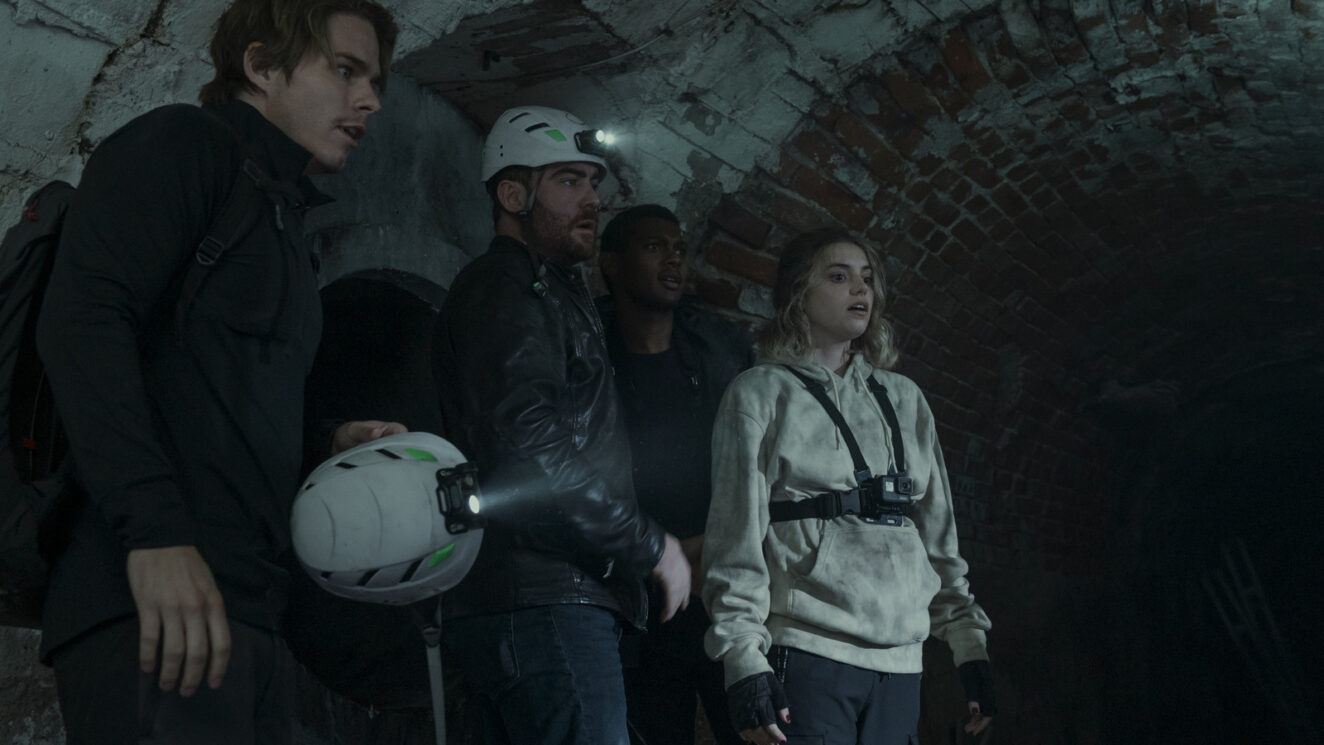
With Do Not Enter, Botet once again steps into the shadows—bringing a new nightmare to life through movement, precision, and pure physical storytelling.
In the following interview, Botet reflects on his approach to creature work, the demands of his roles, and what drew him to the world of Do Not Enter.


Horror Coming to Streaming in May 2026: Shudder Is Doing the Most and Netflix Finally Showed Up

Evil Dead Burn Looks Like the Most Violent Family Reunion You’ll Ever Attend

_CIVILIAN Is the Micro-Series That Proves You Don’t Need Much to Make Something That Matters

Breaking Down the First Minute of ‘The Vampire Lestat’ Official Trailer: What It Reveals About Season 3

Jessica T Deveraux Got Possessed At Her Own Bar In New Film ‘Key of Bones’

The Cape Fear Trailer Is Here. Javier Bardem Built It.

iHorror Exclusive Clip: ‘Obsession’ in theaters May 15th

This Week in Horror: The Genre Says Goodbye to Jonathan Tiersten

Koji Suzuki Built the Well. The Author of ‘Ring’ Trilogy Dies at 68

Sleepaway Camp Knew Before I Did: The Legacy Johnathan Tiersten Left on Queer Media

Panic Fest 2026 Review: ‘Creature Of The Pines’ Is An Interesting Found Footage Horror That Walks A Beaten Path

Jonathan Tiersten’s Greatest Role, and it isn’t Sleepaway Camp

Ready or Not 2: Here I Come Blu-ray Review: Buy It for Samara Weaving

Universal’s Horror Make-Up Show Ends 36 Year Run

Self Driver Runs Out of Road

10 J-Horror Films to Watch After Losing Koji Suzuki
Sleepaway Camp Knew Before I Did: The Legacy Johnathan Tiersten Left on Queer Media
Koji Suzuki Built the Well. The Author of ‘Ring’ Trilogy Dies at 68
This Week in Horror: The Genre Says Goodbye to Jonathan Tiersten

Panic Fest 2026 Review: ‘Jump Scare’ Is A Metal As Hell Kick To The Skull!
Jessica T Deveraux Got Possessed At Her Own Bar In New Film ‘Key of Bones’
The Cape Fear Trailer Is Here. Javier Bardem Built It.
-
 News7 days ago
Jessica T Deveraux Got Possessed At Her Own Bar In New Film ‘Key of Bones’
-
 News7 days ago
The Cape Fear Trailer Is Here. Javier Bardem Built It.
-
 News6 days ago
This Week in Horror: The Genre Says Goodbye to Jonathan Tiersten
-
 News5 days ago
Koji Suzuki Built the Well. The Author of ‘Ring’ Trilogy Dies at 68
-
 Editorial5 days ago
Sleepaway Camp Knew Before I Did: The Legacy Johnathan Tiersten Left on Queer Media
-
 News7 days ago
Panic Fest 2026 Review: ‘Jump Scare’ Is A Metal As Hell Kick To The Skull!
-
 Lists3 days ago
10 J-Horror Films to Watch After Losing Koji Suzuki
-
 News2 days ago
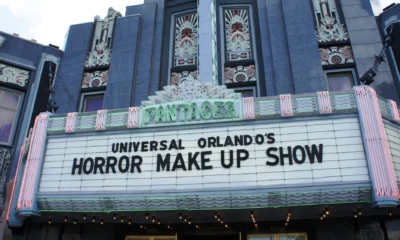
Universal’s Horror Make-Up Show Ends 36 Year Run
You must be logged in to post a comment Login