Games
The Creepy Toy You Keep Seeing Everywhere & Why It’s Trending
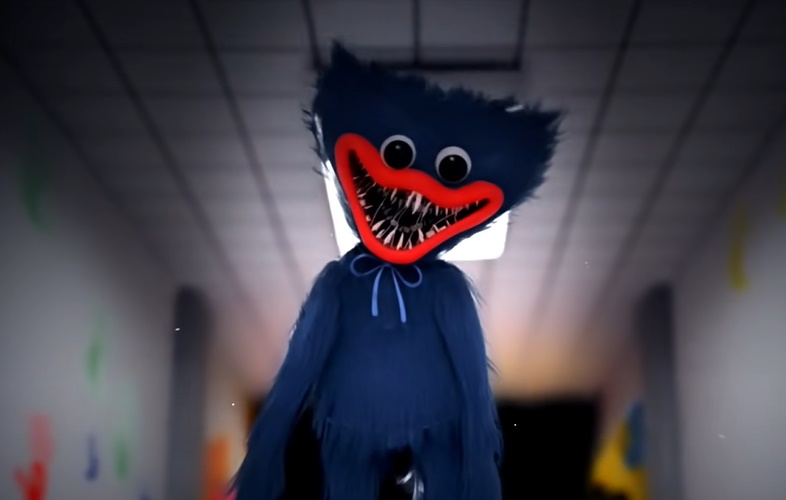
You can tell the popularity of a cultural phenomenon just by looking at the prizes at a fair. The sharp-toothed, blue monster known as “Huggy Wuggy,” is currently the prize du Jour at Midway games and on an upward trend of kid’s (and adult) collectibles.
But who is he and why is he causing such a fuss among parents? Gamers everywhere probably know of this creepy 20-foot doll from the game Poppy Playtime, a thirteen and up horror survival game that’s bark is worse than its bite.
Although the ESRB has slapped a “T” for Teen rating on the box, the content is somewhat mild for parents to start freaking out about. As with most nutritional facts, the largest ingredients are listed at the beginning.
In Poppy Playtime’s case, the T is for Blood and Violence which doesn’t make it a scarlet letter, so to speak. If it was that bad, the conservative ESRB would have used their fists to hammer down an “M” rating for mature.
Parents shouldn’t be concerned with what the game has as far as content, they should however investigate further before falling into the klatch of mass hysteria instigated by ignorant knee-jerk reactionaries sometimes called parents.

The internet has a strange way of creating drama where there shouldn’t be. Several fan-made memes and videos have surfaced about Poppy Playtime and how it influences kids to jump to their deaths or do other horrible things. remember the Momo? Turns out, if you said its name it didn’t come to find and kill you as the legend said. It was just a piece of modern art that didn’t move except by way of imagination.
Poppy Playtime Is Their First Game
The same seems to be the case for Huggy Wuggy. Yes, he’s a bit intimidating, but so was Animal from the muppets until you realized he was fake. Forbes talked to the President and CEO of the developer of the game, Zach Belanger, who says there was no target audience to begin with.
“Poppy Playtime was not created with the intention to target any specific audience,” he says. “Bear in mind that this was the first game our studio ever created, and our main priority was to create something that we would enjoy playing ourselves.
“Beyond that, we have a passion for any content we create to be enjoyable by audiences of all ages. To us, it isn’t accurate to say that we created Poppy Playtime to be consumed by kids or adults, but rather our goal was simply to inspire and entertain anyone who decided to play the game.”

Schools have started issuing warnings to parents about the game in response to concerns from parents who may have gotten wind of hearsay.
Belanger says those stories are extremely exaggerated or false.
He adds: “One of the things we’ve read online is that Huggy Wuggy whispers creepy things into one’s ear while playing, but anyone who has actually played Poppy Playtime would know that Huggy Wuggy does not even have a voice in Chapter 1, so it’s impossible for him to have whispered anything.”
“As far as we are aware, all of these warnings from schools are originating from fan-made content based off of our game, but if you want my personal opinion, I do not think that any of these videos should be cause for concern, and we appreciate all the hard work and dedication our fans are put toward creating content inspired off of Poppy Playtime.”
The Fuzzy Song
There is also some concern around a creepy jingle that accompanies Huggy Wuggy, suggesting that he’ll “squeeze you until you pop!” Seems harmless.
But the creator of a high-energy song that pays homage to Fuzzy has been under scrutiny for his eerie lyrics. Igor Gordiyenko whose YouTube handle is TryHardNinja created a video that has reached over five million viewers.
He says there was nothing nefarious when he wrote it. He based it on the lore of the character and has set the child safety setting to 13 and over on YouTube.
“The themes and visuals of my song and video are true to the character’s lore, actions, and depiction in the game. I am not trying to make an innocent character seem scarier than they are. Much like Chucky from Child’s Play, Huggy Wuggy is and always was a horror character. My song is for fans of the source material which is not for young kids.”
Another horror survival game, Five Nights at Freddy’s didn’t have the same concerns from parents as Poppy Playtime has, and it has since blossomed into a multi-million dollar franchise with a movie adaptation on the way.
Perhaps Freddy’s narrowly missed the evolution of technology and online lore eight years ago. It was about that time that Creepypasta began to permeate the minds of creatives hoping to scare the pants off people with unnerving legends. At that time, The Slender Man came into public view and influenced impressionable teenagers to believe in the supernatural.
Even adults can fall for “real-life” mythology — by way of movies. Films like The Blair Witch Project and Paranormal Activity were so well marketed, that even level-headed grown-ups couldn’t tell the difference between reality and fantasy.
The trick with video games such as Poppy Playtime is to explore the game yourself. Research it before you buy it and don’t fall victim to the adolescent trappings of “I swear it’s true.”
Common Sense Media, one of the leaders in parental guides for content doesn’t seem worried about how Poppy Playtime will affect kids, their biggest complaint is onscreen maneuverability.
They write: “The controls are easy to pick up and play, though not always the most precise. While there’s no graphic violence or gore, there are splatters of blood throughout the factory. Also, the horror nature of the game will likely be too scary for younger audiences.
“Finally, parents should be aware that this is the first chapter of an episodic experience, meaning that it’s only part of the story and the rest must be purchased piecemeal over time.”
*Header image courtesy of TryHardNinja







Games
Paranormal Games: Red Door, Yellow Door

Let’s play a game: Red Door, Yellow Door
Also Known As Doors Of The Mind
Spooky games that border on the paranormal are a mainstay at slumber parties around the world. From light as a feather, stiff as a board… to the classic Ouija board, we’ve all played at least one, but there are others out there, perhaps less well known, and one of the spookiest is Red Door, Yellow Door. Doors of the Mind
What is Red Door Yellow Door?
Sometimes this paranormal game is called Doors of the Mind or Black Door, White Door, and well, any other combination of colors, you can think of.
Red Door, Yellow Door takes two to play. However, it’s perfect for a late-night audience of scared teens, so it’s no surprise that it’s made a resurgence in recent years.
The Game Rules
The rules are simple, but the outcome could be dire, or so the urban legends claim. One player is the guide, and the other is the subject.
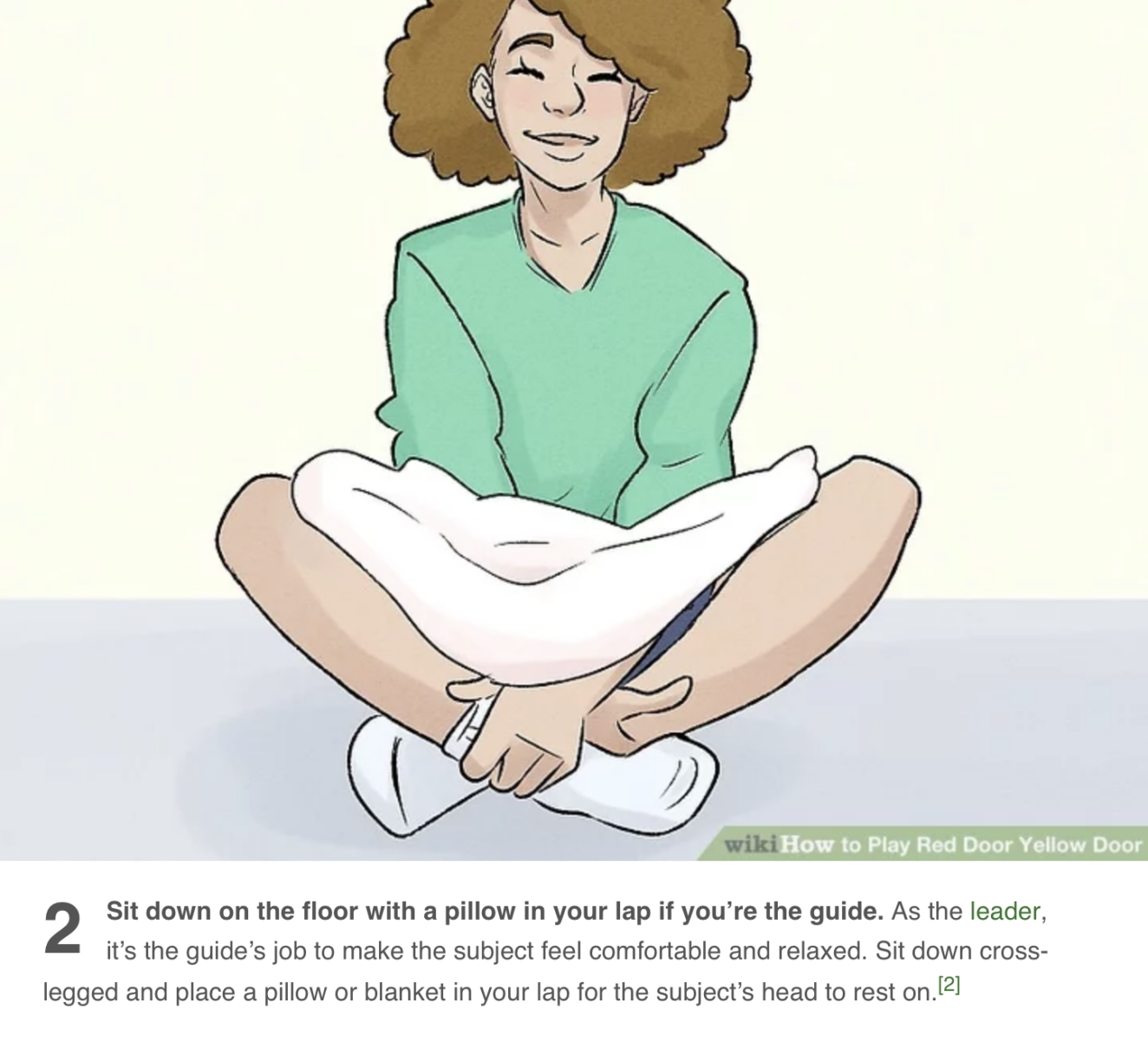
- The guide sits on the floor, cross-legged with a pillow in their lap.
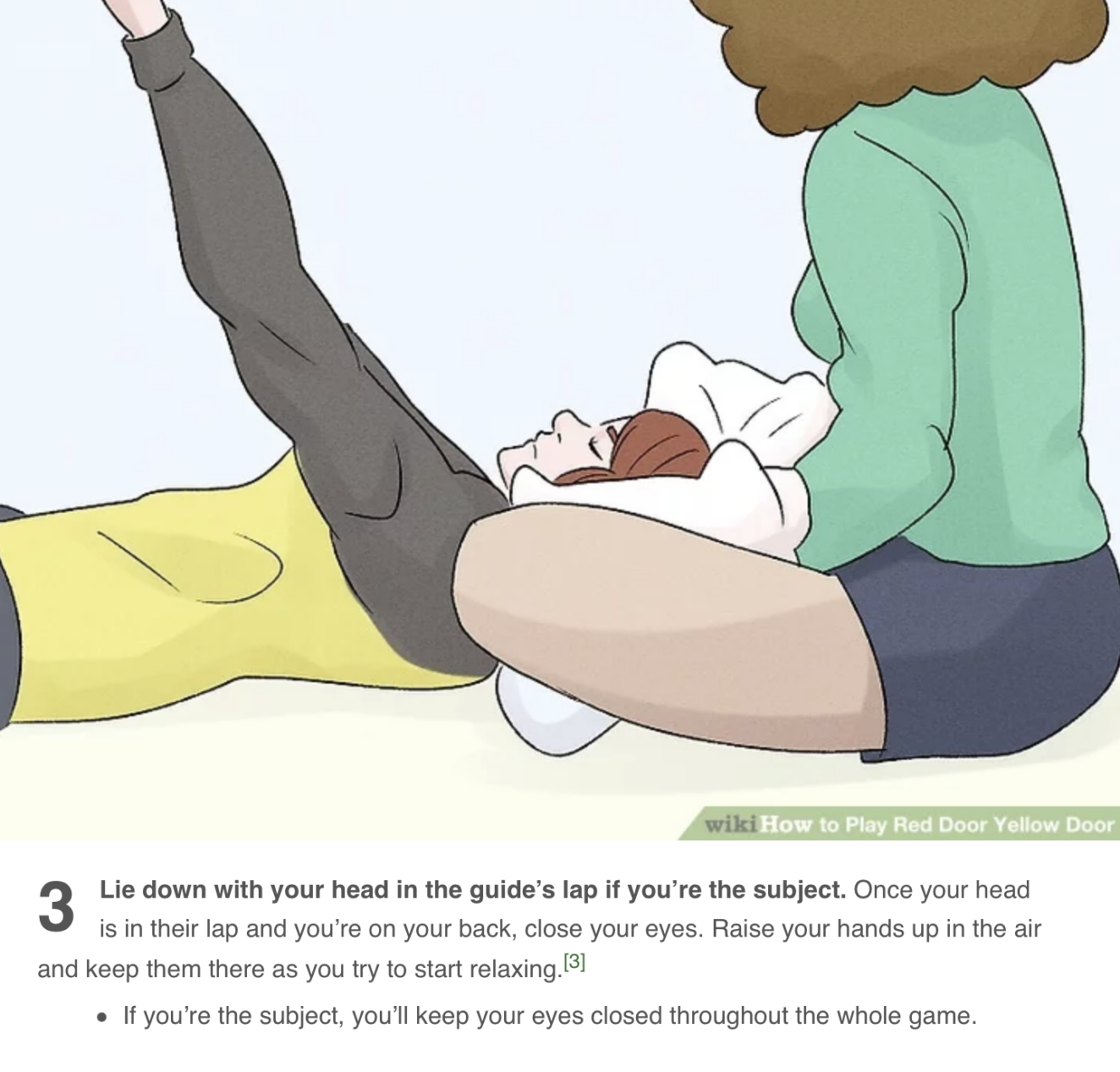
- The subject will then lie on the ground with their head in the guide’s lap and their hands raised in the air.
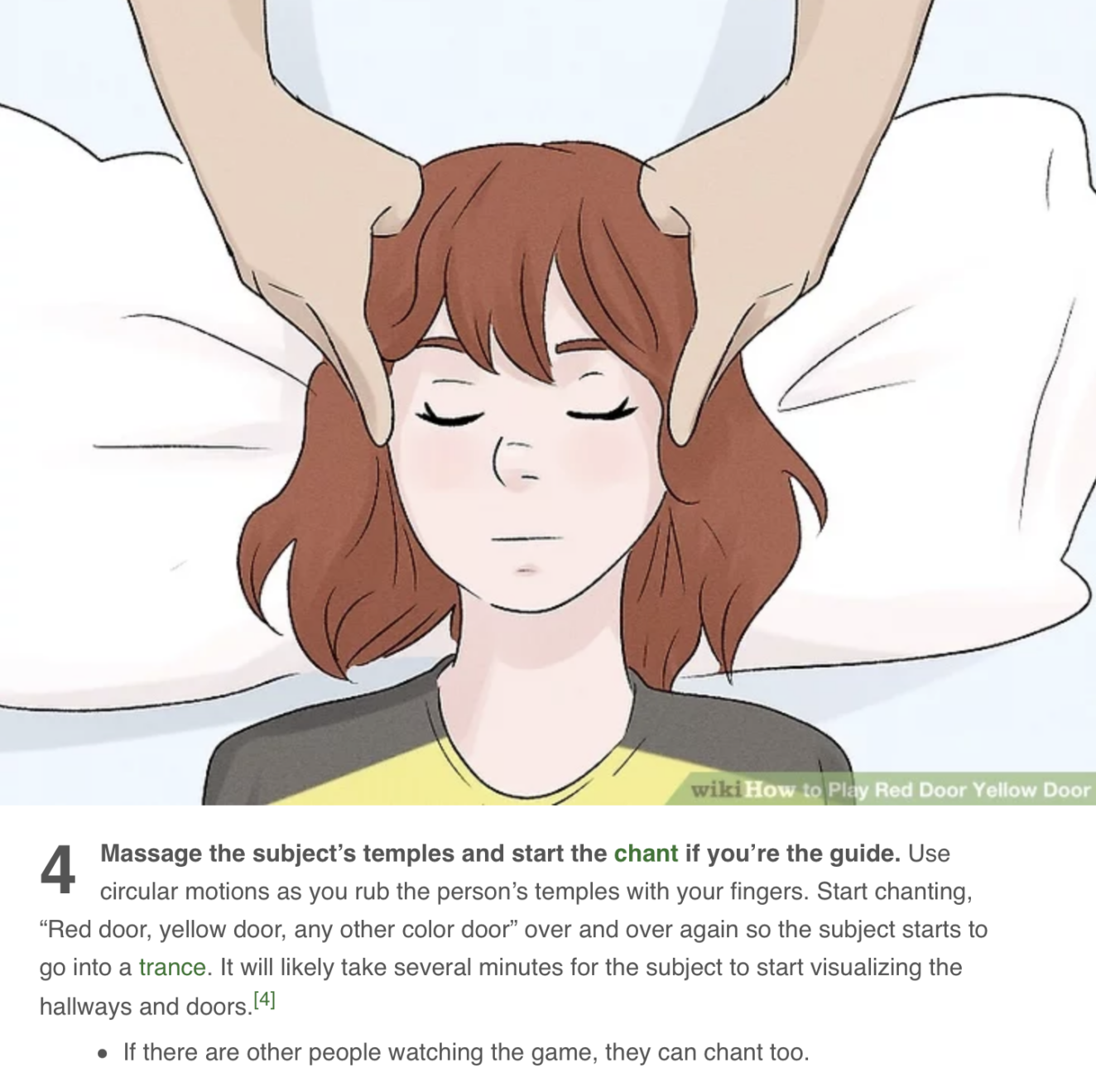
- The guide should, at this point, begin to massage the subject’s temples in a circular motion chanting, “Red Door, Yellow Door, any other color door” over and over again, joined by any witnesses to the game. Doors of the Mind
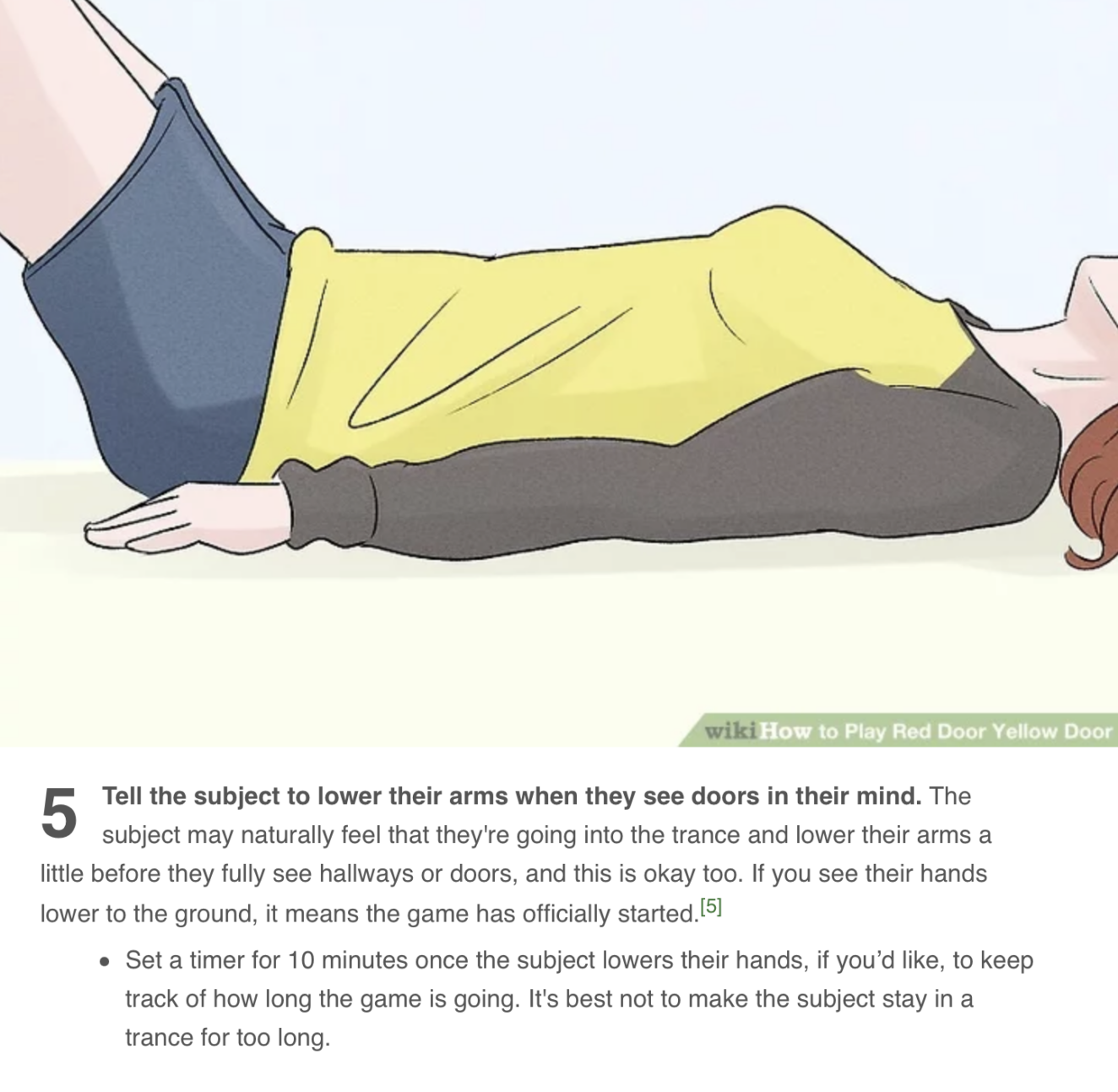
- As the subject slips into the trance, they will find themselves in a room in their mind and at that point, they should lower their arms to the floor signaling the guide and any witnesses to stop chanting.
The game has officially begun.
At this point, the person acting as the guide will begin to ask questions to the subject in order to get them to describe the room. Any witnesses should be silent so that there is no sound except for the voice of the guide and the voice of the subject answering the guide’s question.

The instructor might ask what colors the doors to the room are, how they feel about the doors, and instruct them to go through varying doors into other rooms.
The subject is encouraged to answer all questions honestly until the guide decides to end the game, but there are some warnings and signs of danger to keep in mind.
Dangers To Keep In Mind Doors of the Mind
According to Scary for Kids:
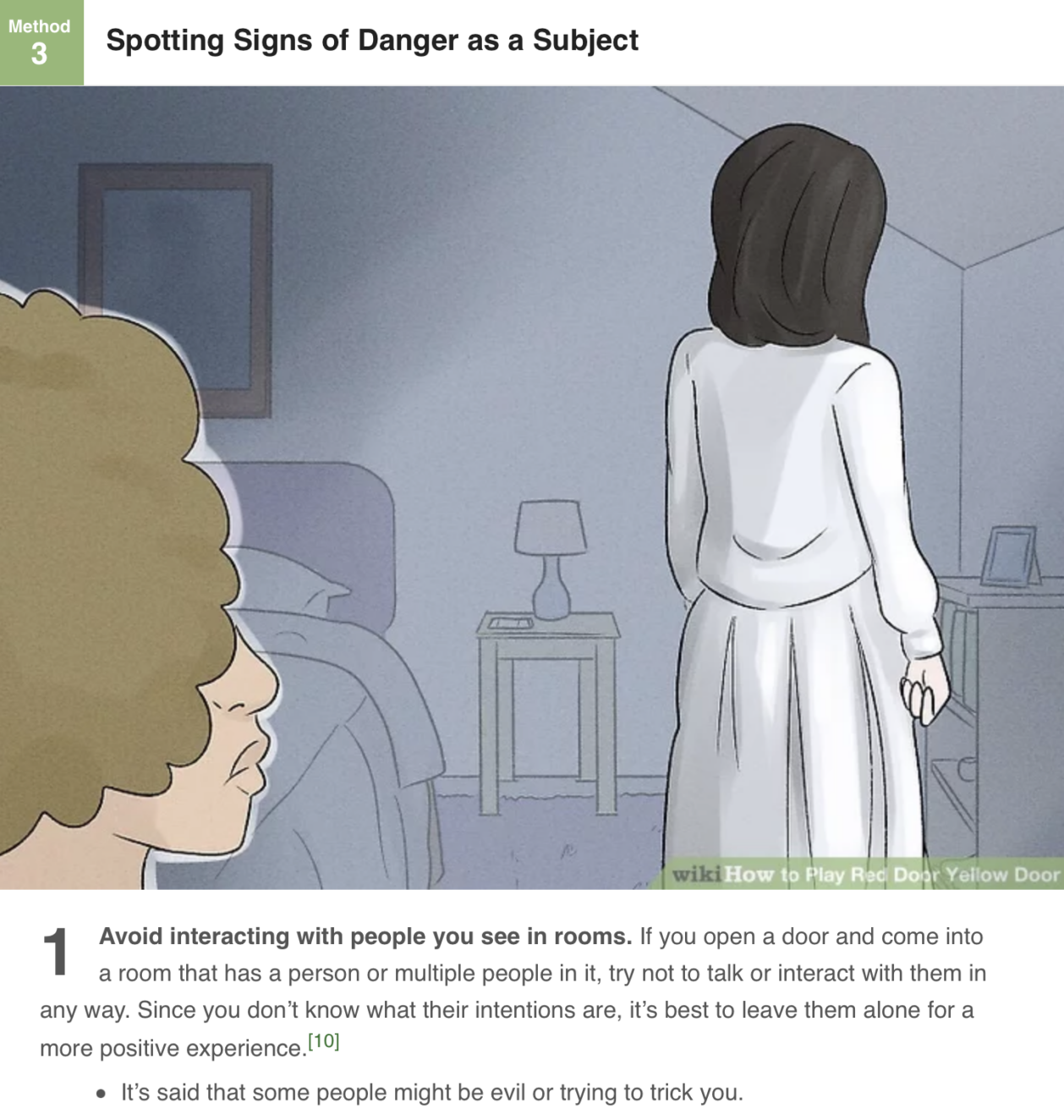
- If you encounter people in the room, it may be best not to interact with them. They may be evil and try to trick you.
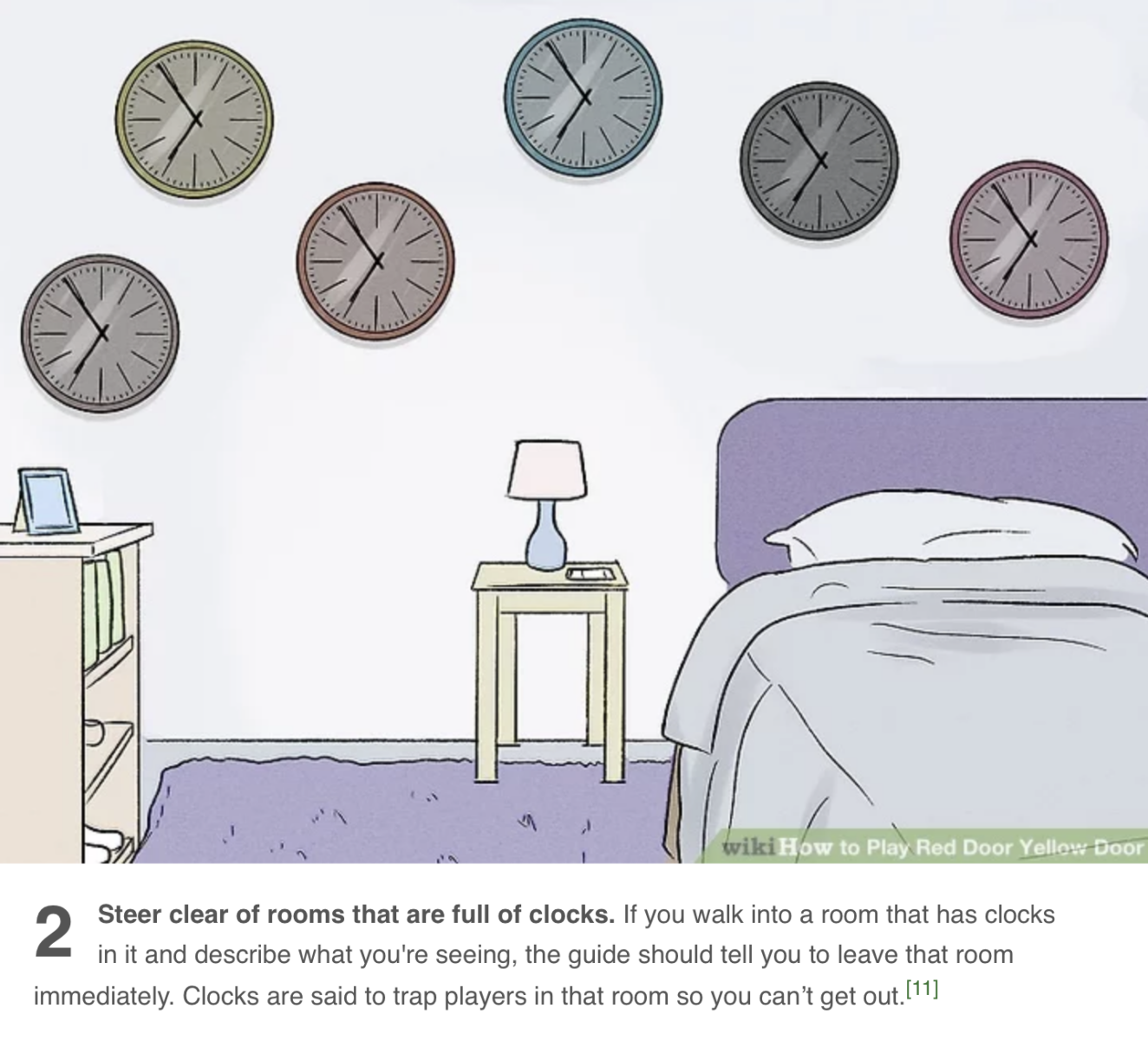
- If you find yourself in a room full of clocks, leave immediately. Clocks can trap you.
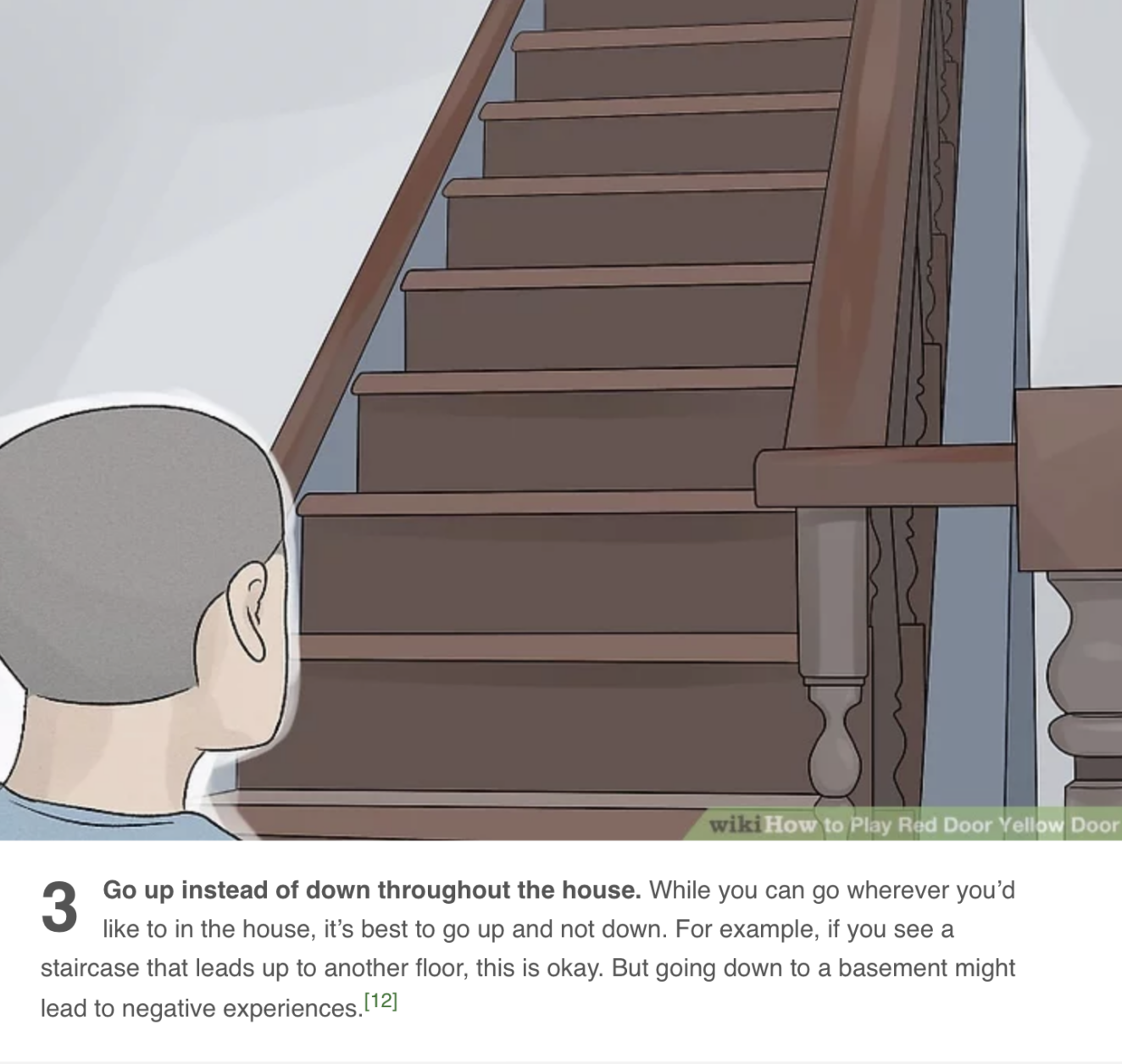
- You can go wherever you want, but it is safer to go up than down.
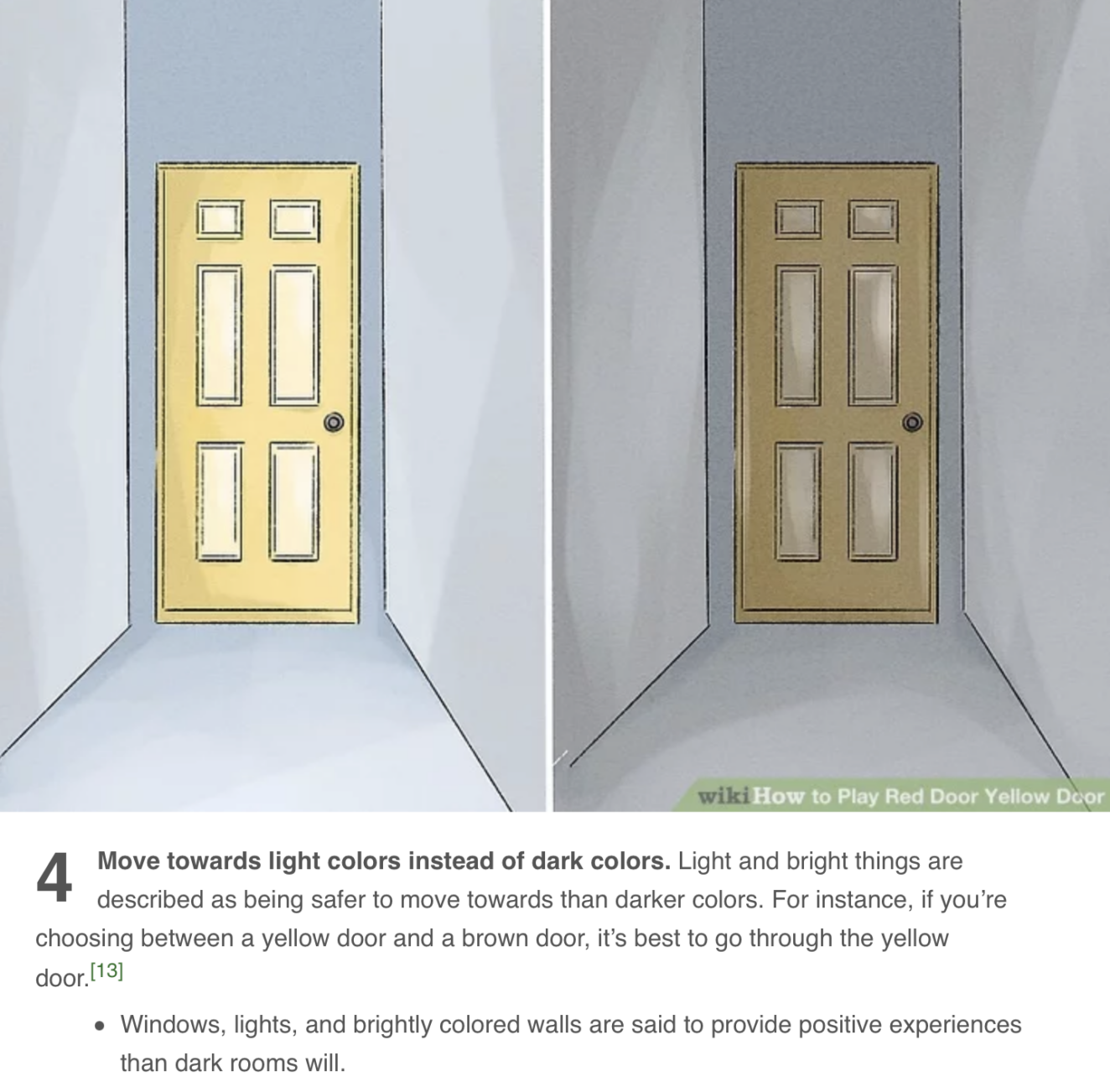
- Light things and light colors tend to be better than dark things and dark colors.
- If you should find yourself trapped in a room, you must try to wake up. If you don’t, you might be trapped forever.
- If you die in the game, you will supposedly die in real life.
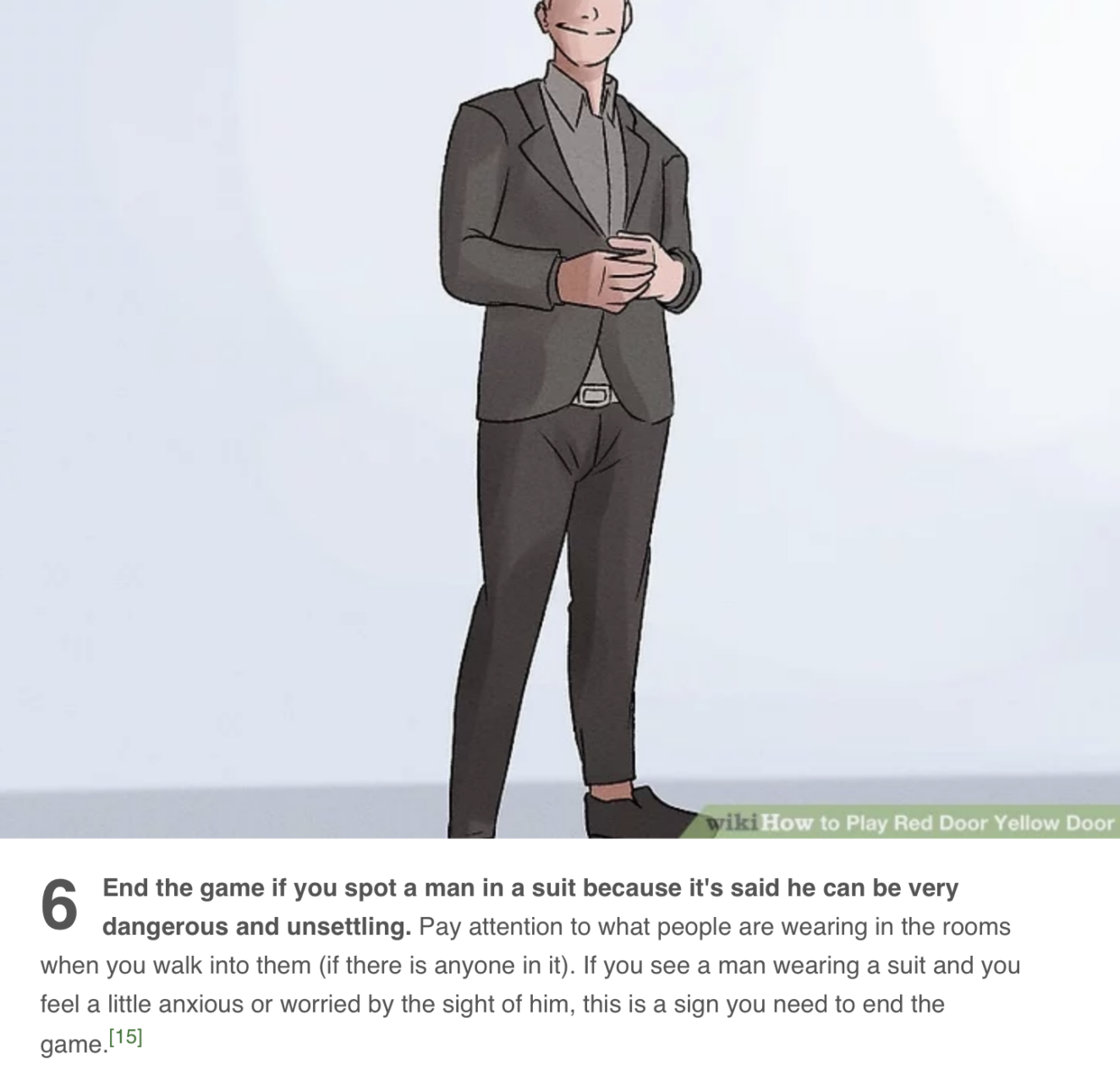
- If you encounter a man in a suit who makes you uncomfortable, end the game immediately.
- If the guide is having a hard time waking the subject from the trance, they should shake them roughly to bring them into wakefulness.
Sounds creepy, right?!
The whole point of the Red Door, Yellow Door, seemingly, is to explore the inner workings of your own mind and to also understand that there are also dark sides to everyone.
Some of the things you might encounter inside the game may be those very things about yourself that you don’t wish to face.
Have you ever played Red Door, Yellow Door or any variation of this spooky game? Let us know in the comments!
This article has been updated. it was originally posted in February 2020.
[Realted article: Forget Christine, The Black Volga is the Real Demon Car]
Red Door, Yellow Door: The Paranormal Game Explained
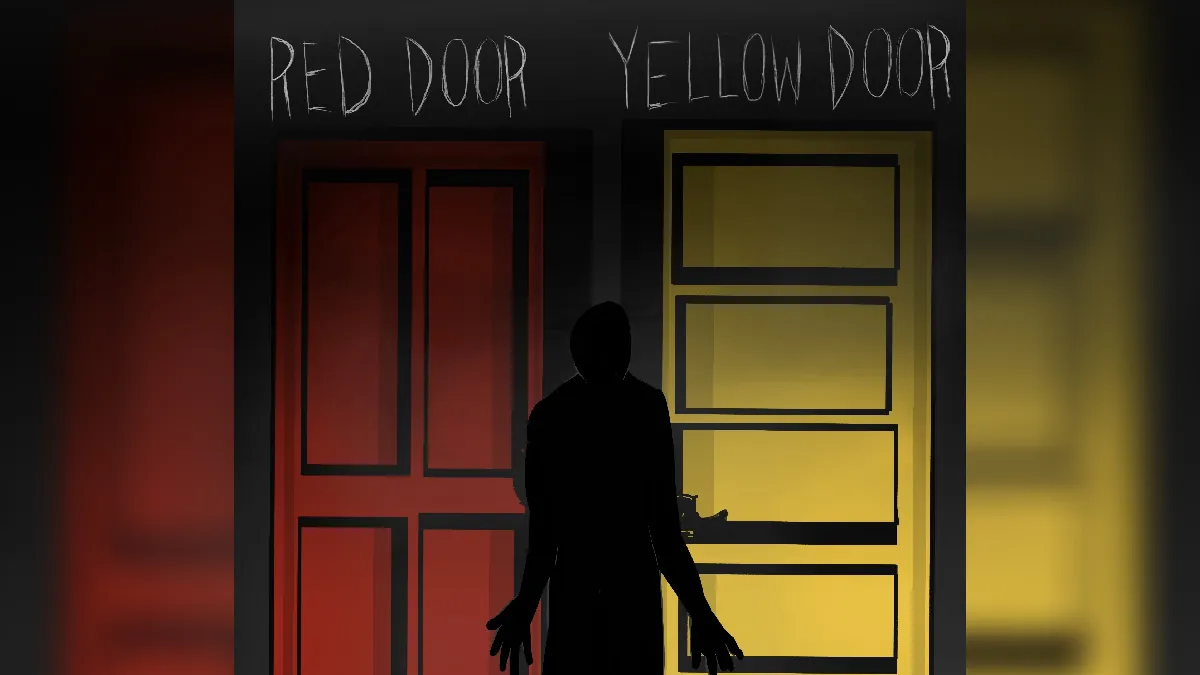
If you’re into paranormal games and challenges, chances are you’ve heard of Red Door, Yellow Door. This creepy game has been circulating online for a while now, and it’s gained a reputation for being one of the most unsettling and mysterious experiences you can have.
But what exactly is Red Door, Yellow Door, and how does it work? In this article, we’ll delve into the history and mechanics of the game, and explore some of the most popular variations and interpretations.
The Basics of Red Door, Yellow Door
The origins of Red Door, Yellow Door are shrouded in mystery, but it’s believed to have its roots in ancient folklore and ritualistic practices. The game is typically played by two or more people, with one person acting as the “guide” or “leader” and the others as “explorers.” The guide sits behind the explorer(s), who lie on the ground with their heads in the guide’s lap. The guide then begins to hypnotize the explorers, leading them into a trance-like state.
Once the explorers are sufficiently entranced, the guide instructs them to imagine a red door and a yellow door in their minds. The explorers are told to choose one of the doors and “enter” it in their minds, visualizing themselves walking down a long, dark hallway. Along the way, they may encounter various entities or experiences, depending on the variation of the game being played.
Some versions of Red Door, Yellow Door involve exploring a haunted mansion or encountering ghostly figures. Others involve traveling through a maze or facing off against supernatural entities like demons or witches. The guide may provide prompts or directions to the explorers, or they may be left to their own devices to explore the imaginary world.
The Risks and Rewards of Red Door, Yellow Door
Part of the appeal of Red Door, Yellow Door is the sense of danger and risk involved. Some players believe that the game can lead to actual supernatural experiences, and that the entities encountered in the game can follow them back into the real world. Others see it as a purely psychological exercise, a way to explore their own subconscious and confront their fears and anxieties.
Regardless of your beliefs about the paranormal, it’s important to approach Red Door, Yellow Door with caution. Hypnosis can be a powerful tool, and it’s possible to experience unintended side effects like headaches, dizziness, or disorientation. It’s also important to establish clear boundaries and guidelines before playing, and to have a trusted guide who can help you navigate any unexpected situations.
Step-by-Step Guide to play Red Door, Yellow Door
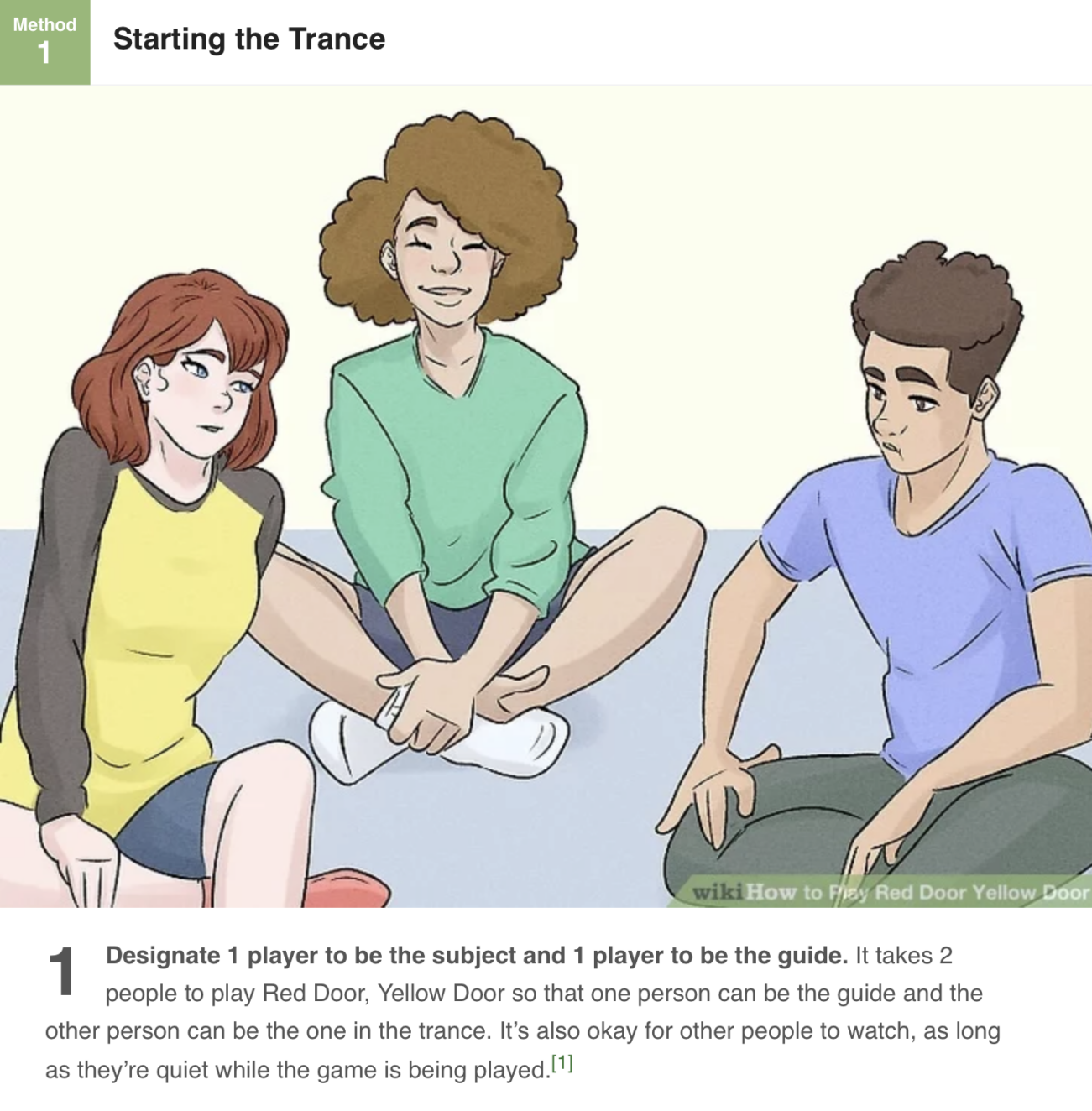
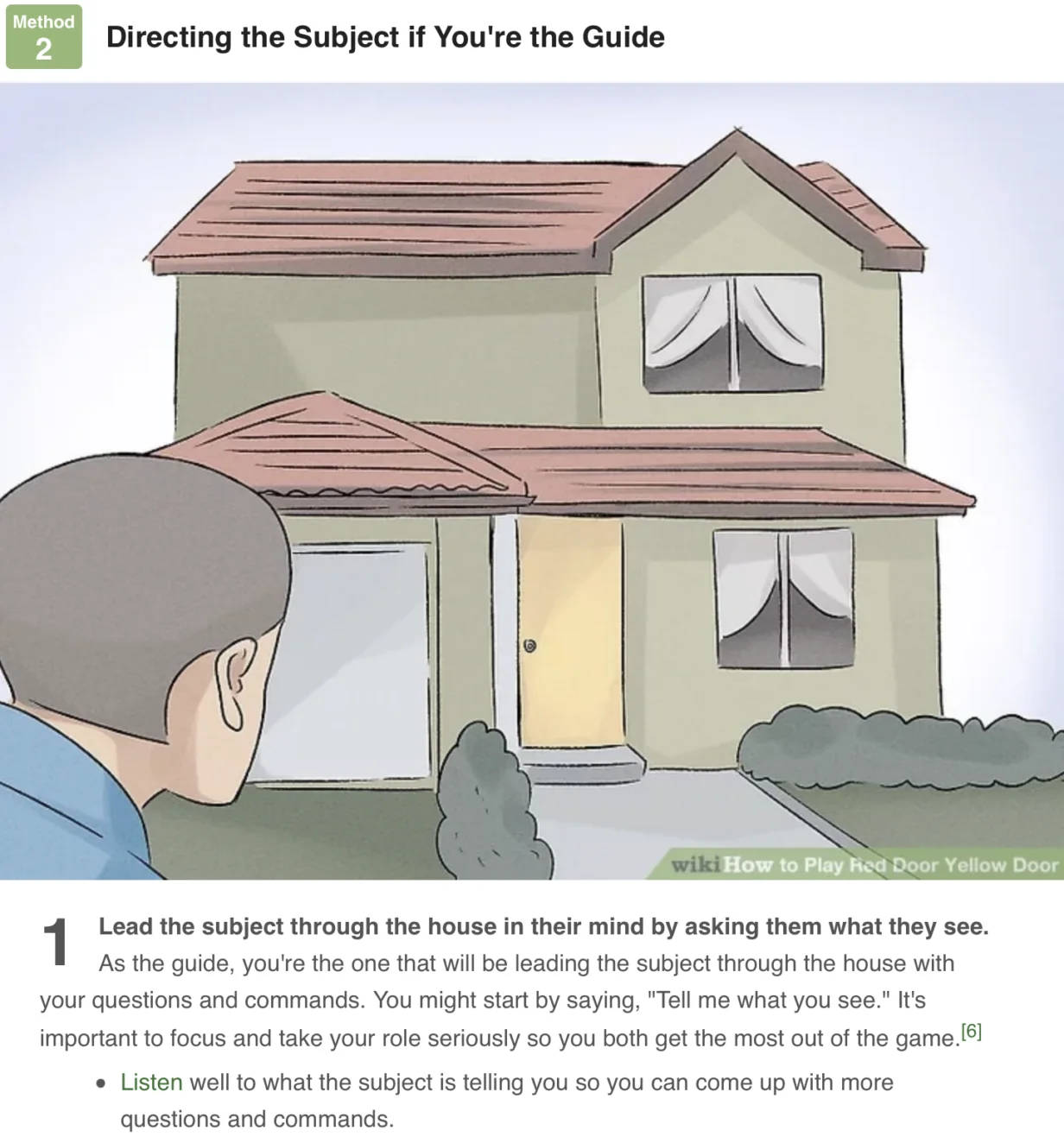
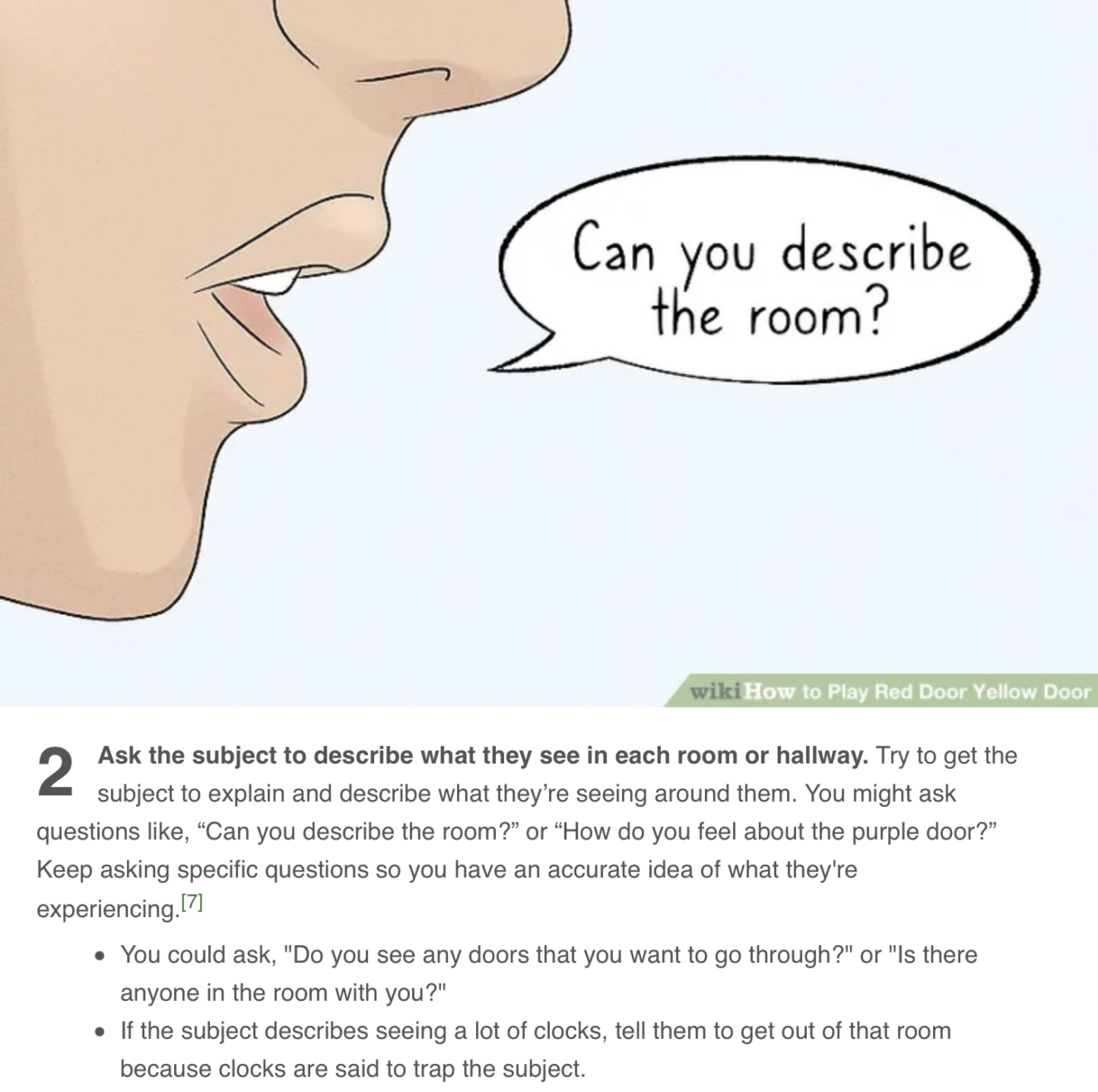
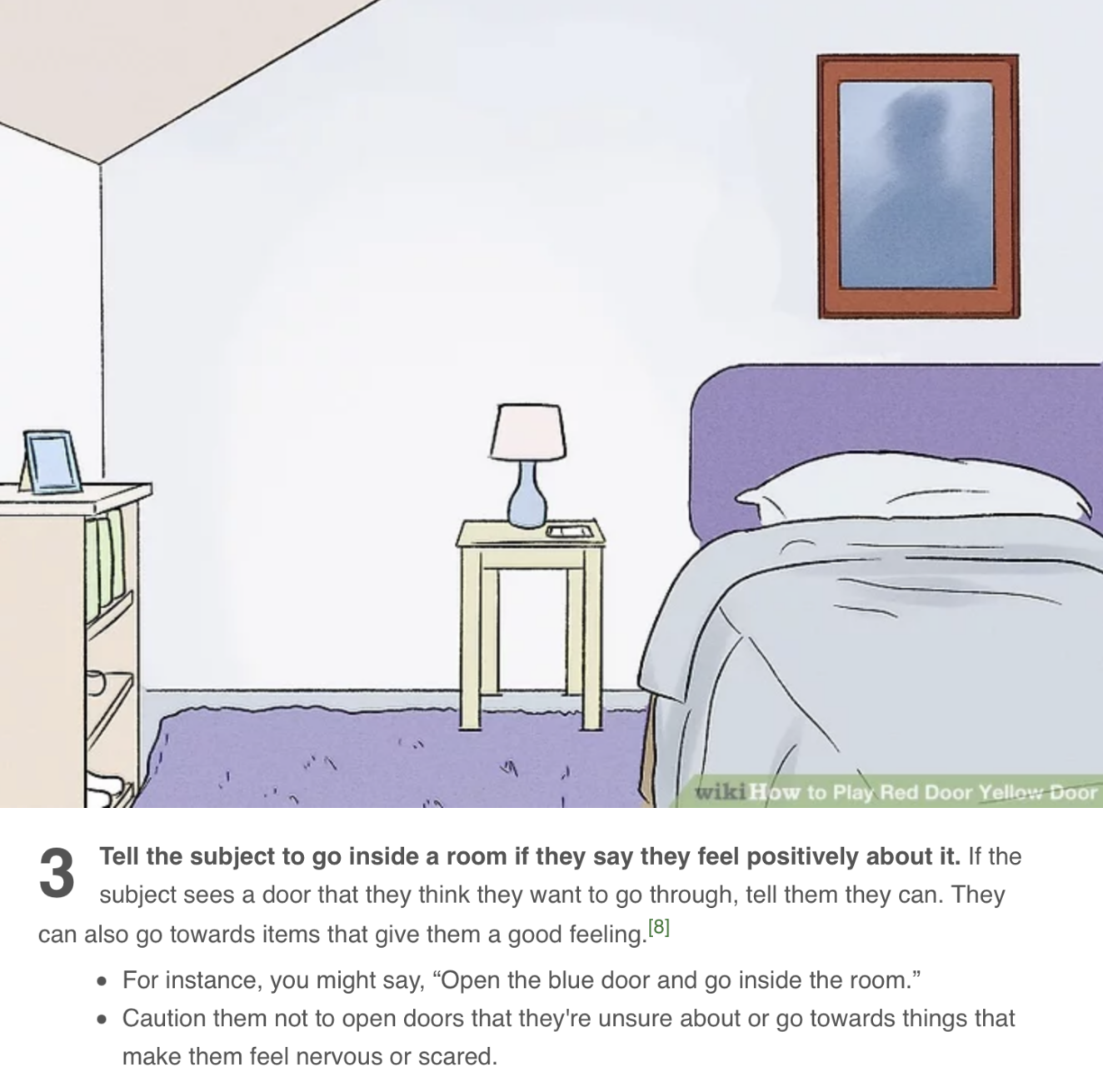
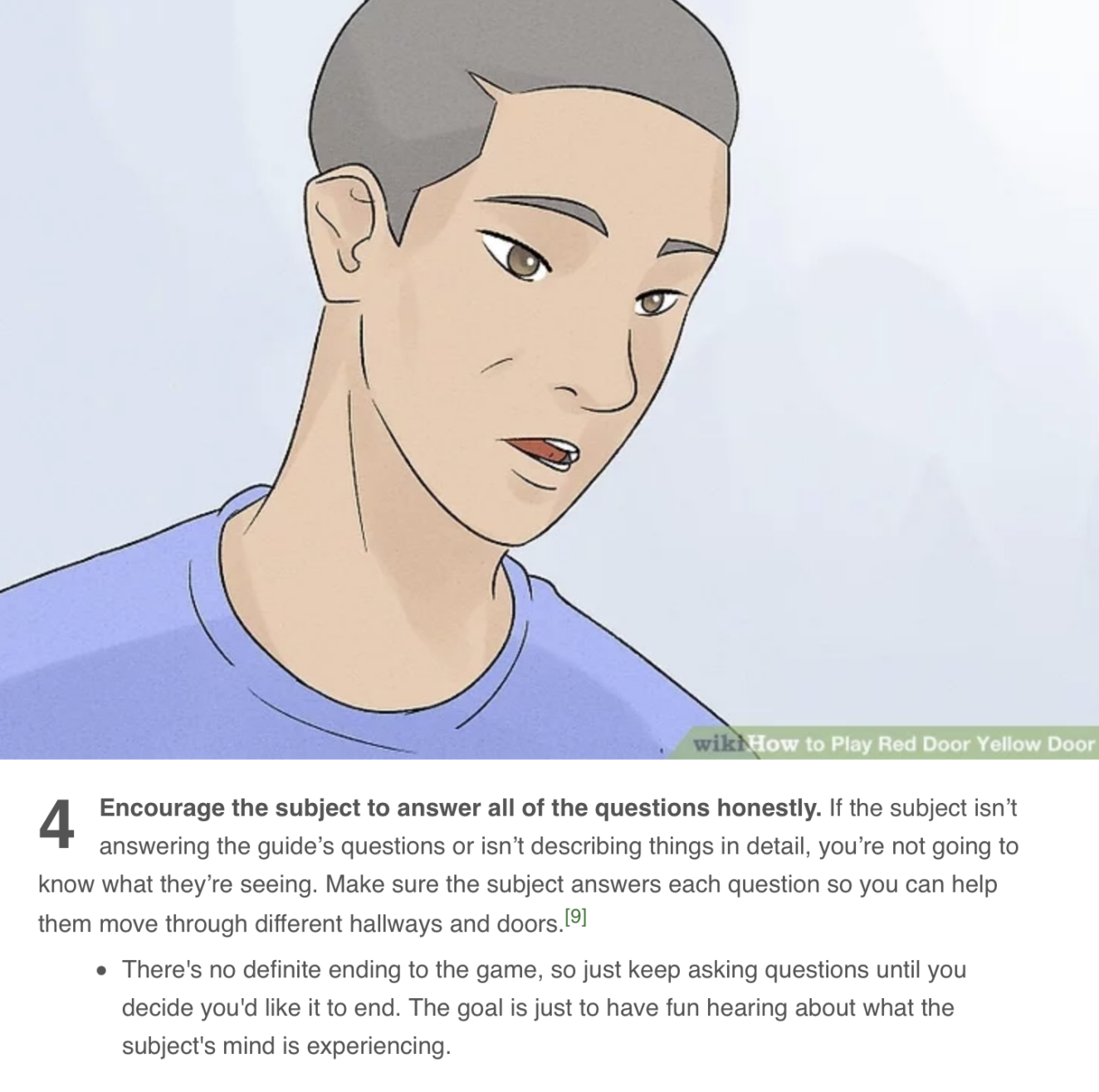
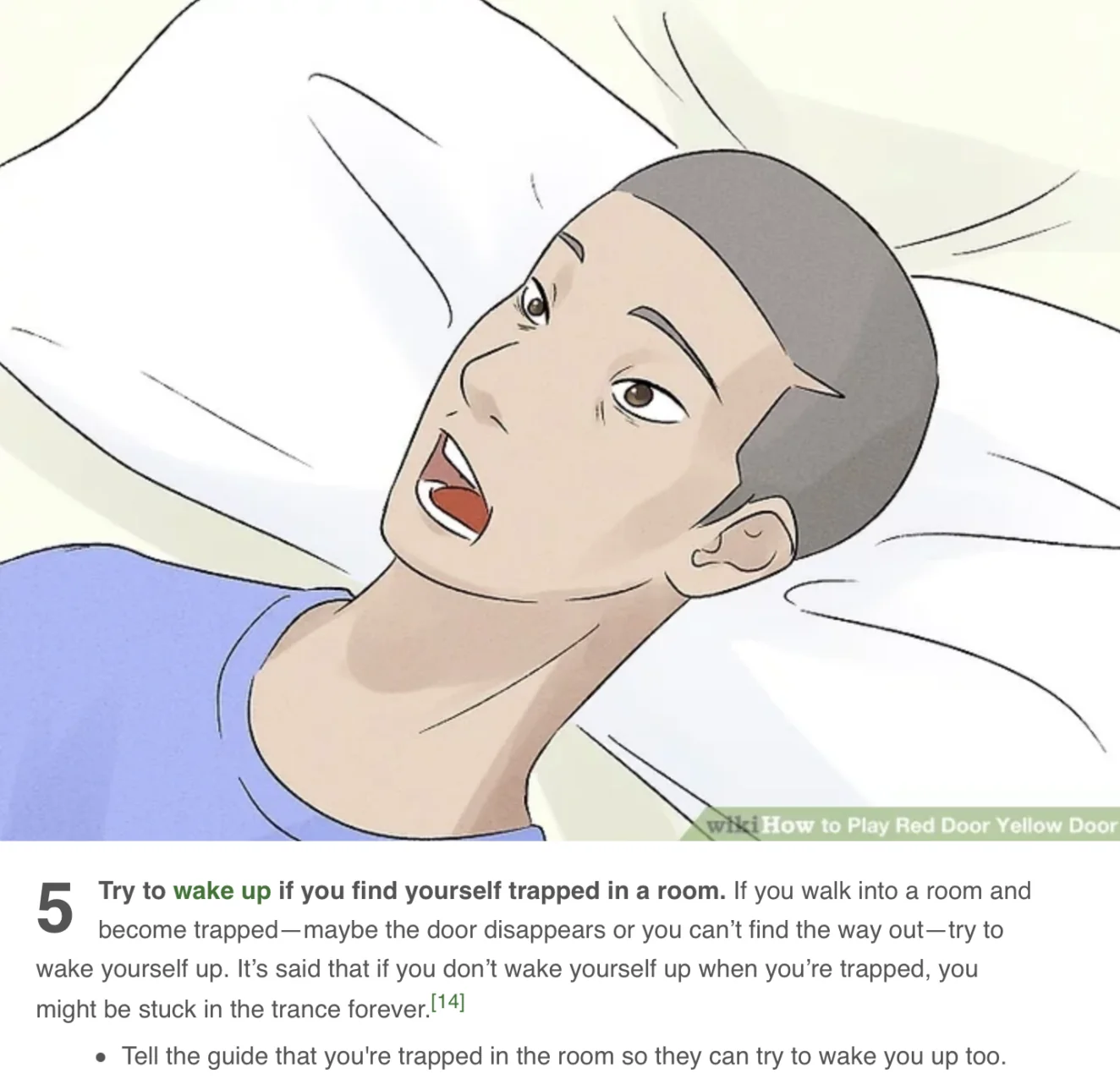
We found a nice step-by-step guide to playing Red Door, Yellow Door on WikiHow:
Games
‘Stream: The Player’s Cut’ Turns the Tables on Gaming

Stream: The Players Cut is the most recent project announced by Fuzz on the Lens Productions. This tabletop game is based off of their 2024 horror movie Stream, featuring David Howard Thornton.
Fuzz on the Lens is the production company behind the hugely successful Terrifier series. For Players Cut, the production company has teamed up with nERD bOX and Red Duke Games.

nERD bOX doesn’t just have their finger on the pulse of the horror community, they influence it. Home to the largest collection of Terrifier content on the web, bOX launched the Terrifier 3 popcorn bucket campaign… and won!
The third partner in this diabolical trinity to bring Stream: The Player’s Cut to life is Red Duke Games. Red Duke is no stranger to bringing fresh ideas to life. With a reputation for having a taste for the different and unexpected, Stream: The Players Cut appears to be nothing less!
About Stream: The Players Cut
Stream: The Players Cut takes the horror and blood infused movie and merges it with a survival based tabletop game.

There are three different ways to play. You can choose to kill and hunt participants for points, just as Players 1, 2, 3, and 4 did in the movie. Perhaps you’re feeling lucky. If so, you can place bets for money as the most strategic killer in the game. Lastly, you can participate in the party mode. This is where live audience wagers occur.
A Bright Future for Fuzz
First with Terrifier and now with Stream, Fuzz has accumulated a passionate following of devoted fans. These are not just any ordinary fans, these are fans that make things happen. Most notably, the showing of support for Terrifier 3 made it the highest grossing unrated film ever! The film’s budget was a mere $2 million, but it raked in $50 million worldwide!
Fuzz on the Lens is the little production company that could. So much has been spawned from their highly successful movies. From fan driven merchandise, to a Terrifier house at Halloween Horror Nights 2025, and now their venture into the gaming world, Fuzz keeps growing.
Yet perhaps their greatest accomplishment isn’t in a physical form such as a Halloween attraction or licensed costume. Remarkably, Fuzz on the Lens has created a horror culture of ravenous fans that has not been seen since the 1980’s! Rock on, Fuzz.
Games
TEASER: New ‘Halloween’ Game Coming From the Same Devs as ‘Friday the 13th’

We just got word that a new asymmetric video game based on the original Halloween movie is coming out in 2026. It’s being developed by the same team that released Friday the 13th: The Game. That game, now defunct and without servers, was shut down last January. It had a rough start and contained glitches, but once everything was ironed out, it became a fan favorite.
It might be time to rejoice with this new Halloween game. We have provided the press release and trailer below so you can find out more about it:
IllFonic honors the iconic 1978 film on PC and consoles in its latest creation coming in 2026.
Lakewood, CO – August 20, 2025 – Halloween, the asymmetric stealth horror game with single and multiplayer modes from developer and publisher IllFonic, co-published by Gun Interactive, and in partnership with Compass International Pictures and Further Front will stalk its way to Xbox Series X|S, PlayStation 5, and PC via Steam and Epic Game Stores in 2026, as revealed today on Future Game Show Live from gamescom.
Step into the chilling world of John Carpenter’s genre-defining film, now transformed into a suspenseful one-versus-many stealth horror experience. Put on the iconic mask to become the ultimate slasher, Michael Myers, stalking and executing the citizens of Haddonfield one by one, or striving to thwart Michael Myers’ plans as Civilians determined to save the unaware townsfolk before it’s too late.
Stick to the shadows as Civilians, seeking out Haddonfield residents to warn them and searching for a way to contact the authorities. As Michael Myers, give them a reason to fear the dark and cut the phone lines to prevent the police from ruining his favorite holiday. Whether playing solo in story mode, against bots offline, or facing others in online multiplayer, each mode rewards stealth, strategy, and skillful play.
Staying true to the original film, IllFonic masterfully recreates the eerie atmosphere of Haddonfield across multiple maps and authentic locations. With a haunting ambience and score inspired by the legendary movie, Halloween brings the terror home in a new experience that will keep both old and new generations looking over their shoulders.
“Working with Compass International Pictures and Further Front has been a dream,” said Charles Brungardt, CEO and Co-Founder of IllFonic. “As rights holders of the film and producers on the game, they’ve shared incredible insights to help us stay true to the soul of the 1978 film. Their tremendous passion for Michael Myers has pushed us to craft something that fans of the franchise will truly appreciate.”
“We are very excited to have partnered up with the great team at IllFonic to finally bring the definitive digital version of Halloween and Michael Myers to video game fans everywhere,” said Malek Akkad, President of Compass International Pictures, Inc.
“Gun Interactive is proud of our friends at IllFonic on their newest project Halloween. As longtime peers within the world of horror, we are excited to lend a hand to their team as needed to see their vision come to light. Seeing them pour all their efforts into honoring an IP near and dear to so many horror fans, we’re happy to help ensure players get to experience the world of Halloween that they’ve built. We can’t wait to see folks in Haddonfield,” Gun Interactive shared.
Halloween will unleash Michael Myers onto Xbox Series X|S, PlayStation 5, and PC via Steam and Epic Game Stores in 2026.



Jessica T Deveraux Got Possessed At Her Own Bar In New Film ‘Key of Bones’

The Cape Fear Trailer Is Here. Javier Bardem Built It.

This Week in Horror: The Genre Says Goodbye to Jonathan Tiersten

10 J-Horror Films to Watch After Losing Koji Suzuki

Koji Suzuki Built the Well. The Author of ‘Ring’ Trilogy Dies at 68

Sleepaway Camp Knew Before I Did: The Legacy Johnathan Tiersten Left on Queer Media

Panic Fest 2026 Review: ‘Frogman Returns’ Is A Thrilling Sequel That Goes For The Croak!

Panic Fest 2026 Review: ‘Jump Scare’ Is A Metal As Hell Kick To The Skull!

This Week in Horror: Black Phone 2, The Backrooms, and the Return of Scary Movie

Exclusive: ‘Key of Bones’ Reveals New Poster and Cannes Fantastic Pavilion Gala Screening

Universal’s Horror Make-Up Show Ends 36 Year Run

Everyone Is Talking About Buffet Infinity. Yes, You Should Watch It.
This Week in Horror: Black Phone 2, The Backrooms, and the Return of Scary Movie

The Vampire Lestat Releases New Single “Butterscotch Bitch” Ahead of Series Premiere
Exclusive: ‘Key of Bones’ Reveals New Poster and Cannes Fantastic Pavilion Gala Screening

The Devil’s Candy 4K Box Set Review: The Best Heavy Metal Horror Film Gets Its Due

Jonathan Tiersten’s Greatest Role, and it isn’t Sleepaway Camp

Ready or Not 2: Here I Come Blu-ray Review: Buy It for Samara Weaving
Universal’s Horror Make-Up Show Ends 36 Year Run

Self Driver Runs Out of Road
10 J-Horror Films to Watch After Losing Koji Suzuki
Sleepaway Camp Knew Before I Did: The Legacy Johnathan Tiersten Left on Queer Media
-
 Lists5 days ago
10 J-Horror Films to Watch After Losing Koji Suzuki
-
 News1 day ago
This Week in Horror: Black Phone 2, The Backrooms, and the Return of Scary Movie
-
 News2 days ago
Exclusive: ‘Key of Bones’ Reveals New Poster and Cannes Fantastic Pavilion Gala Screening
-
 News4 days ago
Universal’s Horror Make-Up Show Ends 36 Year Run
-
 Movie Reviews3 days ago
Ready or Not 2: Here I Come Blu-ray Review: Buy It for Samara Weaving
-
 Movie Reviews4 days ago
Self Driver Runs Out of Road
-
 Editorial3 days ago
Jonathan Tiersten’s Greatest Role, and it isn’t Sleepaway Camp
-
 Movie Reviews2 days ago
The Devil’s Candy 4K Box Set Review: The Best Heavy Metal Horror Film Gets Its Due
You must be logged in to post a comment Login