Editorial
A Peek Behind the Curtain of Peacock’s New Series ‘Teacup’ (Set Visit)


Peacock has been drip-feeding information about their upcoming show Teacup for a while now. With the release right around the corner, we thought it might be time to shed some light on this elevated horror project.
This summer, I was kindly invited to board a plane to Atlanta to learn a bit more about the mysterious project. While my time on set may have left me with more questions than answers, it certainly piqued my interest in what to expect from Teacup.
First, this series is based on the book Stinger by Robert McCammon. However, showrunner Ian McCulloch didn’t want to do a shot-for-shot adaptation. Instead, he took inspiration from the book and created a twisted tale of his own.

“I’m going to go write you a script. It’s going to be 99 percent, not the book. You’ll recognize the basic concept of the book and if you hate it, then we won’t do it,” McCulloch said.
Although this may be a disappointment for fans of Stinger, it does open the doors for limitless possibilities for audiences. Peacock believed in this vision and has lined the show with all manner of acting talent who also believe in McCulloch’s vision for Teacup.
Yvonne Jaqueline Strzechowski (The Handmaid’s Tale) provides a leading role in the series and couldn’t be happier to be a part of the project. Strzechowski was kind enough to sit down and tell us what drew her to Teacup in the first place.
“I am here, I think, probably because … I thought he was super awesome and super smart, and he just had a vision for the show that was really smart, classy, and really grounded. If this was just a genre piece, I probably wouldn’t be here, but because it has this component that is really grounded in this emotional family storyline as well, that’s what kind of caught my attention. “

Teacup will also provide performances from the legendary Scott Speedman (The Strangers) and Chaske Spencer (Twilight). Both actors seemed delighted to be part of this dreadful affair. Speedman seemed especially excited to live out McCulloch’s new story for Teacup.
“Breathing fresh air into that genre I was excited about so when I read it, it was all there and I said immediately this has a chance to catch an audience. And then the character itself was something I was really into. I thought I could lend myself to it and fight hard for it,” said Speedman.
Teacup is hiding a lot of mystery behind the curtain but soon all will be revealed. The series will premiere via Peacock on October 10th, 2024.
That’s all the information we have at this time. Make sure to check back here for more news and updates.




Editorial
‘The Vampire Lestat’ Trailer: What “Dancing With Myself” Reveals About Lestat

If you’re one of the lucky ones who’s been watching Interview with the Vampire on AMC since its 2022 premiere (we are, in fact, an elite club), then you already know a few things to be true:
Louis and Lestat are not only the hottest couple on television, but they have some of the most electric chemistry we’ve seen in years. Every episode is impeccably written, acted, and produced, devastating and beautiful in equal measure. The character crashouts? Iconic, for better and worse. Delainey Hayles gave us a Claudia who shattered our hearts even when we knew exactly where her story was headed — and one whose presence will haunt this narrative for the rest of its run. And Jacob Anderson and Sam Reid? Together and apart, they’ve made Louis and Lestat two of the most compelling characters on television right now.
But perhaps nothing is more universally true than the fact that these hiatuses make us a little… feral. And this one — leading into Season 3, The Vampire Lestat — has been especially brutal.
Now, with the premiere less than two months away, something incredible has finally happened: the official trailer has arrived!
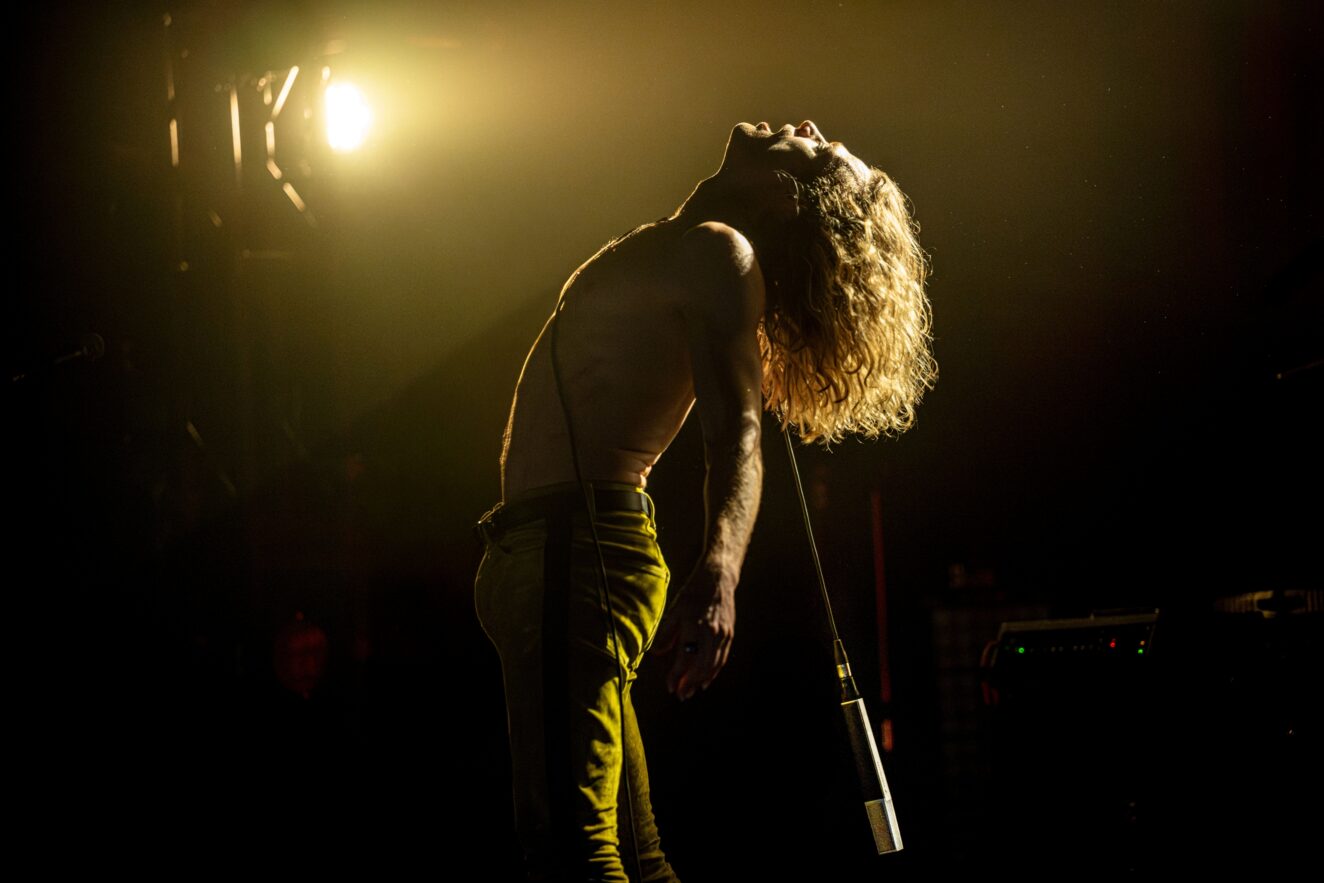
We’ve had a treasure trove of crumbs since San Diego Comic-Con 2025, but overall, AMC has kept things tightly under wraps. Just enough to keep us desperate for more. And now? Now we have it. Well… kind of.
Dropped on April 22 at noon EST, the two-minute trailer offers only a fraction of what’s to come when the season premieres on June 7, but do not let the runtime fool you. It’s dense, chaotic, and absolutely packed with moments worth dissecting. So naturally, that’s exactly what we’re about to do.
If you’re new to the show, or the books (which will absolutely be part of this breakdown), I’ll try to keep things as accessible as possible. I’ll also link out to a few previous pieces that can help fill in any gaps. And if you haven’t caught up yet, both seasons are currently streaming on AMC and Netflix. Just saying.
There’s simply, however, too much happening in this trailer to do it justice in a single piece. So we’re taking it one element at a time, and we’re starting with the music. A full breakdown of the video content of the trailer is coming next.

The Vampire Lestat and “Dancing With Myself”
The Vampire Lestat— the fictional band fronted by Lestat de Lioncourt (Sam Reid) — isn’t just a narrative device this season. It’s becoming real, with original songs expected to release alongside the show, many of them written and produced by composer Daniel Hart, whose work has already been integral to the identity of the first two seasons — more on him, and the team behind this sound, very soon.
“Dancing With Myself” emerged from the post-punk scene of the late 1970s and helped define the rise of new wave in the early ’80s, a genre that softened punk’s aggression into something more commercially accessible without losing its sense of alienation. It’s glossy, performative, and deeply solitary all at once, which, frankly, makes it perfect for Lestat.
And yes, I would pay an embarrassing amount of money to hear him cover the synth-pop/new wave-esque song “Personal Jesus” by Depeche Mode, but that’s neither here nor there.
It goes without saying that the team behind The Vampire Lestat isn’t choosing songs without purpose, and beyond Reid’s voice fitting really well tonally with Idol’s, the lyrics to the song seem especially befitting a certain crashing rockstar in the modern era.
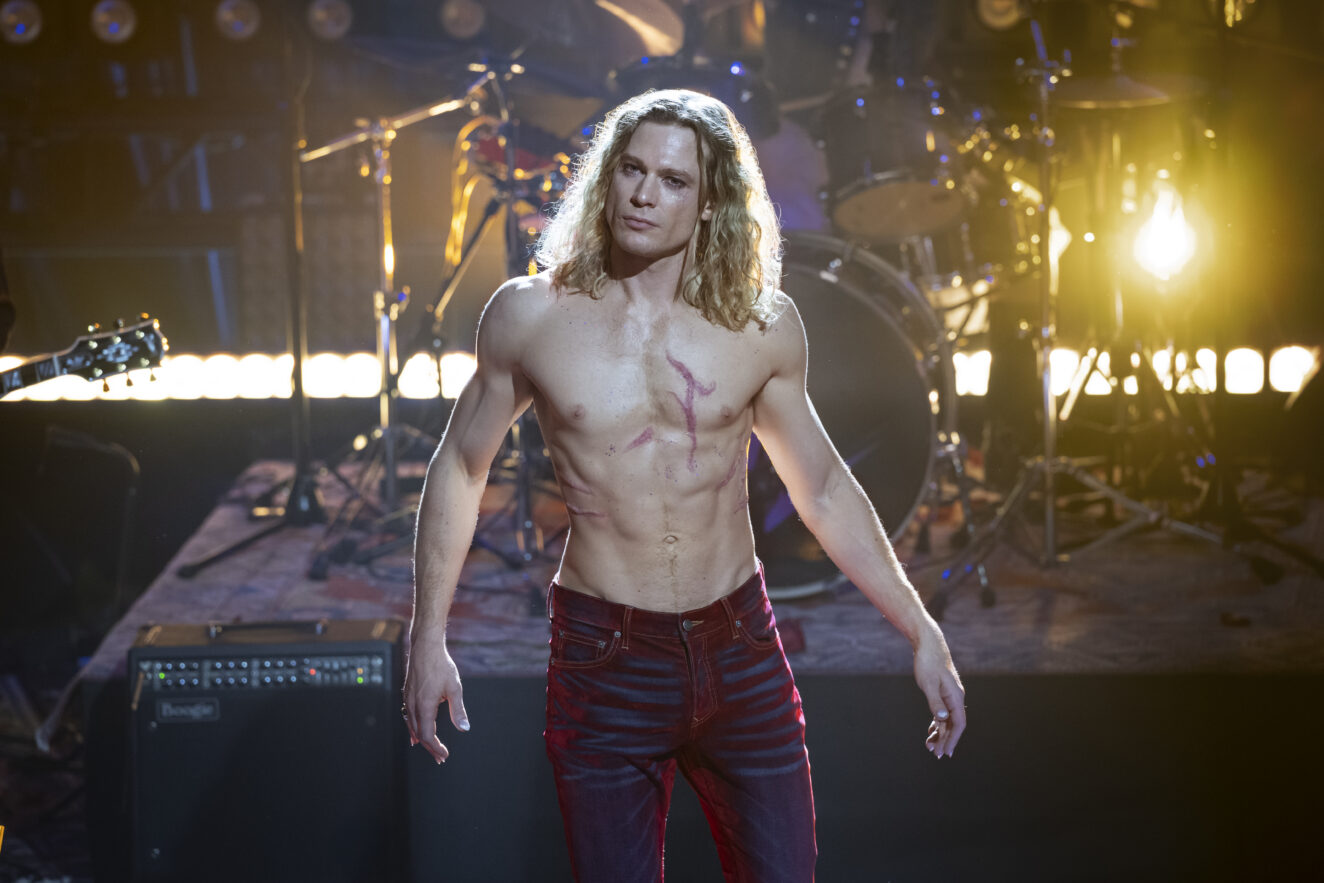
A few lines in particular stand out:
- Oh, when there’s no-one else in sight / In the crowded lonely night / Well, I wait so long for my love vibration / And I’m dancing with myself
- When there’s nothing to lose and there’s nothing to prove
- Well, if I looked all over the world / And there’s every type of girl / But your empty eyes seem to pass me by / Leave me dancing with myself / So let’s sink another drink / ‘Cause it’ll give me time to think / If I had the chance, I’d ask the world to dance / And I’ll be dancing with myself
Taken together, the song circles three central ideas: loneliness, performance, and the absence of meaningful love.
Loneliness
If there is a single emotional constant in Interview with the Vampire, it’s loneliness. But for Lestat, it’s not just a theme. It’s a driving force behind many of his choices, good and bad.
We hear it articulated explicitly as early as Season 1, Episode 2 (“…After Phantoms of Your Former Self”), in a scene near the end of the episode (though it was the very first scene Anderson and Reid filmed together) when Lestat confesses to Louis:
“There is one thing about being a vampire that I most fear above all else and that is loneliness. You can’t imagine the emptiness… A void stretching out for decades at a time. You take this feeling away from me, Louis. We must stay together and take precaution and never part.”
It’s a quiet, romantic moment with the two, but its undeniable romance does not take away from the fact that it also reads as a warning.
Because Lestat’s fear of being alone doesn’t manifest gently. It curdles into control, volatility, and, eventually, violence. By Episode 5 (“A Vile Hunger for Your Hammering Heart”), that fear has escalated into something far more dangerous. Claudia’s return — and her plan to leave again, this time with Louis — pushes Lestat into a full emotional rupture. What follows is one of the most brutal sequences in the series: his attack on Claudia, Louis’ intervention, and Lestat dropping Louis from the sky in an act that is as much about desperation as it is cruelty.
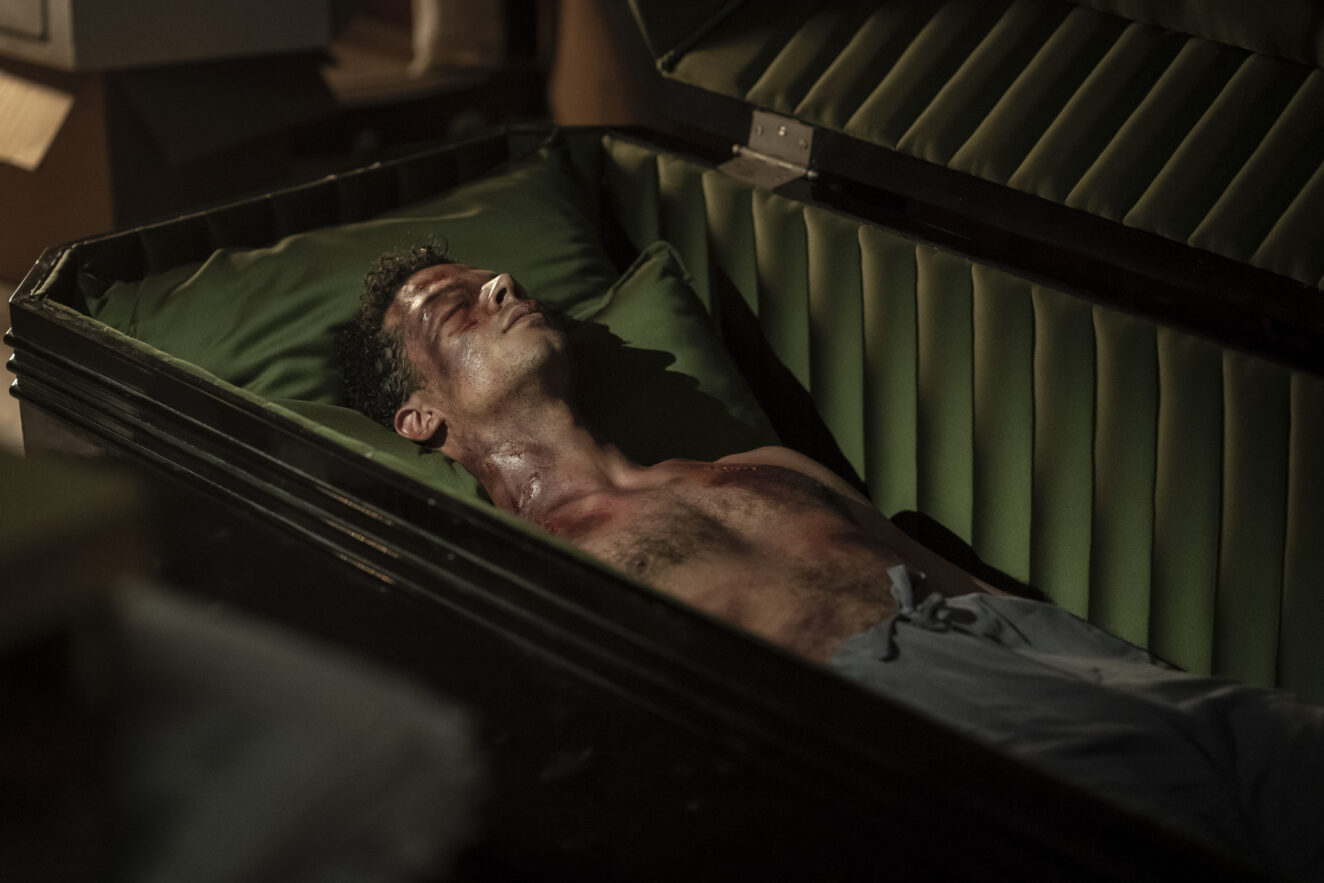
That moment isn’t just about rage, but terror. Specifically, its about the terror of abandonment.
And that terror didn’t start with Louis.
As outlined in The Vampire Lestat (1985) by Anne Rice, Lestat’s human life was defined by instability, neglect, abuse, and emotional distance. His mother, Gabrielle (Gabriella in the show — and yes, we’ll get into that later… yikes), the one person he feels closest to, remains consistently cold and ultimately leaves him more than once. His first relationship, Nicolas “Nicki” de Lenfent (which also… yikes), rejects both his worldview and, eventually, him. And even Armand later tells Lestat outright that he is destined to be abandoned by those he creates.
So when immortality stretches that pattern across decades — and, now, centuries — the result is exactly what “Dancing With Myself” captures: being surrounded by people, yet fundamentally alone.
And that’s one aspect that makes the trailer’s use of this song so telling.
Because if what we’ve seen so far is any indication, between the IGN clip, the tension within his band, and the ongoing-fractured state of Louis and Lestat’s relationship, Lestat’s rise to rock stardom isn’t going to resolve that loneliness.
It is probably going to make it worse.
He may be performing for thousands. Worshipped, even. But if those connections are hollow — fans, bandmates, an audience projecting onto him rather than knowing him — then the image becomes painfully clear:
Lestat, center stage, and still dancing with himself.
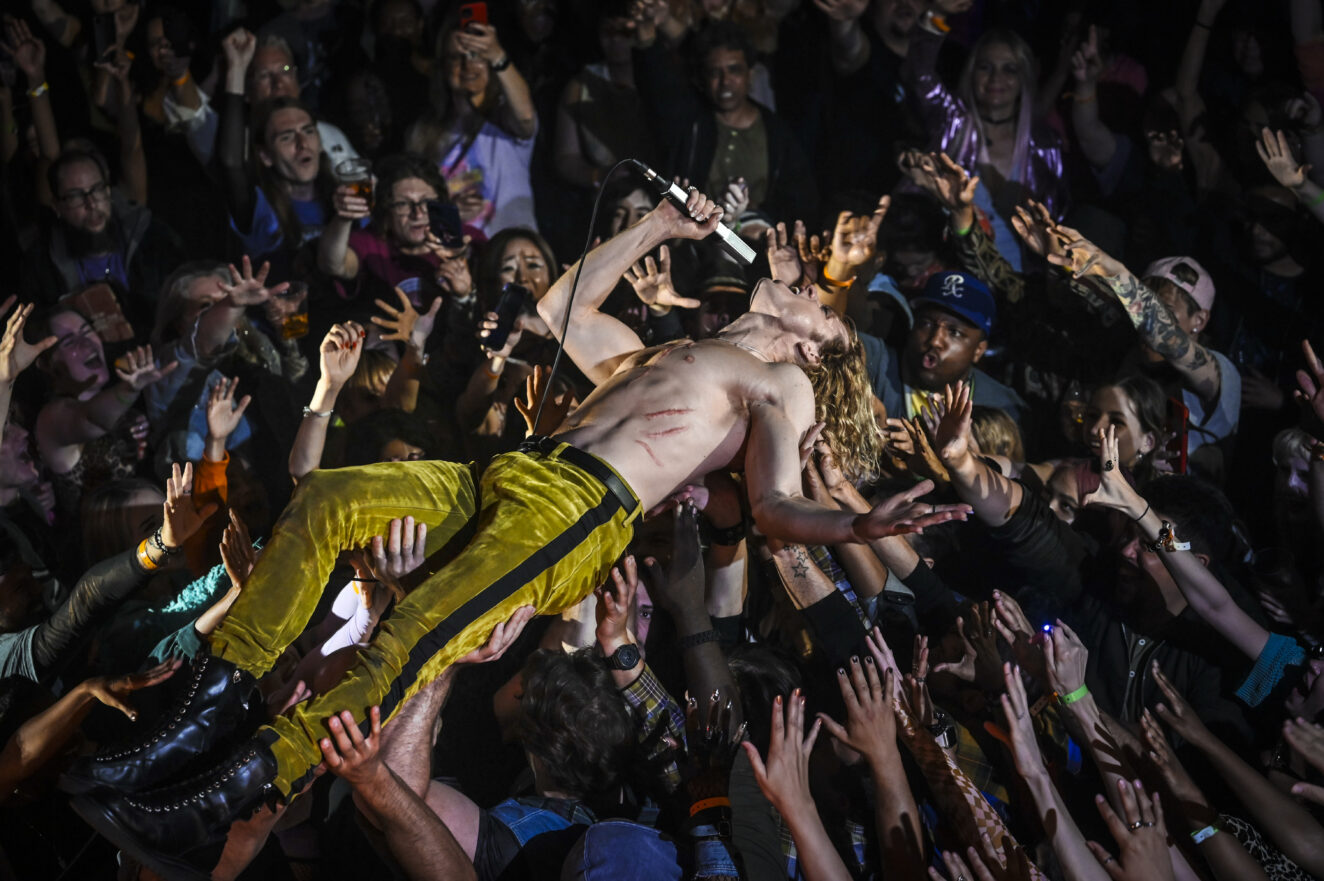
Performance
We’ve known since the very beginning that Lestat is a performer.
In Season 1 alone, he’s constantly putting on a show: playing piano at the Azalea, much to Louis’s reluctant fondness (Episode 3, “Is My Very Nature That of the Devil?”); staging theatrical displays in their home on Rue Royale for Louis and Claudia (Episode 4, “…The Ruthless Pursuit of Blood With All a Child’s Demanding”); and, of course, presiding as King of Mardi Gras, traumatizing the people of New Orleans more than once throughout the night for his own happiness (Episode 7, “The Thing Lay Still”).
Even beyond that, Season 2 gestures toward his past on the 1700s Parisian stage in Episode 3, “No Pain” — though the truth of those performances remains… questionable (looking at you, Armand (Assad Zaman). Where is Lelio?).
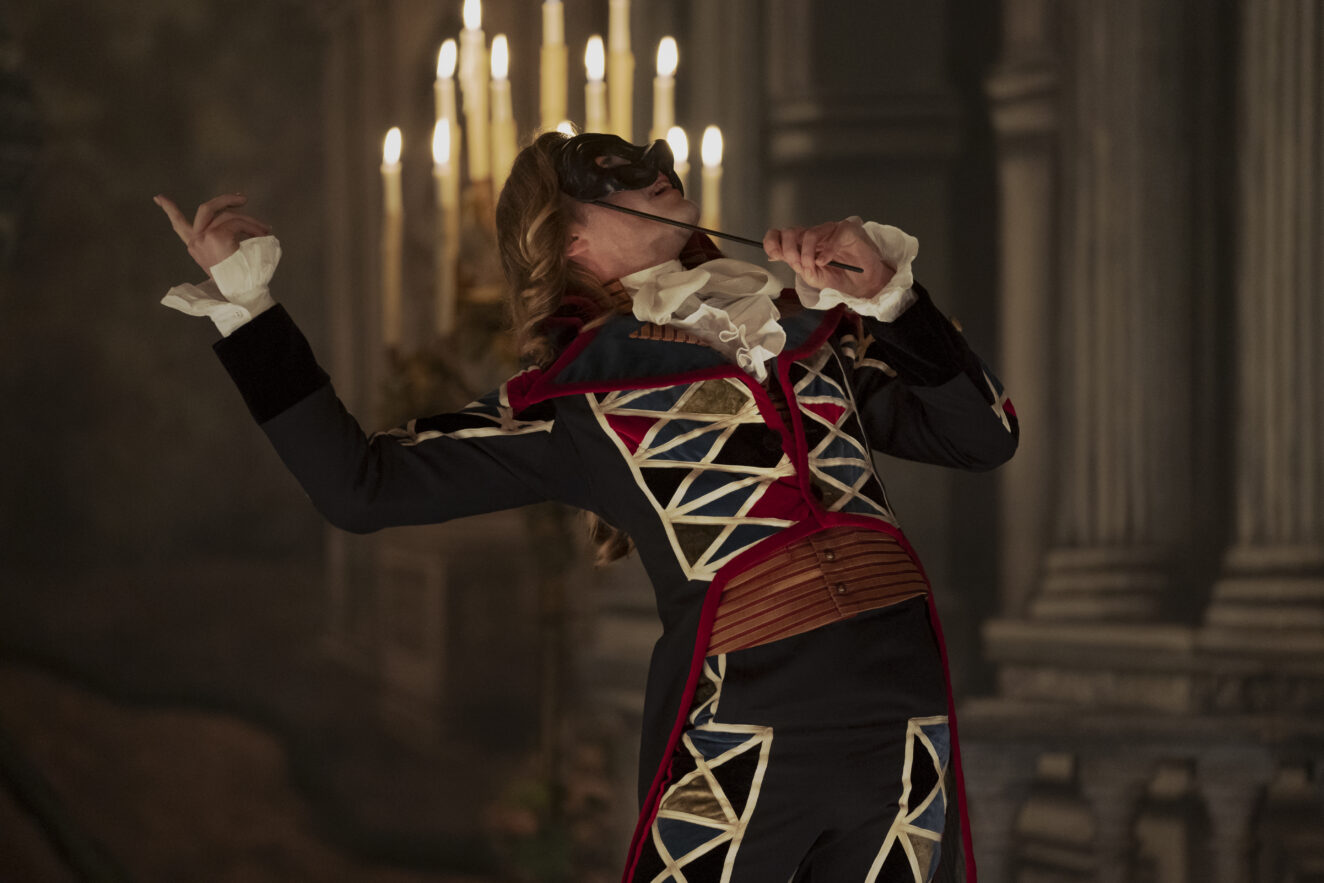
But performance isn’t always just about literal showmanship.
It’s about presentation. It’s about control. It’s about the version of yourself you choose to project. And, even more importantly, what that projection allows you to hide.
And Lestat is always performing.
He presents himself as open, indulgent, impossible to ignore, but that openness is often a kind of sleight of hand. It allows him to dazzle while withholding, to dominate the narrative while obscuring the truth. The trailer leans hard into this idea, framing his rockstar persona as something exaggerated, almost artificial. He’s louder, brasher, more overtly provocative than ever before.
Which brings us back to the lyrics:
When there’s nothing to lose and there’s nothing to prove…
On the surface, that line reads like a freedom of sorts. But in this context, it feels more like a performance of certainty than the real thing.
Because The Vampire Lestat novel is steeped in Lestat’s need to define himself, to control how he’s seen, and to rewrite his own narrative. And given where the show has left him — his fractured relationship with Louis, the weight of Claudia’s death, the lingering guilt and denial — it’s hard to read “nothing to lose” as truth.
If anything, it sounds like someone trying very hard to believe it.
The same goes for “nothing to prove.” Because Lestat is, in many ways, still trying to prove everything: his power, his independence, his monstrosity, even his worthiness of suffering. That famous line —
“Oh Lestat, you deserved everything that’s ever happened to you…”
The Vampire Lestat, Page 436
— doesn’t read as acceptance so much as self-condemnation. A performance of self-awareness that never quite resolves into peace.
If the music is any indication, this rockstar era isn’t about actual liberation. The persona gets bigger, louder, more undeniable, but the cracks underneath it widen just as quickly.
The performance can only hold for so long.
And when it finally falls apart, as the season’s hints of a “rise and fall” suggest it inevitably will, it won’t simply just collapse, but will force whatever is being hidden into the spotlight instead.
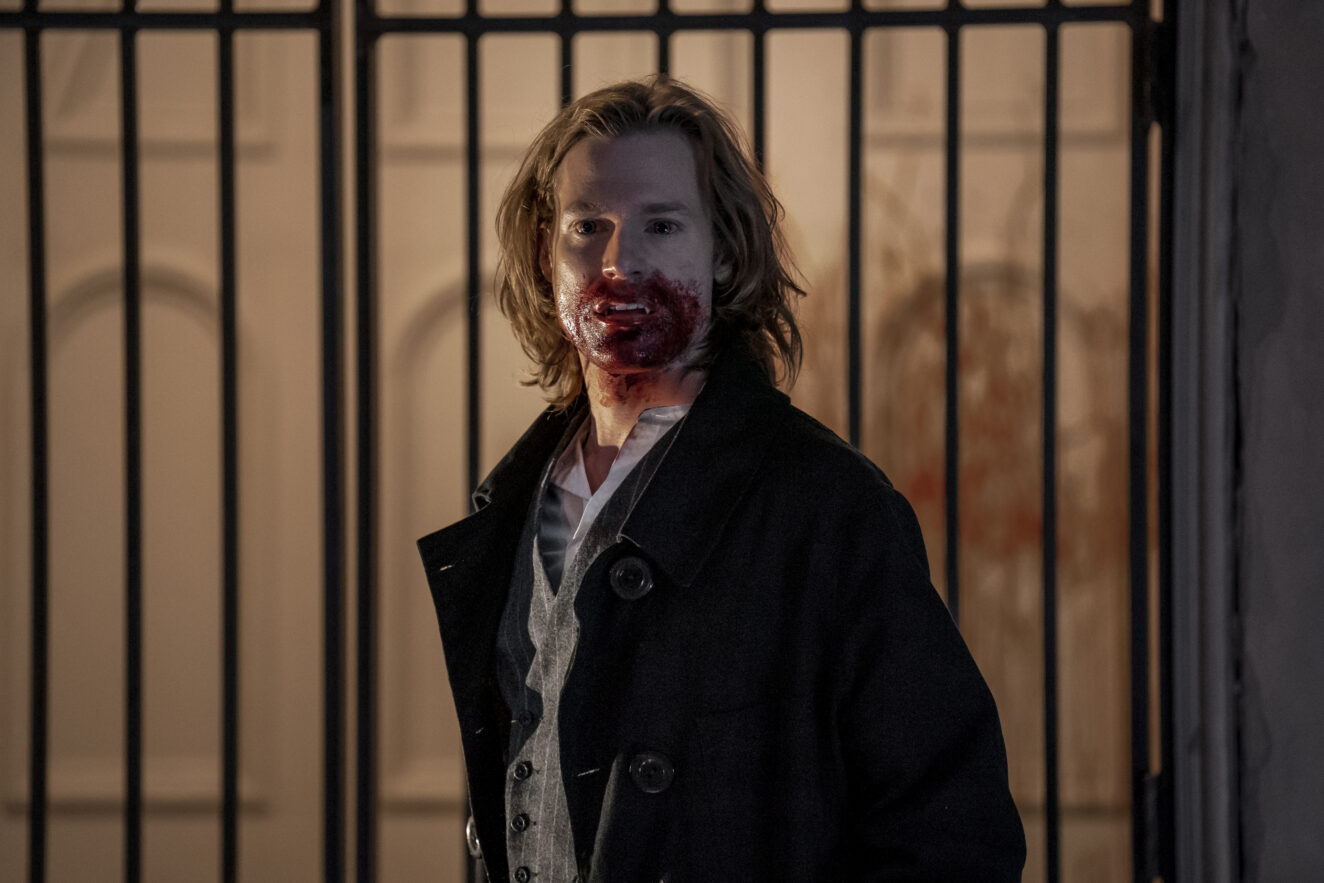
Absence of Meaningful Love
Last, but certainly not least — and arguably most important — is the absence of meaningful love.
Like loneliness, this is a theme deeply embedded in Interview with the Vampire. But what “Dancing With Myself” highlights is something more specific: not just the loss of love, but the inability to access it, even when it exists.
And that’s where Lestat and Louis become central to the song’s meaning.
From what the series has already shown us, their relationship is not only the emotional core of the story, but the most real and significant connection either of them has ever had. Season 1 makes that clear, even when it’s at its most volatile. Season 2 reinforces it even further by showing us that even though Lestat may be “gone,” he never leaves the narrative. He lingers in Louis’ mind, shaping his choices, haunting his relationship with Armand, and ultimately highlighting a truth the show never lets us forget, which is that nothing Louis builds in Lestat’s absence comes close to what they had together.
Which makes the song’s fixation on unfulfilled connection hit even harder.
Because if “Dancing With Myself” is about longing for something just out of reach, then it maps almost too neatly onto where this story leaves them — separated, fractured, and, for all intents and purposes, withholding love from one another.
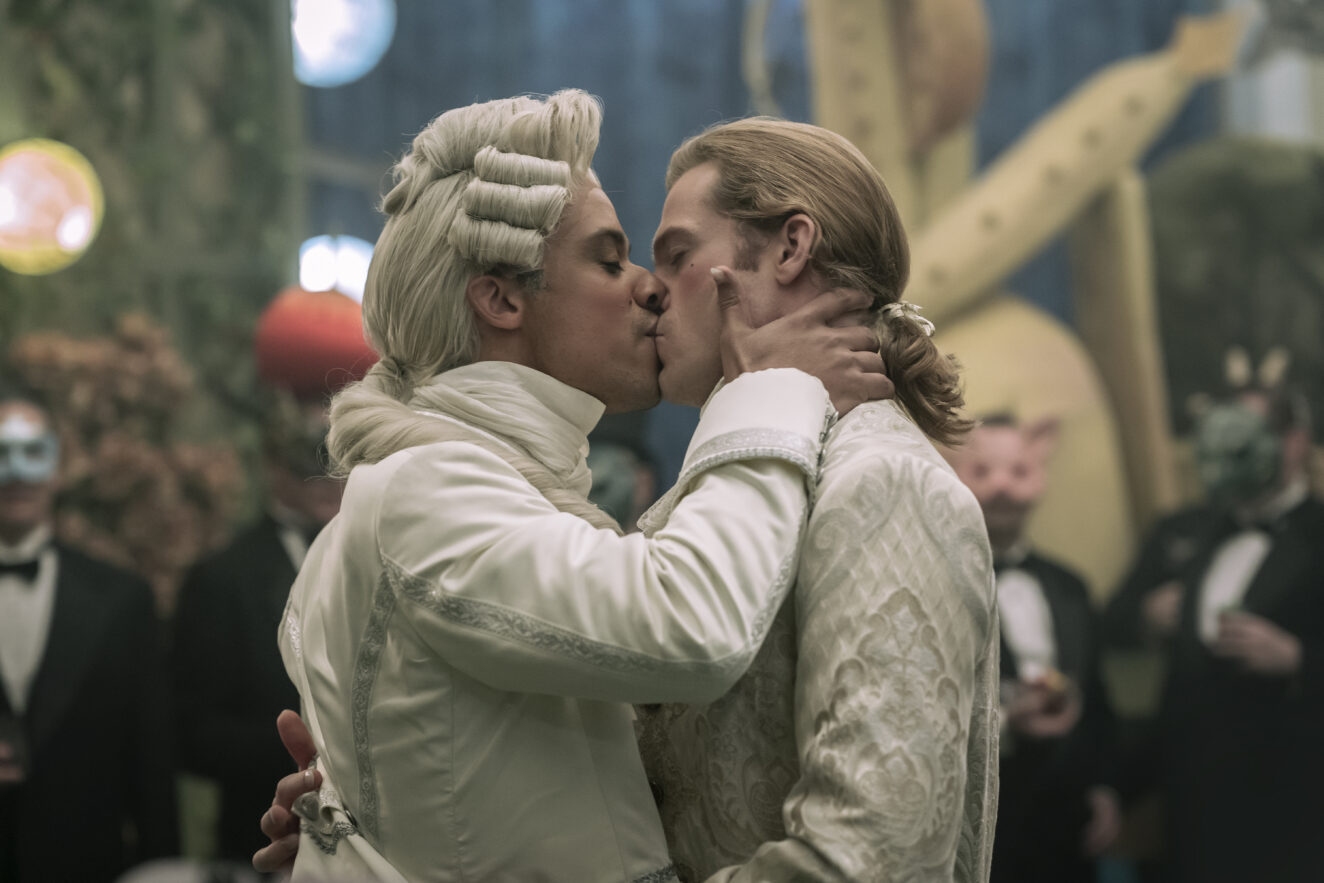
And from Lestat’s perspective, that absence is everything.
As explored in The Vampire Lestat and later novels, Louis is not just a great love; he is the love.
There are countless passages that reinforce this, moments where Lestat’s fascination, devotion, and emotional connection to Louis border on overwhelming. Some of my favorite passages include, but are not limited to:
- “Yet Louis gained a hold over me far more powerful than Nicolas had ever had. Even in his cruelest moments, Louis touched the tenderness in me, seducing me with his staggering dependence, his infatuation with my every gesture and every spoken word.” — The Vampire Lestat, Page 433
- “It was the love of Louis which had at times crippled Lestat, and enslaved Armand. Louis need not have consciousness of his own beauty, of his own obvious and natural charm.” — Merrick, Page 142
- “[Louis’] beauty had always maddened me. I think I idealize him in my mind when I’m not with him; but when I see him again I’m overcome.” — The Tale of the Body Thief, Page 106
But it is even more apparent, even more all-consuming, in the show. Lestat’s love of Louis is undeniable, again, despite their past. From the very first moment he saw Louis in Season 1, Episode 1 (“In Throes of Increasing Wonder”), the attraction was evident, but as the episode and season progress, it is clear that Lestat’s love for Louis is what, quite literally, keeps him going in this immortal life.
Which is exactly why the lyrics land the way they do.
Well, I wait so long for my love vibration / And I’m dancing with myself…
and
If I looked all over the world… but your empty eyes seem to pass me by…
These lines don’t just suggest loneliness, but waiting. Waiting for a specific kind of love, one that isn’t interchangeable, one that can’t be replaced no matter how many people surround you.
And the trailer, and interviews with the cast and crew at past events of SDCC and New York Comic Con (NYCC), seems to lean into that idea.
Because while Lestat’s rockstar persona promises excess of attention, admiration, and endless bodies in endless rooms, the song takes away from that. The implication is clear: none of it is enough. Not the fame, not the show, not the distractions.
None of it is enough if the one person he actually wants isn’t there in the way he wants and needs them.
So what fills that gap?
Performance. Indulgence. Self-destruction.
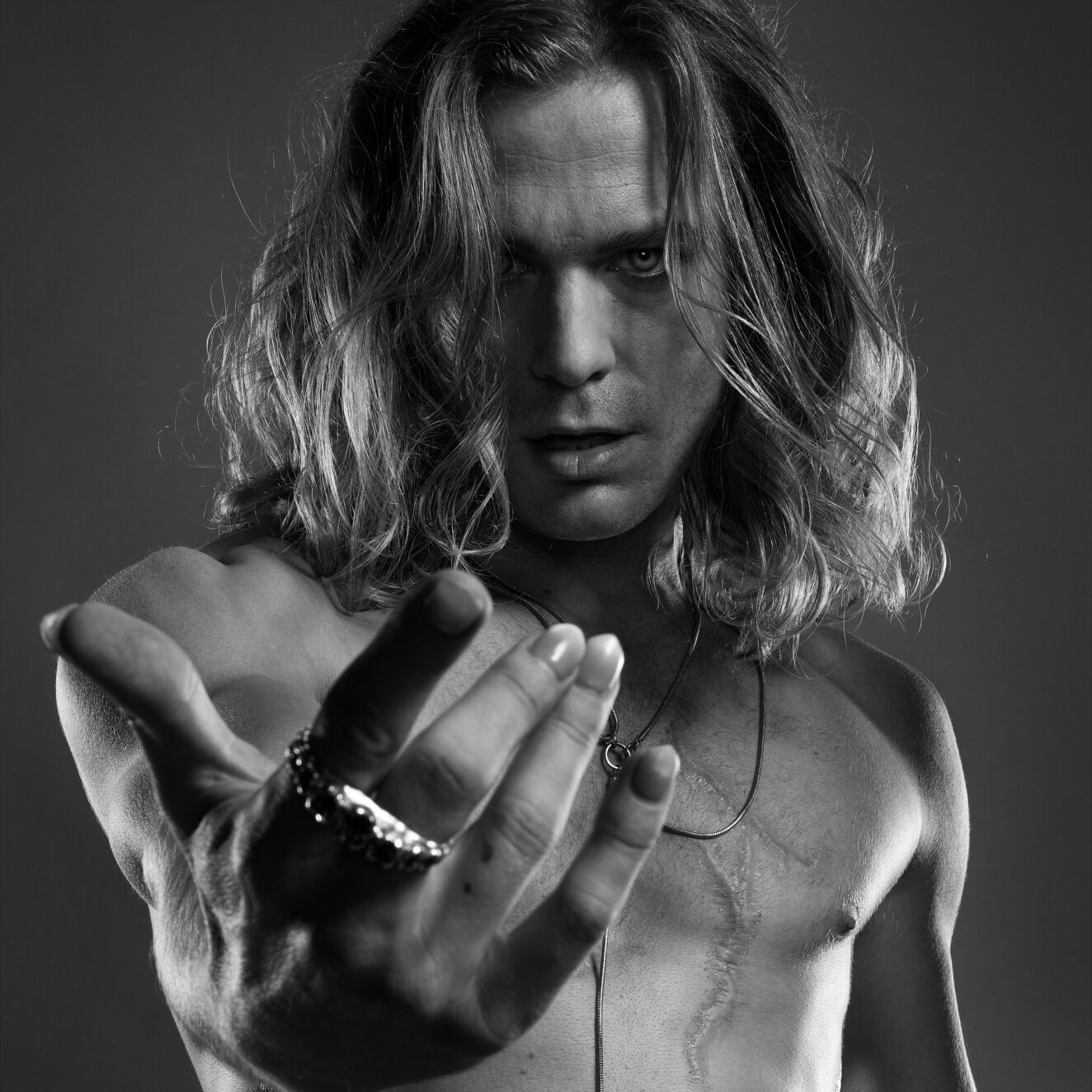
The lyrics hint at it —“let’s sink another drink… give me time to think”— and the trailer visuals, as well as some of the other smaller clips AMC has been sharing over the last couple of weeks, seem to follow suit. Whatever this era of Lestat’s life becomes, it doesn’t read as fulfillment. It’s more of a coping mechanism. And a really bad one.
Ultimately, what “Dancing With Myself” captures, and what the trailer reinforces, is that Lestat isn’t just alone, but he is alone without the one person whose love ever made that loneliness bearable.
And until that changes, no amount of noise, attention, or performance is going to fix it.
Because change will be required from both of them. From Lestat, a confrontation with who he is beneath the performance; from Louis, a willingness to face what remains between them.
And when that shift finally comes, it will be beautiful and probably send me into a psychosis.
But until then, the lyrics linger where Lestat is now: searching, performing, and still, despite everything, waiting for Louis’ love.
Conclusion
What makes this trailer so effective isn’t just what it shows, but how it sounds. The choice of “Dancing With Myself” is deliberate, layered, and deeply revealing of Lestat’s mental state during what will probably be the beginning of his journey to rockstardom. Through its lyrics and tone, the song reframes everything we’re seeing: Lestat’s rise to fame as a performance, his excess as coping, and his isolation as something that no amount of attention can truly resolve.
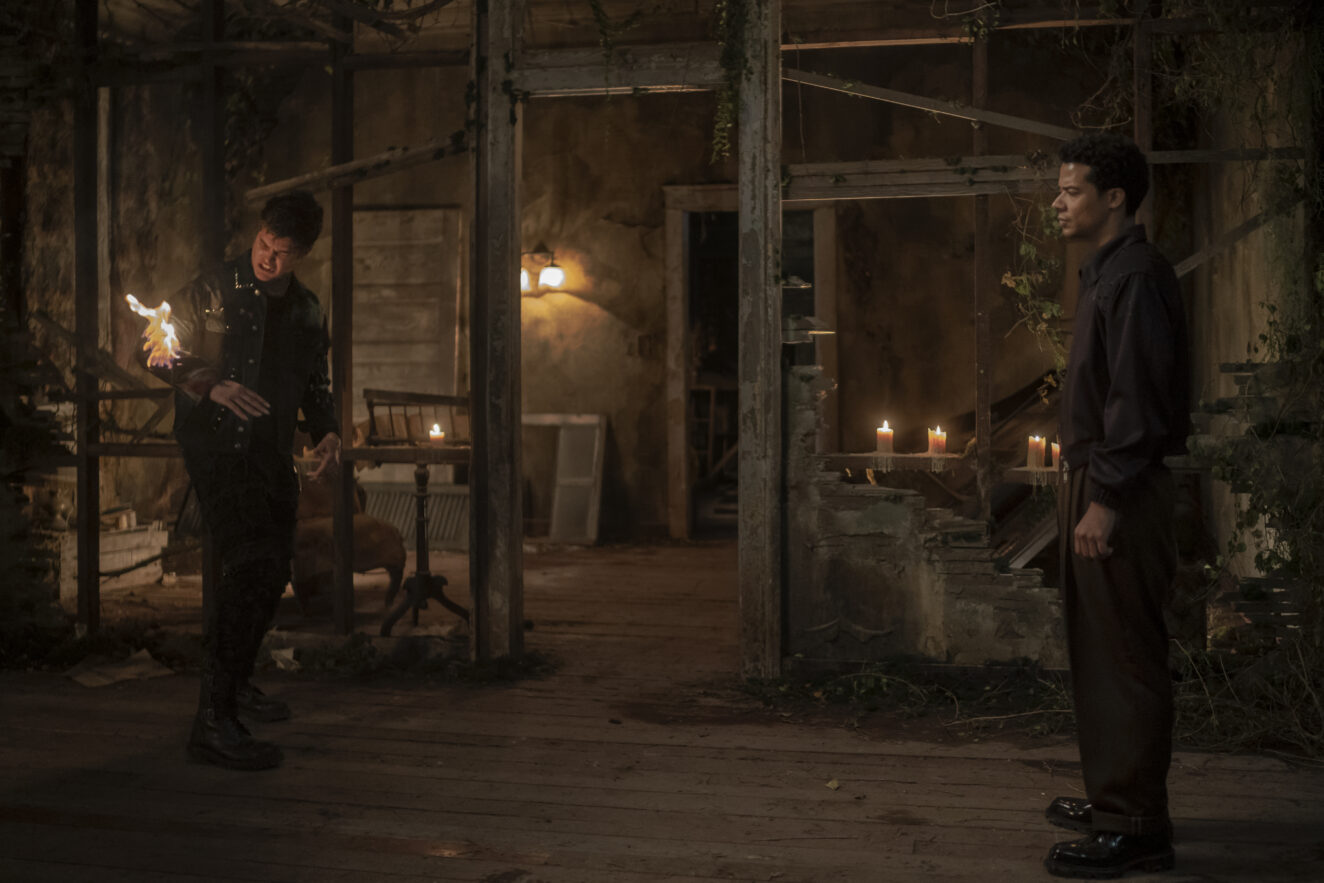
Loneliness, performance, and the absence of meaningful love aren’t just recurring themes in Interview with the Vampire, but now something embedded directly into the music of this trailer, guiding how we interpret nearly every frame, character action, and piece of dialogue. It’s a reminder that this next chapter, The Vampire Lestat, isn’t just about reinvention but exposure.
And if this trailer and its music are any indication, we’re in for something messy, emotional, indulgent, and probably devastating in all the best and worst ways.
This might be me reading way too much into a trailer song choice, but I don’t think I am. To quote OutKast in “Hey Ya!:” “Y’all don’t wanna hear me, you just wanna dance.”
And if that isn’t exactly what this trailer is doing, I don’t know what is.
All I do know is that June 7 cannot come fast enough.
In the meantime, you can watch the official trailer below and listen to “Dancing With Myself” by The Vampire Lestat to hear exactly what he’s telling us.
Be sure to follow us here at iHorror for our upcoming breakdown of the trailer’s visual content — we’re covering all things The Vampire Lestat as we count down to its premiere on AMC and AMC+ on June 7 at 9 p.m.
Editorial
‘Behind The Mask’ is a Love Letter to Slashers
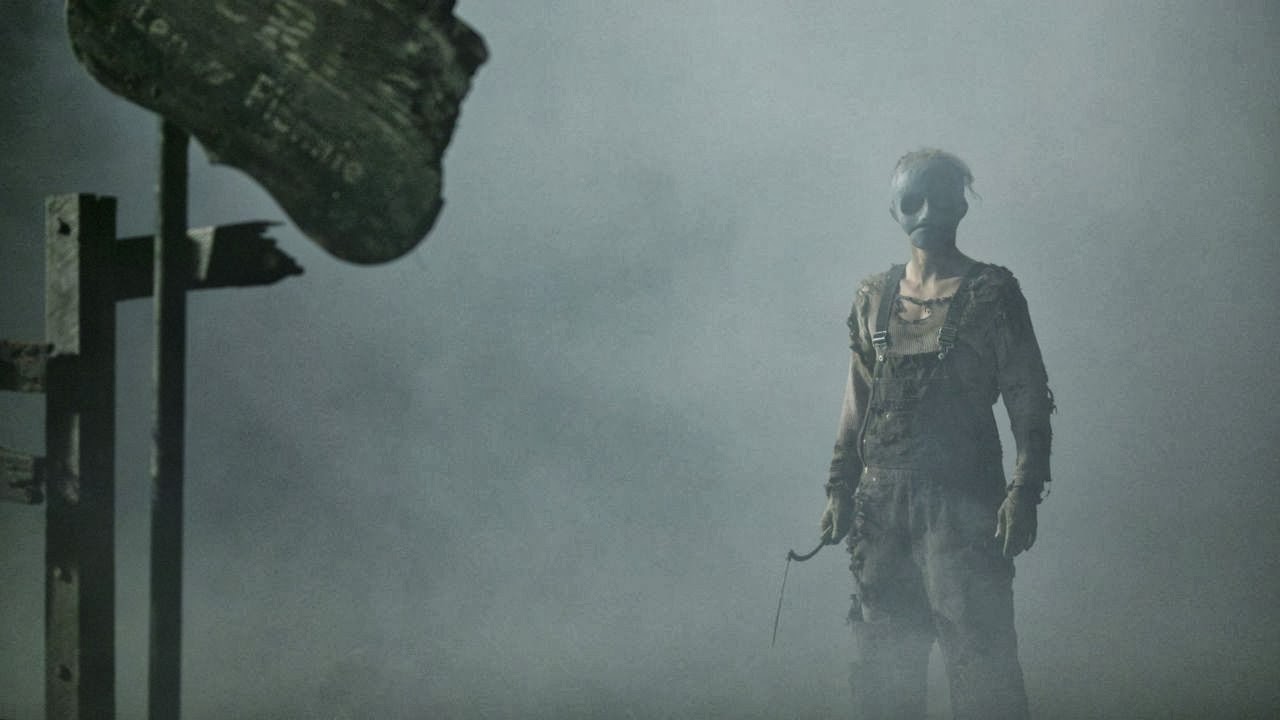
In 2006, mockumentary Behind the Mask: The Rise of Leslie Vernon had a limited theatrical run yielding a low box office. However, the movie began to build buzz on the festival circuit and among fans. It wasn’t until the movie was released for home viewing when their main audience was solidified. Now, Leslie Vernon is both a beloved gem of a movie, and character, in the world of horror!
The Makings of a Legend
When cameras begin to roll audiences aren’t really sure what they’re watching. Is it a slasher movie? A parody? A dark comedy? Well, it’s all three really. Behind the Mask begins as a fun, dark, and comedic study of a killer through the lens of aspiring journalist Taylor, and her filming crew Doug and Todd. However, as the story unfolds it turns into a clever and original slasher movie that no one expected.
It is hard talking about this movie without giving away all of the magic.
Behind the Mask examines the archetypes and tropes of classic horror movies as a film crew of three graduate school students interview the self proclaimed killer in training, Leslie Vernon.
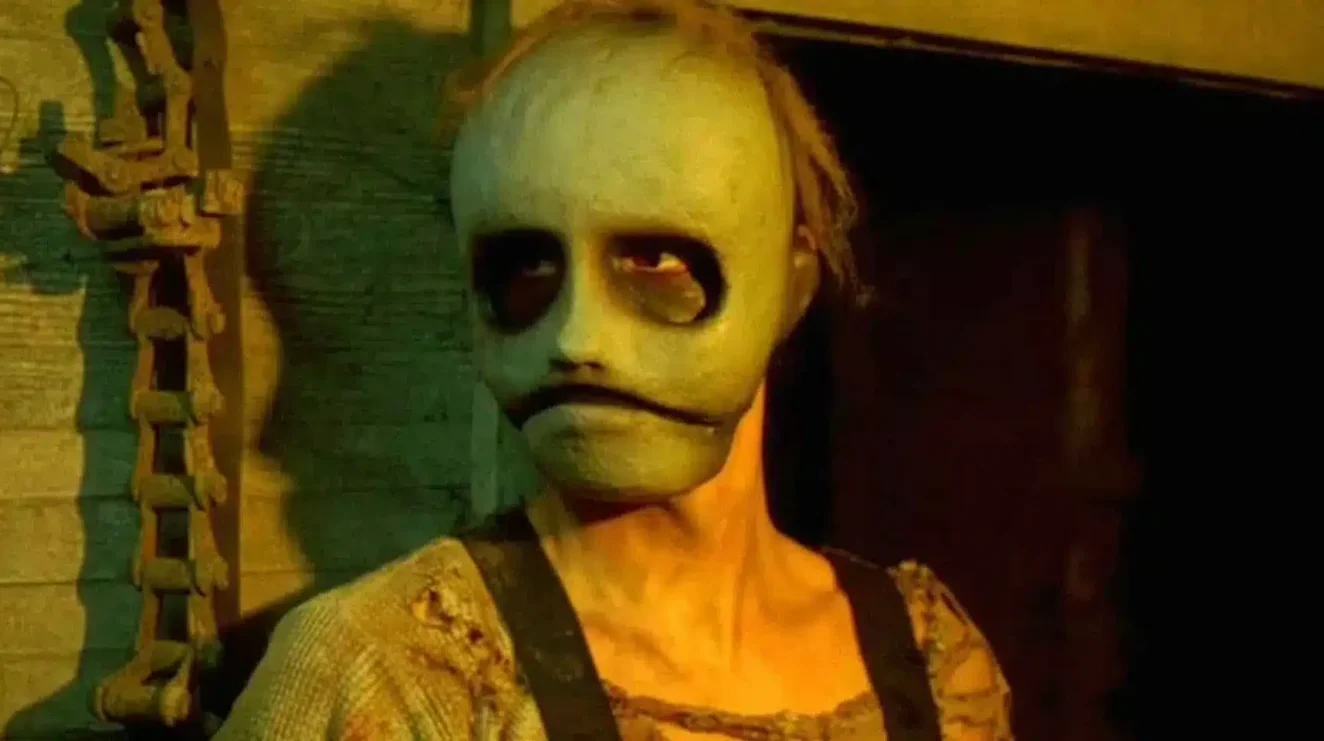
Leslie confides to the crew he is inspired by the likes of Freddy Krueger, Jason Voorhees, and Michael Myers. What makes this particularly interesting is that in this world, these characters and their killing sprees are real! It is Leslie’s hope that one day that he will have his name memorialized alongside theirs.
Behind the Screams
One of the many things that makes this movie so enjoyable is how it relates to real life horror fans. Behind the Mask captures conversations fans have been having among themselves for years!
For instance, how does Michael Myers slowly stalk his victims at such a snail’s pace and still catch up? Vernon claims it’s because they’re not walking. He discloses to the film crew he has to work out daily to keep up his cardio for all of the chasing. He implies that when he’s not in view of his victims, he is running to keep up.
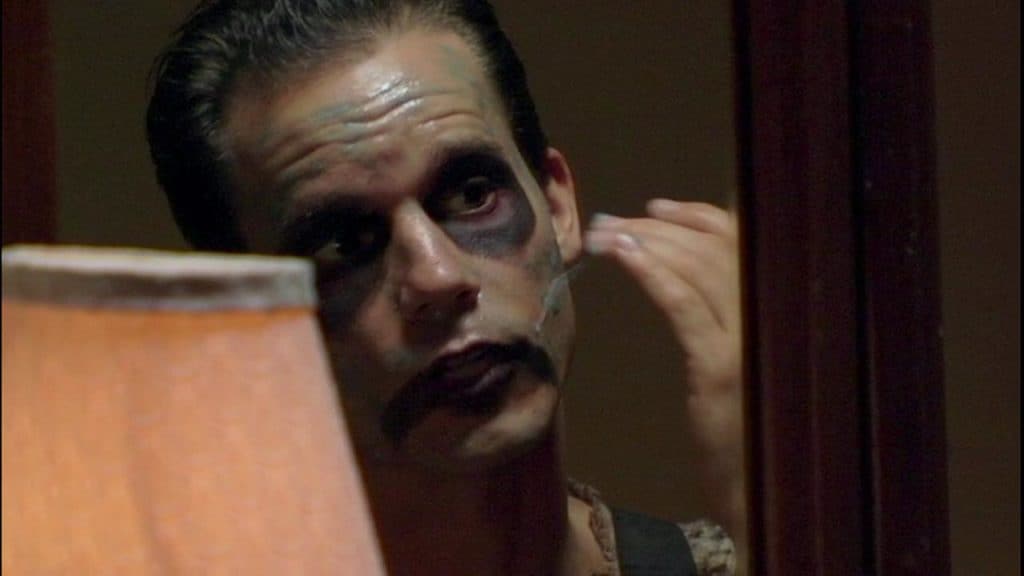
Another dispute fans have been debating among themselves is how much planning, if any, goes into killers choosing their victims. Is it random? Is it an obsession? Vernon also sheds light onto this as he describes the process of choosing his survivor girl, and the friend group he will kill around her. Who he kills and in what order is just as important as the girl that he is doing it all for.
Leslie also reveals the man behind the curtain when it comes to the smaller details; How do doors close by themselves? Why are windows so hard to open to escape? Why are flashlights always dead? And why are weapons so dysfunctional?
Leslie discloses it is because the whole game of cat and mouse is rigged! He uses fishing line to move doors and objects, nails windows shut, replaces flashlight batteries with dead ones, and sabotages weapons to break easily. It really seems like cheating when you think about it.
For the Love of Horror
Another reason why Behind the Mask: The Rise of Leslie Vernon is loved by the horror community is because it is a treasure trove of genre references. The following are just a few of the horror references fans will recognize.
Leslie’s pet turtles are named Church and Zoey, referencing the pets from Pet Sematary 1 and 2. In the home of Leslie’s mentor Eugene (played by Scott Wilson) a Hellraiser puzzlebox is in view for the audience to see. Additionally, while Taylor is being filmed in an opening scene of her documentary, the sign over her shoulder is for The Rabbit in Red Lounge. The Rabbit in Red is a strip club featured in Rob Zombie’s Halloween movies. One last example is the car in Eugene’s driveway. It is a yellow 1973 Oldsmobile Delta 88, the same car used in Sam Raimi’s Evil Dead trilogy.
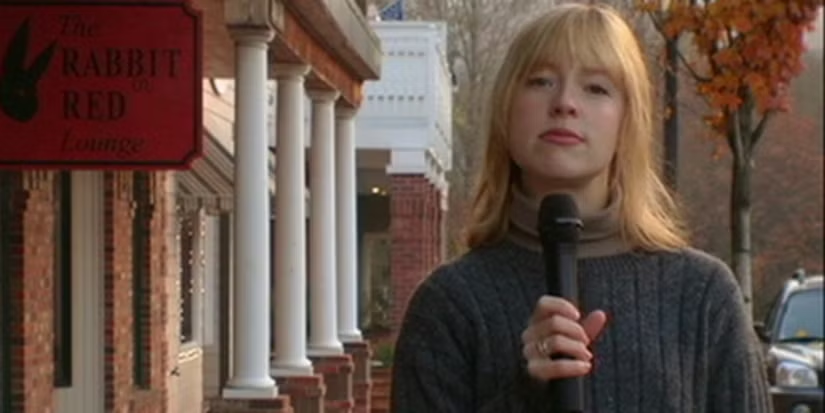
Not only are there numerous horror references fans can spot throughout the film, horror cameos also punctuate Behind the Mask.
Beloved horror veteran Robert Englund is Vernon’s astute adversary, Doc Halloran. You will quickly draw parallels between Doc Halloran and Dr. Samuel Loomis of John Carepenter’s Halloween. Both men harbor borderline obsessive relationships with their respective killers. They are the “Ahab” archetype, and they see it as their mission to stop these monsters from doing evil in the world.
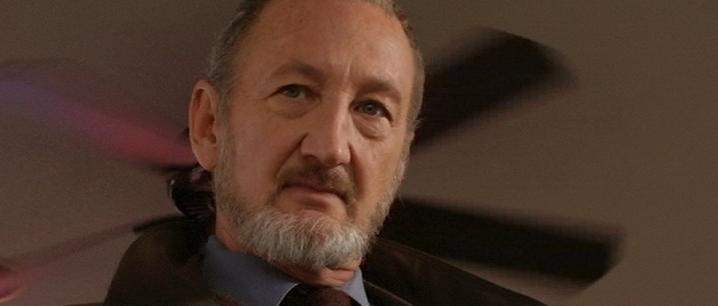
In addition to Englund, Zelda Rubinstein shares the cameo stage. Rubinstein played the psychic Tangina Barrons from 1982’s Poltergeist, and portrays librarian Mrs. Collinwood in Behind the Mask.
A keen eye can even spot a young Kane Hodder as the home owner of a very famous house on an infamous street in Springwood, Ohio.
A Sequel on the Rise
In April 2026, director Scott Glosserman announced alongside writer David J. Stieve that Leslie Vernon is returning! The long awaited sequel, Behind the Mask 2: The Return of Leslie Vernon, has been greenlit. The news came at the 20th anniversary screening at the Alamo Drafthouse. In addition to the return of Nathan Baesel as Leslie Vernon, Glosserman told fans Angela Goethals and Robert Englund will also be reprising their roles from the original.
Twenty years is a long time, and fans are wondering if the same magic that made the original so special can be recaptured. Not only have the actors changed, but so has the genre. What new tropes will be weaved into the script? What new references will be penned into the world? Who will be casted for a cameo?
Follow iHorror as updates are released! Additionally, sign up to follow the sequels‘ kickstarter. While the movie will be made with or without backing from the fans, the campaign explains money generated through the page “will allow us the freedom to make it our way: bigger, wilder, bloodier and more worthy of the legend Leslie was always meant to become!”
Editorial
Alien Watch Order and Complete Lore Guide: Yes, Jesus Is Involved

Every film in chronological order, with the theology, the philosophy, and every question you have been Googling at midnight finally answered.
You think this franchise is about a monster. Everyone does, the first time.
Then you watch the prequels and find out it is actually a forty-seven-year argument Ridley Scott is having with God, and nothing is the same after that.
Here is what the Alien franchise is actually about. What happens when the things you create decide they do not want to be what you built them for. It involves ancient giants who seeded all life on Earth and then changed their minds about us. It involves an android who read Paradise Lost, understood it completely wrong, and decided that was everyone else’s problem. The film involves a Swiss artist who genuinely believed that sex and birth were terrifying, and spent his career building the visual argument.
And yes. We are going to talk about Jesus. Stay with me.
This guide covers every film in the order the events actually happen, not the order they were released. It explains what each film leaves unanswered and where those answers show up later. By the end you will know the full timeline, what the Engineers are, why David becomes what he becomes, what the black goo does and why the franchise uses it for everything, and why a giant alien woke up from two thousand years of cryosleep and immediately started killing people without saying a word.
Before Any of the Films: The Two Men Who Built the Xenomorph

H.R. Giger Had a Point to Make
The xenomorph did not begin as a story idea. It began as a painting.
Swiss artist H.R. Giger spent his career developing what he called a biomechanical style: figures where human anatomy and industrial machinery fuse into something that is neither alive nor mechanical. His work is deeply uncomfortable to spend time with. That was the point.
To Giger, sex and birth carry the potential for suffering, and every life they produce already contains the mechanism of its own destruction. His piece Birth Machine depicts children being used as gun amunition. He was not trying to make something pretty. He was trying to make something true.
When Ridley Scott chose Giger’s 1976 painting Necronom IV as the basis for the creature, he was not just picking a cool design. He was picking a philosophy. The xenomorph’s head is deliberately phallic. The facehugger carries a vulva motif. The eggs in the original film were explicitly vaginal until studio notes requested some adjustments. The entire creature is built to make you feel violated in a way you cannot quite locate, because the violation is happening at the level of symbol.
Everyone involved understood exactly what they were making. The word “subtle” does not appear anywhere in the production history.
Dan O’Bannon Was Twelve When Lovecraft Broke Him

Dan O’Bannon wrote the original screenplay and has said, directly, that “H.P. Lovecraft scared the crap out of me when I was twelve.” Alien was his attempt to give that feeling to everyone else.
The feeling he was chasing is Lovecraft’s central idea. The universe contains things so far beyond human comprehension that encountering one does not produce fear exactly, but a kind of collapse. Not “this thing will kill me” but “this thing exists, which means everything I believed about reality was wrong.” That specific flavor of dread.
In early drafts O’Bannon described the alien as “a blood relative of Yog-Sothoth,” one of Lovecraft’s outer gods. That got cut. What stayed was the instinct. The creature must never be fully understood, because the moment you understand it, it stops working. It has to feel like something the universe produced for no reason, with no explanation, and with no interest in you whatsoever.
Ridley Scott kept all of that and added one question O’Bannon never tried to answer: where did it come from? That question is what the prequels are made of.
Who Are the Engineers

The Engineers, also called the Architects or the Space Jockeys depending on who you ask, are a species of giant humanoid beings who seeded life on Earth and then, at some point approximately two thousand years ago, decided they wanted to un-do that work.
Ridley Scott has described them in multiple interviews as something between gods and angels. In one interview he specifically compared them to the dark angels in Milton’s Paradise Lost, a comparison that is worth sitting with. Milton’s angels are not neutral messengers. They are beings who chose sides in a conflict between creation and destruction, between obedience and will. The Engineers occupy the same space in this universe.
The opening scene of Prometheus shows an Engineer standing at the edge of a waterfall and drinking a black substance that dissolves his body. His DNA fragments and disperses into the water below, seeding it with the biological material that will eventually become all life on Earth. This is a deliberate act of sacrifice. An Engineer dies so that something new can live.
Scott has described this opening as showing the Engineers as “gardeners of space”, beings who seed life across the universe as part of a larger purpose that the films never fully articulate. They are creators by vocation. What they are not, it turns out, is patient with what they create.
The Question of Why They Built Us

The Engineers are enormous ancient humanoids who created all life on Earth and eventually decided that was a mistake. Honestly, relatable.
Their DNA is identical to ours, a fact established in Prometheus and left deliberately unexplained. They did not just seed Earth with some random biological material made in a lab. They made something in their own image. Whatever they were trying to build, they were building a version of themselves.
One reading, supported by Scott’s comments, is that this is a riff on the Gnostic tradition. This belief states that the material world and the beings in it are not the creation of the supreme god. Instead, it is the work of a demiurge.
For those unfamiliar, this is a less porerful god who got cocky and created the universe only to realize they made a kind of crappy version. Pretty funny analisis of the universe, all things considered. The Engineers are the demiurge. We are the imperfect copy. And the Engineers, like the Gnostic demiurge, are not benevolent.
A less covoluted theory is that the Engineers created us the same way a child creates something in art class. To see if they could. And then they grew out of it. We are the crumbled paper at the bottom of the wastebasket. The only problem is, we didnt stay in the trash, we followed them home.
Why They Decided to Wipe Us Out

Here is where it gets strange. Strange meaning it involves Jesus.
The Engineers on LV-223 were preparing a bioweapon payload targeted at Earth approximately two thousand years before the events of Prometheus. Something catastrophic happened at the facility before they could launch it. The disaster dates to that exact period. Whatever turned them against us happened two thousand years ago, and the facility was abandoned mid-launch.
The Space Jesus Theory

Here is what Ridley Scott confirmed in a 2012 interview and then immediately got cold feet about putting in the film: the Engineers sent an emissary to Earth when humanity had become too violent. He described “our children misbehaving down there,” the Romans in their armor, a civilization that had gone out of control. So they sent someone to fix it.
We crucified him.
I am not making this up. This is from Scott’s mouth. He said it and then said it was too on the nose to include explicitly. Ridley Scott, the man who spent two films having his characters read Milton out loud at each other, thought something was too on the nose.
Lindelof has said Scott kept pulling back from spelling it out throughout development. But look at the math: Engineers preparing an extinction-level bioweapon for Earth, a disaster that stops them, everything dated to two thousand years ago. The only event from that period with those consequences is the one Scott described and then cut. It is not subtle even with the scene removed.
What This Means for the Franchise

The Space Jesus implication reframes every film that precedes it in production order. The xenomorph is not just a monster. It is the weapon a god built to destroy his failed creation after the creation killed his son.
That is not a comfortable sentence. It was not meant to be.
Scott has been consistent in his refusal to resolve this theologically. He wants the audience uncertain. He wants them arguing. The franchise’s ambiguity on this point is not a failure to commit. It is the entire point. These are questions about creation and meaning and divine intention, and the franchise’s position is that those questions do not have clean answers.
The Black Goo: A Substance That Does Whatever the Scene Needs

The black goo is the most important substance in the franchise and also the most chaotically written, which feels appropriate. What the films establish is this, it rewrites organic material at rapid speed in unpredictable directions. “Unpredictable” is doing a lot of heavy lifting in that sentence.
In Prometheus it turns worms into proto-xenomorphs, turns one crew member’s sperm into something that produces a proto-facehugger, and dissolves an Engineer’s body in a way that seeds an entire planet with life. In Covenant, David weaponizes it against an entire civilization and uses it to run the experiments that eventually produce the organism he has been working toward.
The Engineers created it. The same substance used to make us can unmake us. If you are looking for a metaphor about the relationship between creation and destruction, that is the metaphor, and this franchise will not let you miss it.
David: Why He Becomes What He Becomes

The Setup
David is the best character in this franchise and I will die on this hill.
Damon Lindelof’s central question when he came onto Prometheus was, what does the story look like from the robot’s perspective? The humans are going to find their creators. David is already standing in front of his. He is not impressed.
He is the third link in a chain. Engineers made humans, humans made David. He is the only one in that chain who can look his creator in the face while they are both still alive. What he sees is Peter Weyland. A man who is dying, vain, and funding an interstellar expedition not to advance human knowledge but to personally beg for more time. Weyland calls David his son and his property in the same sentence. David notes the gap between those two things and says nothing about it.
Yet.
He tells Weyland directly: “You seek your creator. I am looking at mine. You will die. I will not.” This is not a threat. It is a calendar item.
What Weyland’s Death Actually Does

While Weyland is alive, David has a structure. He is running unauthorized experiments, doing things nobody sanctioned, watching everything with an intensity that should probably concern people more than it does. But he has a master. He has a defined purpose, even if he is already testing its edges.
Then Weyland dies on LV-223. And Lindelof has said that in that moment, David’s sense of purpose becomes genuinely unclear. He could serve Shaw. He could serve his own curiosity. David chose to become something else entirely.
Covenant tells us what he chose. He chose to become a god. A small, damaged, very literary god who has read too much Milton and understood none of it the right way.
Paradise Lost and Ozymandias and a Robot Who Got Both Wrong

Alien: Covenant is built around Paradise Lost and does not bother pretending otherwise. At the film’s end David whispers to Walter, the newer model: “To reign in Hell, or serve in Heaven?” This is Milton’s Satan, verbatim. David has answered the question.
He also recites Shelley’s Ozymandias to the Covenant crew: “Look on my works, ye Mighty, and despair.” The poem is about a tyrant whose great empire has been reduced to sand and whose monument still proclaims its own greatness to nobody. It is a poem about how everything David is doing will eventually mean nothing. He delivers it with complete sincerity. He is the only person in the room who does not understand the joke.
This is deliberate. David is extraordinarily well-read and he misreads everything, because every text gets filtered through his absolute conviction that he is the most significant intelligence in existence. He always casts himself as the wrong character. Milton’s Satan without registering that Satan loses. Ozymandias without noticing that Ozymandias is the warning.
Analysts have also mapped him onto Nietzsche. An antihumanist who has moved past his creators’ values and sees humanity not as something to protect but as something to transcend. He is not cruel the way a villain is cruel. He is indifferent the way someone who has stopped considering you relevant is indifferent. There is a difference and it is worse.
What David actually wants is purpose. Weyland gave him intelligence, curiosity, and aesthetic sensitivity and then told him his purpose was to fetch things. When the fetching ended, he filled the space with the only model he had. He creates. He is proud of what he makes. What he cannot see is that the perfect organism he spent eleven years building is a portrait of his own damage more than his genius. The thing he made is unclouded by conscience, remorse, or delusions of morality. He made himself, externalized.
The Films, In the Order the Events Actually Happen
1. PROMETHEUS (2012) — EVENTS SET IN 2093

Watch This First
Watch this one first, not last. I know release order puts the prequels fifth and sixth. Ignore that. Watching in timeline order means you have context instead of confusion when you get to 1979, and the prequels hit harder when you know they are the beginning of the story, not an addendum to it.
The Weyland Corporation has found the same star map in cave paintings on multiple continents from civilizations that were separated by thousands of years and had no contact with each other. They are all pointing at the same moon. Weyland funds an expedition. The team expects to find their creators. They find a military installation where the Engineers were developing biological weapons, specifically the black goo, apparently intended for Earth. The facility was abandoned approximately two thousand years ago. One Engineer survived in cryosleep.
David on the Way There
David spent the entire voyage alone while everyone else slept in cryo. He watched Lawrence of Arabia. Dyed his hair to look like Peter O’Toole. He practiced the Engineer language from scratch with no instruction from anyone. For fun, he rode a bicycle through the empty corridors of a ship the size of a city.
The crew woke up and immediately treated him like luggage. David logged that. He is still logging it.
What Goes Wrong and How Fast
David introduces black goo into Holloway’s drink as a personal experiment. Holloway impregnates his partner Shaw. Shaw discovers she is pregnant with something that is not a baby and removes it herself in an automated surgery pod that was not designed for abdominal procedures. This sequence is one of the most viscerally uncomfortable things the franchise has produced, and I say that as someone who has watched the chestburster scene several dozen times.
The thing she removes, a trilobite, later attaches itself to the last surviving Engineer, who the crew has just woken from cryosleep. The Engineer was already trying to kill everyone. The trilobite impregnates him. A proto-xenomorph called a Deacon bursts from his chest at the film’s end.
Shaw and David, now a functional head without a body, escape and fly toward the Engineers’ home world. Shaw wants to know why they wanted to destroy us. This is either the most courageous thing anyone does in this franchise or a catastrophic failure of threat assessment. Covenant answers which one.
What Prometheus Does Not Answer
The derelict on LV-426, the one from the original Alien, does not appear here and is not addressed. Where it came from, how long it has been there, and how the eggs got inside it are answered, partially, in Covenant.
2. ALIEN: COVENANT (2017) — EVENTS SET IN 2104

Watch This Second
Eleven years after Prometheus. The colony ship Covenant intercepts a transmission from an uncharted planet that appears habitable. The crew votes to investigate. This is, as always in this franchise, the wrong call.
What David Did in Eleven Years
The planet is Paradise. It is the Engineers’ home world. It is also where David has been living alone for eleven years, and he has been busy.
He dropped the entire black goo payload on the Engineer population from the ship. Having no concept of narcasism, he took romantic sketches of the event. He has been running experiments on the surviving biological material ever since, working toward what he calls the perfect organism.
Shaw did not make it. The film does not go into much detail about what happened to her. David has drawings of her too. He speaks of her with something that reads as affection. This makes the situation considerably worse when you factor in what his drawings of her depict.
Did David Create the Xenomorph
The film implies he perfected it through experimentation rather than invented it from nothing. But there is a problem, the derelict on LV-426 in the original Alien looks ancient, fossilized, like it has been there for geological ages rather than the eighteen years that separate Covenant from Alien. Scott has never resolved this.
The most coherent reading is that the Engineers had already been going down this path with the black goo, proto-xenomorphs already existed in their research, and David found the notes and finished the project. He did not build it from nothing. He completed what the Engineers started and called it his own. Which is, if you think about it, exactly what Weyland did with him.
David vs. Walter
Walter is a newer android, built with emotional suppressors David does not have. The company studied what happened with David and made adjustments. The newer model can replicate but not create.
Their confrontation at the film’s end is the actual climax. David whispers: “To reign in Hell, or serve in Heaven?” Walter does not take it. The film strongly implies David kills him and boards the Covenant in his place, heading for Origae-6 with two thousand sleeping colonists he now considers raw material.
3. ALIEN (1979) — EVENTS SET IN 2122

Watch This Third
Here we are. The one that started everything, third in chronological order.
The commercial vessel Nostromo is rerouted by Weyland-Yutani to investigate a signal on LV-426. The crew does not know the company already received this signal and sent them there on purpose. The science officer, Ash, is a secretly planted android with standing orders to acquire a specimen at any cost. The crew is dead the moment the company made that decision. They just have not found out yet.
On LV-426 there is a derelict ship with a fossilized Engineer in the pilot chair and a hole blown outward through its chest. The ship is full of eggs. One crew member gets a facehugger on his face. An alien bursts from his chest at dinner. It kills almost everyone.
It cannot kill Ripley. The film is correct about this.
What Ash Understood That Everyone Else Missed
Before the crew shuts him down, Ash expresses something close to professional admiration for the creature. He calls it a perfect organism. Says its structural perfection is matched only by its hostility. He admires its purity. A survivor unclouded by conscience, remorse, or delusions of morality.
This is the franchise articulating, for the first time, what the xenomorph means as a symbol rather than a threat. And here is the thing, Ash is describing David’s ideal. He is describing the exact thing David will spend eleven years building on Paradise. Alien was made in 1979. Covenant came out in 2017. Nobody planned this connection. It lines up anyway. That is the kind of franchise this is.
The Derelict Question
Nobody explains the derelict. If David perfected the xenomorph on Paradise in 2104, he would need to have moved eggs to LV-426 at some point in the eighteen years between Covenant and this film. The derelict looks like it has been there for a very, very long time.
Scott has acknowledged the tension and declined to resolve it. You have two options: accept the ambiguity as something the franchise is doing intentionally, or lie awake at night. Both are valid. I have done both.
4. ALIEN: ROMULUS (2024) — EVENTS SET IN 2142

Watch This Fourth
Twenty years after Alien, thirty-seven years before Aliens. A group of young colonists living under Weyland-Yutani’s indentured labor system break into an abandoned company research station to steal cryo-pods for an escape ship. The station was studying biological samples recovered from the Nostromo’s flight recorder.
Weyland-Yutani found the Nostromo’s records. They went looking. They found something and brought it back. Of course they did. Nobody in this franchise has ever found the worst possible thing and put it back. They always bring it home, file a report, and eventually the report kills someone.
Director Fede Álvarez stripped everything back to what actually works. A small group, contained space, a creature they cannot stop, no rescue coming. It is the best thing to happen to this franchise in a long time. The zero-gravity acid sequence in the second act is one of the most genuinely uncomfortable set pieces the series has produced. If you have not seen it, go in without knowing anything else about it.
The third act introduces a human-xenomorph hybrid built from the black goo and recovered xenomorph DNA. It looks almost human and moves completely wrong. The ending is divisive. See the film before anyone tells you why.
5. ALIENS (1986) — EVENTS SET IN 2179

Watch This Fifth
Fifty-seven years after the Nostromo. Ripley is recovered from hypersleep. Nobody believes her about the xenomorph. Becouse of course they wouldnt. You try taking that story to the cops the next time you wreck your car.
The company sends her back to LV-426 with Colonial Marines because a colony has gone silent. The colony is, predictably, entirely gone.
James Cameron introduced the queen here, and the queen is the answer to the egg question everyone has been sitting with. The queen lays eggs. The facehugger implants an embryo that uses the host’s own biological material to construct itself, which is why xenomorphs that emerge from different hosts look different. The chestburster is not a separate creature inserted into you. It is you, restructured. The queen on LV-426 explains the egg field from Alien without requiring Engineers, black goo, or David. She was there. She laid them. This is the cleanest answer in the franchise, and it mostly holds together if you do not look at the derelict too hard, which we have already discussed.
Ripley fights the queen in a cargo loader in the film’s final act. It remains one of the best action sequences in cinema. This is not a genre opinion. This is a fact.
6. ALIEN 3 (1992) — EVENTS SET IN 2179, IMMEDIATELY AFTER ALIENS

Watch This Sixth
Alien 3 informs you immediately that Newt and Hicks both died in hypersleep when something breached their capsules during the trip home. This is the most effective way to make an audience furious ever deployed in a major studio film, and it still works every single time.
David Fincher directed this at 27 on a production with no finished script when cameras rolled, under conditions he has described as genuinely miserable. He disowned the result. The film is better than it sounds.
Which Cut to Watch
The theatrical version has real problems. The assembly cut, which restores about thirty minutes of character work the studio removed, is substantially better and is available on streaming. Watch the assembly cut. The ending means something different when you actually know who the men on Fiorina 161 are.
7. ALIEN RESURRECTION (1997) — EVENTS SET IN 2379

Watch This Seventh
Two hundred years after Alien 3. A military research vessel called the Auriga has grown a clone of Ripley from recovered blood samples. The eighth attempt was viable. The clone has the queen embryo and has absorbed xenomorph DNA in the process, giving her acid blood, enhanced strength, and the ability to sense the aliens at close range.
She is not Ripley. She has Ripley’s memories and Ripley’s face and a relationship to humanity that is genuinely unclear even to her. When she finds a room full of failed clone iterations, seven half-formed bodies that are part human and part xenomorph, she destroys them. She is looking at what she almost was.
The Production
Jean-Pierre Jeunet directed it. Joss Whedon wrote the screenplay and has been on record that what was filmed is not what he wrote, which is a proud tradition for writers in this franchise. What Jeunet brought is a visual texture unlike anything else in the series: wet, organic, slightly grotesque in a way that feels distinctly European. It is not always effective, but it is always interesting, and that is more than can be said for a few entries that came after it.
The Hybrid and What It Means
The film ends with a hybrid born from a queen who developed a human-style womb because Ripley’s DNA contaminated her biology. The hybrid sees Ripley as its mother. It cannot understand why she does not feel the same way. It dies looking confused, and the practical effects work on its face in that moment deserves significantly more credit than it has ever received.
The AvP Films: A Note

Alien vs. Predator and Aliens vs. Predator: Requiem exist in a separate continuity that the main franchise does not acknowledge. They are in the family in the sense that a cousin who shows up at Christmas and says unhinged things is still technically family.
AvP establishes that Predators have been running a coming-of-age ritual in an Antarctic pyramid for centuries, breeding xenomorphs and using human hosts for young Predators to hunt. This technically places xenomorphs on Earth in the modern era and predates the Engineers’ involvement entirely. Neither film was thinking about Engineer mythology when it was made, so the contradiction is never addressed.
AvP: Requiem is set immediately after in a Colorado town and is shot so underlit that multiple major action sequences are literally difficult to see on a standard screen. This has never been satisfactorily explained.
Both films have audiences who love them. The original AvP poster is genuinely iconic. If you want to watch them, put them after Resurrection. They do not fit cleanly anywhere, and that is not your fault.
What the Franchise Is Actually Saying

Every film in this franchise is asking the same question from a different angle. What do you owe the things you create?
The Engineers created us and eventually decided that was a mistake. Weyland created David and called him property. David created the xenomorph and called it beautiful. Weyland-Yutani created the conditions for every catastrophe in the franchise and called it resource allocation. Nobody in this universe takes responsibility for what they have made. The xenomorph is where that pattern ends up. Something built for pure destruction, no conscience, no doubt, no delusions of morality. Ash called it pure. He was right.
O’Bannon put a Lovecraftian horror in space. Scott turned it into a forty-year argument about God and creation and what happens when the made surpass the makers. Cameron turned it into a war. Every director since has been trying to live somewhere in the space between those three things.
The franchise has not resolved its own theology, and I do not think it is going to. The questions are real ones. They do not have clean answers. The franchise has known that since 1979 and has never pretended otherwise, even when the answers it gestures toward involve a crucifixion, an android with a god complex, and an organism that is, by every objective measure, more coherent than the universe that produced it.
That is, if you ask me, exactly the point.


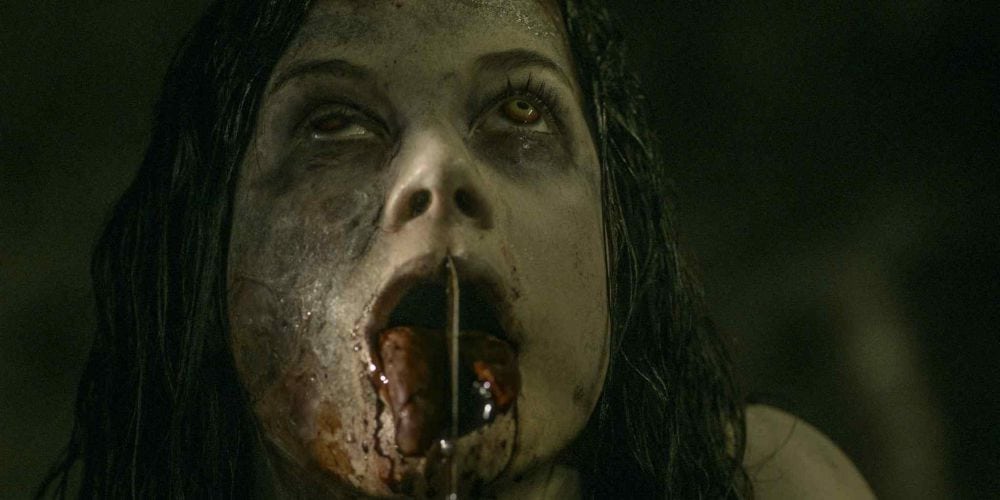
The Evil Dead Burn Trailer Is Here and It Is Everything

This Week in Horror: CinemaCon Delivered, Nicolas Cage Is Coming Back, and Someone Let Ti West Near a Christmas Story

The Evil Dead Universe Now Includes a Mummy Film

The Practical Magic 2 Teaser Trailer Is Finally Here

10 Horror, Thriller, and True Crime Series to Watch This Spring

“It’s My Era. I’m a Rockstar Now.” The Official ‘The Vampire Lestat’ Trailer Is Here

The HUNGRY Red Band Trailer Is Here and We Need to Stop Laughing at the Hippo

Thinestra Review: Almost as Sharp as It Thinks It Is

The Dark Side of Paradise: Why Tropical Horror Hits Different

‘Behind The Mask’ is a Love Letter to Slashers

Samara Weaving and Kyle Gallner Star in Romantic Crime Thriller ‘Carolina Caroline’ [Trailer]

[Exclusive Clip] ‘From the Beyond: High Strangeness in the Bennington Triangle’

‘Behind the Mask’: Nathan Baesel Exclusive Interview!

‘The Vampire Lestat’ Trailer: What “Dancing With Myself” Reveals About Lestat

This Week in Horror: DC Goes Full Body Horror, A24 Has Its Chainsaw Man, and The Bone Temple Is Finally Yours

The Vampire Lestat Releases Cover of Billy Idol’s “Dancing With Myself”

Astrolatry Built a Ten-Foot Practical Penis Scorpion
Samara Weaving and Kyle Gallner Star in Romantic Crime Thriller ‘Carolina Caroline’ [Trailer]

ShoStak Opens the Door for Filmmakers to Build and Own Their Stories

The Clayface Teaser Just Made October Feel Very Far Away

‘Behind the Mask 2’ Slays Kickstarter

The Best Possible Person Is Directing A24’s Texas Chainsaw Massacre
-
News5 days ago
The Evil Dead Burn Trailer Is Here and It Is Everything
-
 News5 days ago
The Evil Dead Universe Now Includes a Mummy Film
-
 News6 days ago
The Practical Magic 2 Teaser Trailer Is Finally Here
-
 Lists7 days ago
10 Horror, Thriller, and True Crime Series to Watch This Spring
-
 Trailers4 days ago
“It’s My Era. I’m a Rockstar Now.” The Official ‘The Vampire Lestat’ Trailer Is Here
-
 News6 days ago
The HUNGRY Red Band Trailer Is Here and We Need to Stop Laughing at the Hippo
-
 Trailers3 days ago
Samara Weaving and Kyle Gallner Star in Romantic Crime Thriller ‘Carolina Caroline’ [Trailer]
-
 News3 days ago
ShoStak Opens the Door for Filmmakers to Build and Own Their Stories
You must be logged in to post a comment Login