Movies
Interview: ‘Sator’ Director Jordan Graham on the Fascinating Facts Behind the Film
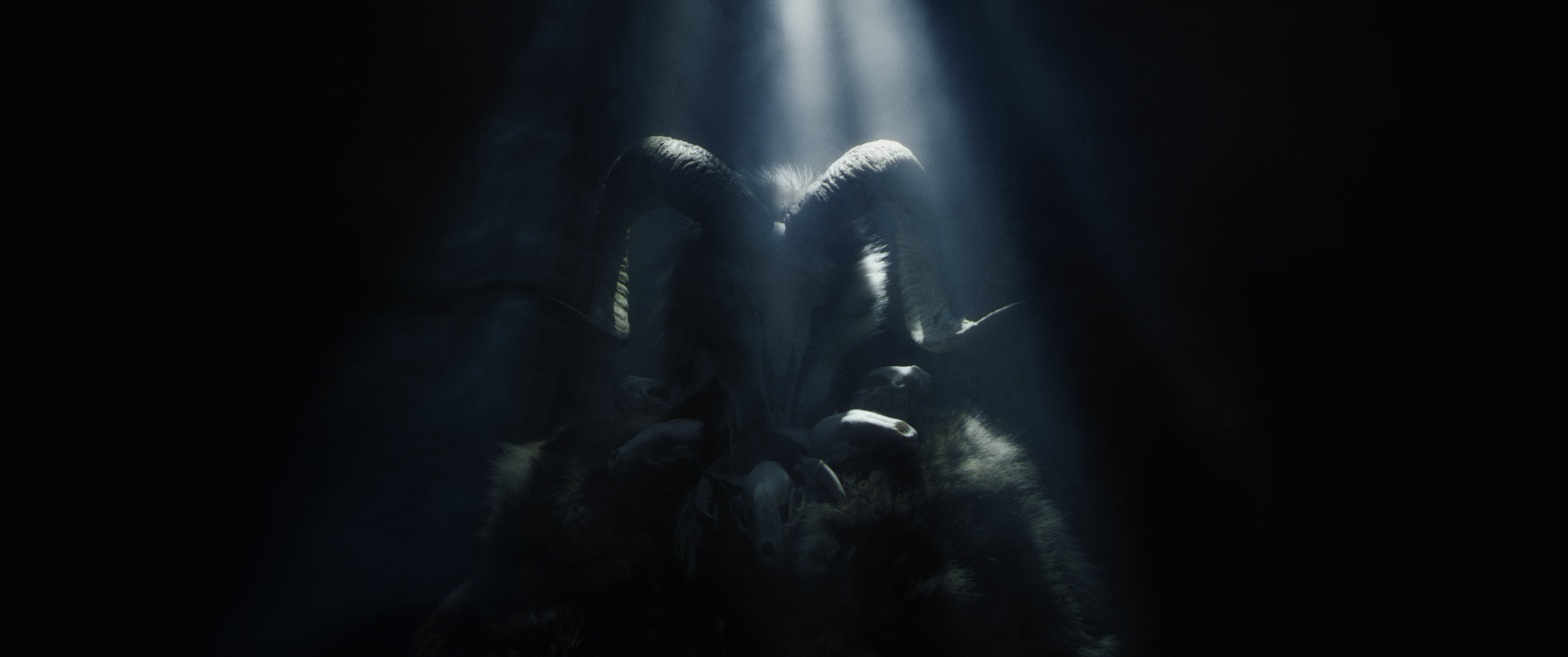
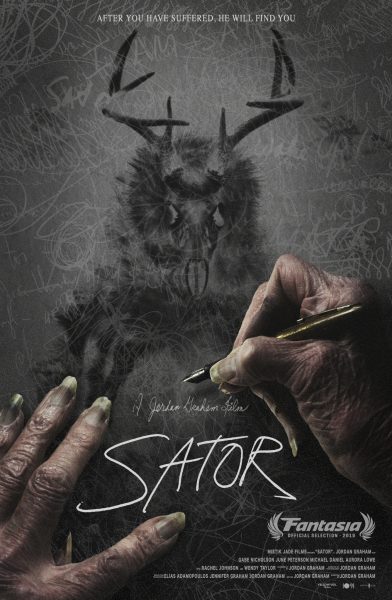
Jordan Graham’s Sator is a chilling, atmospheric tale of a demon haunting a family, and — in a fascinating twist — it’s inspired by true events.
Graham spent 7 years making Sator, serving as director, writer, cinematographer, composer, producer, and editor. The film follows a secluded family living in a forest being stalked and manipulated by the mysterious demon Sator, and (as I learned) is largely based on stories told by Graham’s own grandmother about her history with this entity.
The real on-screen interviews with Graham’s late grandmother recount details of her own incidents with Sator, and reveal her personal journals and automatic writings. I spoke with Graham to learn more about this deeply personal tale and his hands-on, in-depth, learn-as-you-go experience making this moody, slow-burn indie horror. 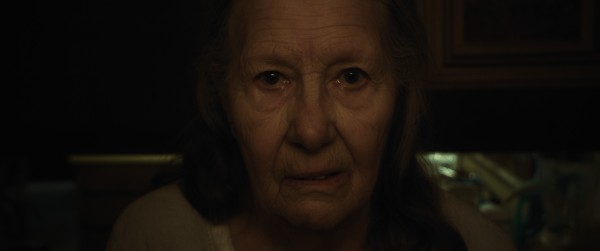
Kelly McNeely: Sator is obviously a very personal project for you, could you talk a little bit about that, and about your grandmother’s history and obsession with this entity?
Jordan Graham: My grandmother wasn’t supposed to be a part of this film, originally. Since I was using her house as a location, I decided to put her in the film as a quick cameo. And then it kind of branched off from there. The cameo was just going to be like an improvisational scene, and if I wasn’t going to use it, then that’s fine. And I got one of the actors, Pete — he plays Pete in the film, he’s a friend of mine — I told him that you’re going to come in there, you’re going to meet my grandmother on camera, and you’re going to pretend to be the grandson and to get her talking about spirits.
So he went in there and asked her, you know, I heard there’s spirits around here. And then she started talking about the voices that were in her head. And something called automatic writing, which I’ve never heard about in my life. She’s never shared it with me before, and she just happened to want to share it while we were actually shooting.
So then I went home and did some research, and then decided that I wanted to incorporate this as much as possible into the film. And so I rewrote the script to make what I had already shot work, and then went back and did more improvisational scenes to try to bring out the automatic writing and the voices. And whenever we would do a scene with her, I would have to stop and rewrite the film again to try to figure out how to make it work, because you can’t tell my grandmother what to say, and I have no idea what she’s going to say. And a lot of the stuff she does say, doesn’t doesn’t really work for the story I was already trying to tell.
But then when I was in post production — when I was already done shooting the film — dementia got really bad for my grandmother and our family had to put her into a care home. And I was cleaning out her back room and the back closet, and I found two boxes, one of which had all of her automatic writing. So you see that, [he shows me one of her notebooks] but there was a box that was full of them. So I found all those and then I found a journal of her documenting her life — over three months — with Sator, it was a 1000 page journal. She met Sator in July 1968, and then three months later, she ended up in a psychiatric hospital because of her obsession with him. And so when I found this journal, I was like okay, I want to put Sator into this film. Like this is such a cool concept, but it felt like I was already done shooting at that point.
So I then raced to my grandmother, and it was a race against time because dementia was starting to take over, and so I I got her to speak about him, and then the last time that I got her to speak about him she could barely even say anything. And yeah, so that’s kind of the history behind it.
Kelly McNeely: It’s a very intimate, deeply personal story, and you can tell. What made you want to tell that story, what made you want to dive into Sator a little bit more, and this concept of Sator?
Jordan Graham: So I went into this film trying to make something unique, because I did the whole film myself, so I wanted to make something and do it in the most unique way possible. And the story I already had, I wrote that seven years ago — or when I started this thing — so I don’t really remember the original story. But it wasn’t that unique.
So when my grandmother started speaking about this, it’s like, well, I have something really interesting here. And with automatic writing, I had never even heard about that, or seen that in a film before. And if I’m making the film in such a personal way, like doing everything myself, and then having such a personal story, I feel like that people are going to really connect with that more. And then also, this is a really cool way to memorialize my grandmother, I feel. So that’s kind of why I wanted to go in there, to do something that was different.
Kelly McNeely: And the automatic writing that your late grandmother had was actually able to be contributed to the film, which is fantastic. How much of the story is sort of fabricated versus how much of it is her real stories, and as far as the audio and video footage, how much of that is archival and how much that was created for the film?
Jordan Graham: Everything my grandmother says is real to her, she believed everything that she said. So I didn’t tell her anything to say, that was all her. Some of the things she said were true. Like, she talked about my grandfather, and my grandfather died of lung cancer. And she says — multiple times — when we were shooting that my grandfather decided to get up, he said he was done, he was ready to die, he got up, walked out of the house and lay down in the grass and he died. Which never happened. But she said that multiple times. And I was like, where is that even coming from in your mind, and then trying to figure out how to edit that and use that in the film to make it make sense with the plot and whatnot.
And then with the archival footage, that was a happy accident. This film was a bunch of little happy accidents. There was gonna be a flashback scene in the film originally, and I was trying to figure out what medium I wanted to shoot it on. And then my mom happened to get a bunch of old home movies transferred to DVD, and I was just going through them. I wasn’t looking for anything to use in the film, I was just watching them. And then I came across a birthday scene — a real birthday in my grandmother’s house — and the house looks exactly the same from when we were shooting.
And what was great was my grandmother is off to one side, my grandfather’s off to the other side, and what was going on in the middle was just totally left open for me to create my own scene. So I went out and I bought the same camera, I bought the same tapes, I made a similar looking cake and similar looking presents, and was able to create my own scene around real home video footage from like 30 years ago now.
Because I could see myself in that footage — and it’s not in the film, I cut around me — but I was like eight or so. It was a mixture of different timeframes in that one scene, it was a mixture of like between like five years. And even that in that scene, if you listen to the background, you can hear my grandmother talking about evil spirits and that was actually her just randomly talking about that in the 90s.
Kelly McNeely: So you did so much for this film, you mentioned it took about seven years to make the film and you did nearly every job behind the camera if I understand correctly, including building the cabin. What was the greatest challenge for you in making Sator?
Jordan Graham: I mean… *sighs* there’s so many. I guess the things that ate at me the most, the things that got me down a dark spiral, were trying to figure out my grandmother’s story while we were shooting the film. Because I already had another story as I told you, and was just trying to figure out how to make it work. That was driving me a little nuts there for a while.
The thing that really got to me — and it wasn’t necessarily a struggle, the whole film was a challenge. I don’t necessarily say the film was hard, it was just really, really tedious. And so the most tedious thing was doing the sound in the film. So everything that you hear besides my grandmother speaking, I did in post production. So every, like, every piece of cloth, every lip movement, everything I had to do later. And it took me a year and four months to record just the audio. And that was probably the most draining part of the film. But again, it was really tedious.
So when you say challenging? Yeah, the audio. Yeah, I guess that’s my answer. Because then there’s so much. That was challenging.
Kelly McNeely: Was there anything where you had to, like, learn a new skill in order to complete the film?
Jordan Graham: Yeah, I’ve been making films and short films and music videos and stuff for 21 years now. But I’ve never used gear this good, and I’ve never had real film lights before. So learning how to work with real film lights, yes, that was new. But I think the biggest thing of learning was in post production, color grading the film. So I never I never used software to actually color film before. So I had to learn that, and that took 1000 hours to color the film. And then with sound design. I’ve never had to do sound like this before. It usually just comes from the camera or I get sound effects from other sources that aren’t mine. But I wanted to record everything myself. So that yes, I had to learn that aspect.
And then the software, I had to learn how to do 5.1 audio, which — if you saw the screener, you weren’t able to hear that, you just heard the stereo — but I had to mix it with 5.1 and learn that software. Yeah, I’d never used any of that software before. Even editing software that I used to edit the film, I had never used before. Before this film I was using something else. So yeah, the whole thing was learn as I go, if I had to do YouTube tutorials — not for creative, I never used tutorials on how to be creative or how I wanted it to look — but how to technically use something.
Kelly McNeely: Speaking of the sound, I understand that you scored Sator as well. So what was the process for finding that really unique sound?
Jordan Graham: I have props all around here [laughs]. But it was just pots and pans, nuts and bolts. I’m not a musician, so I was just making sound effects. And then I had a bass guitar, I bought a really cheap bass guitar and plugged it into the computer. And then I had a violin bow and I was just making sound effects with it. So that’s it. That was all the tools needed, which is just stuff you find in your kitchen.
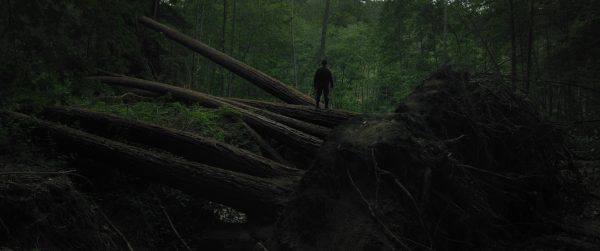
Kelly McNeely: It’s a very atmospheric film as well, just visually and tonally what were your inspirations — I understand you had to rewrite the film as you were going — but what were your inspirations when you were making Sator?
Jordan Graham: Yeah, even though I rewrote, I still knew the vibe and the mood of this film before going into it. For inspirations, as far as aesthetically, True Detective. The first season of True Detective was a major one, and the film The Rover was a major one. As far as inspiration to make the actual film? Jeremy Saulnier’s Blue Ruin, but maybe for, like, the beginning of that. Have you seen that film?
Kelly McNeely: I love that film!
Jordan Graham: So that was a huge inspiration. He did many jobs on his own on that one, and at the time, I thought he did it for a very very low budget, when I found it was– it’s still low — but it wasn’t as much as I thought, he did it for a lot more. But also like, the beginning of that movie is very quiet as well, and the main character doesn’t speak very often, and so that was my inspiration going in. But then as I’m shooting the film, I’d get other inspirations, like, Under the Skin was a big one.
Kelly McNeely: I definitely see the True Detective aesthetic to it. I’d love that first season so much. It’s one of my favourite things.
Jordan Graham: Oh, yeah. I’ve seen it like seven times already now. And I’ve been talking about that season during these interviews, and now I want to go watch again. I would love to make a film in Louisiana and have that kind of aesthetic. I just I love it. Yeah, that show’s so good.
Kelly McNeely: Now for my last question, I’m not gonna say any names, because I don’t want to have any spoilers for anyone. But I understand that one of the actors actually lit his beard on fire?
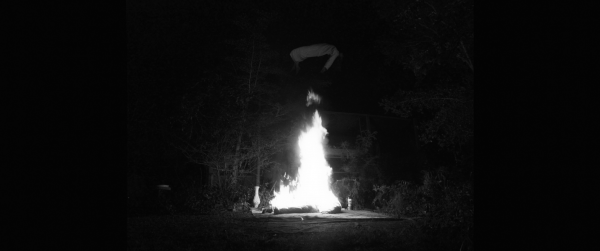
Jordan Graham: Yeah, that wasn’t my idea. But he called me like a week before and said, like, I want to burn my beard off for the film, I spent seven months growing this thing, and I want to burn it off. And I was like, nope, that’s not happening, that’s way too dangerous. And then I was thinking about it, and fire is such an important theme to the film. I was like, that’d be really cool if we did that. So he came over.
That was my biggest day on the film. I had three people help me on that day. I shot for 120 days, most of the time was just myself with one or two actors, and then I had like 10 days where one person would assist me with some basic tasks. And then that one day, I had three people that I needed to help me with that.
And so yeah, we tried lighting his beard, but it was so saturated in blood that it wouldn’t light, so I had to go get lighter fluid and brush that on his face, and had somebody there with a hose, and somebody there to light it. And then lit on fire. He lit it twice, and both those shots are in the film.
Kelly McNeely: That’s commitment.
Sator comes out digitally in North America from 1091 Pictures on February 9th, 2021. For more on Sator, click here.
Official Synopsis:
Secluded in a desolate forest home to little more than the decaying remnants of the past, a broken family is further torn apart by a mysterious death. Adam, guided by a pervasive sense of dread, hunts for answers only to learn that they are not alone; an insidious presence by the name of Sator has been observing his family, subtly influencing all of them for years in an attempt to claim them.



Movies
5 Horror & Thriller Films Premiering at Cannes 2026
The Cannes Film Festival is widely considered the most prestigious film festival in the world. Held annually in Cannes since its founding in 1946, the invitation-only event showcases new films from across the globe, spanning every genre from auteur-driven dramas to boundary-pushing horror. Taking place at the Palais des Festivals et des Congrès, Cannes remains one of the “Big Three” European festivals alongside Venice Film Festival and Berlin International Film Festival, as well as part of the global “Big Five,” which also includes Toronto International Film Festival and Sundance Film Festival.
The 79th annual Cannes Film Festival runs from May 12-23, 2026, with Park Chan-wook (director of Oldboy (2003), The Handmaiden (2016), and No Other Choice (2025)) serving as jury president. French-Malian actress Eye Haїdara will host the opening and closing ceremonies. At the same time, honorary Palme d’Or awards will be presented to Peter Jackson (director of the Lord of the Rings trilogy) and Barbra Streisand. The festival opens with The Electric Kiss, directed by Pierre Salvadori.
But now let’s get to the really good stuff.
Among the lineup this year are several genre entries that should have horror and thriller fans paying very close attention for their theater releases which will be later in the year. Here are five films I’m especially excited about, all of which are premiering at Cannes 2026.
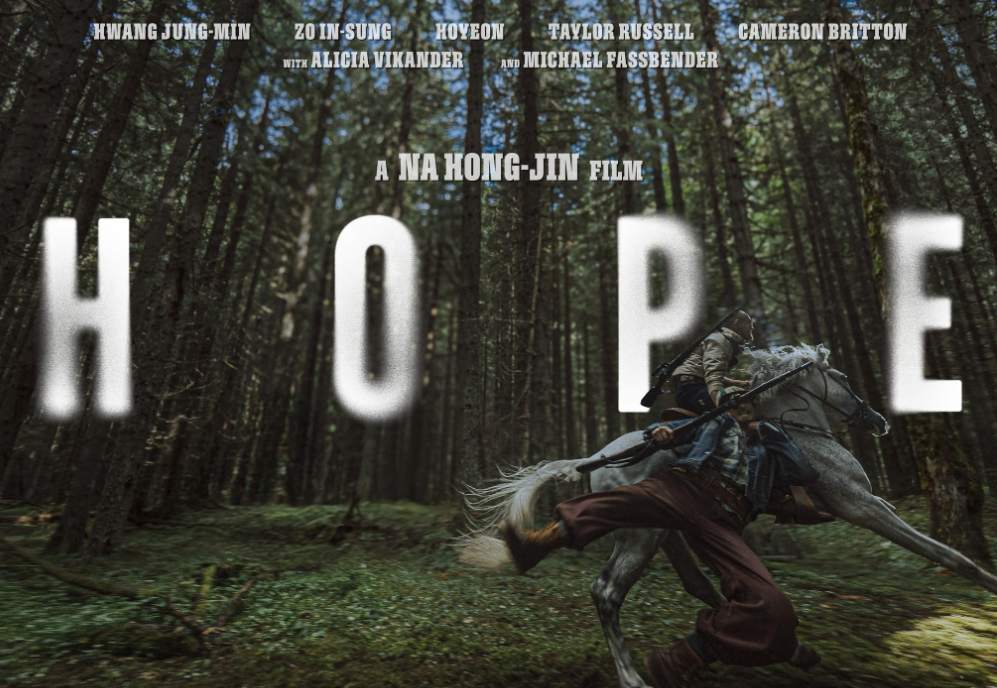
Hope (Korean: 호프)
Directed by Na Hong-jin (The Wailing), Hope looks like one of the most intriguing genre entries in competition for the Palme d’Or.
Set in a remote village near the Korean Demilitiarized Zone (DMZ), the film’s premise appears, at first, to be a contained crisis: a tiger sighting that throws the community into worried chaos. But as the situation escalates, something far more sinister begins to emerge, forcing residents to confront a terrifying unknown.
With a stacked international cast including Hwang Jung-min (Veteran, New World, I, the Executioner), Zo In-sung (A Frozen Flower, The King, It’s Okay, That’s Love), Jung Ho-yeon (Squid Game, Disclaimer),Taylor Russell (Bones and All, Waves), Alicia Vikander (Ex Machina, The Danish Girl, The Man from U.N.C.L.E.), and Michael Fassbender (Shame, Prometheus, X-Men: First Class), this one feels like it could be a major crossover hit.
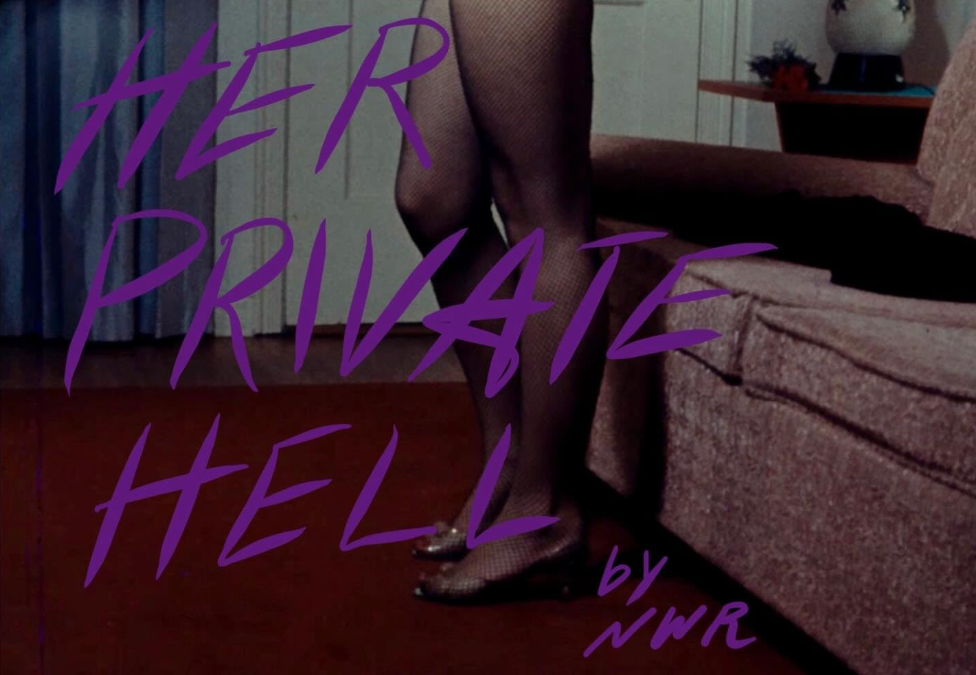
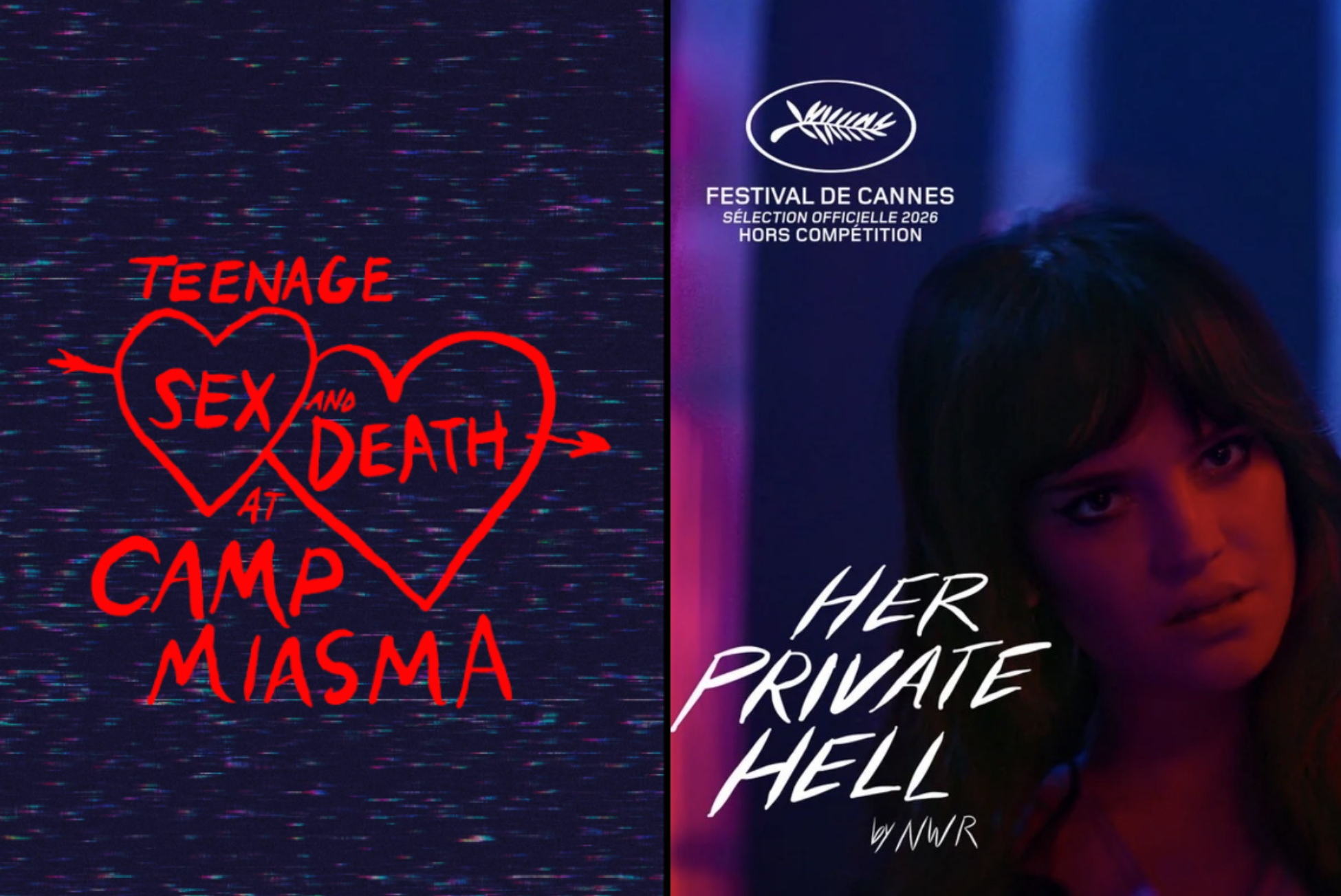
Her Private Hell
From Nicholas Winding Refn (The Neon Demon) comes a surreal, neon-drenched nightmare that feels perfectly at home within his filmography.
A mysterious mist engulfs a futuristic city, unleashing a deadly and elusive force. At the center is a young woman searching for her father, whose path collides with an American soldier on a desperate mission of his own: rescue his daughter from Hell.
Starring Sophie Thatcher (Companion, Heretic, Prospect), Charles Melton (May December, Warfare, Riverdale), Havana Rose Liu (Bottoms, No Exit, Bleu de Chanel), Diego Calva (Babylon, The Night Manager, On Swift Horses — seriously, I’m so excited to see him in new work!) and more, this out-of-competition premiere could end up being one of the most talked about, and hopefully one of my personal favorites.
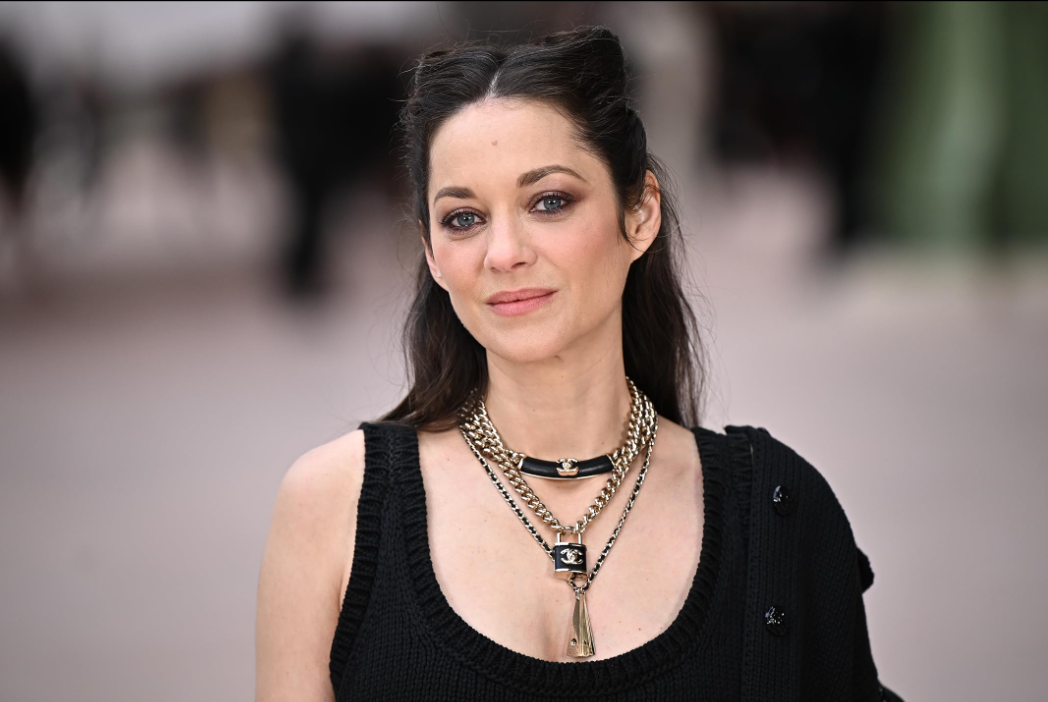
Karma
Directed by Guillaume Canet (Tell No One), Karma is a French psychological thriller that leans into moral ambiguity.
The story follows Jeanne, a woman attempting to rebuild her life in Spain while hiding a troubled past. When her young godson disappears, suspicion quickly falls on her, forcing her to flee to a religious community she once escaped. As her partner searches for the truth, the narrative spirals into a tense mystery.
Led by Marion Cotillard (La Vie En Rose, Inception, Rust and Bone), who always delivers an outstanding performance, Karma appears to be a slow-burn kind of thriller that will really keep audiences captivated.
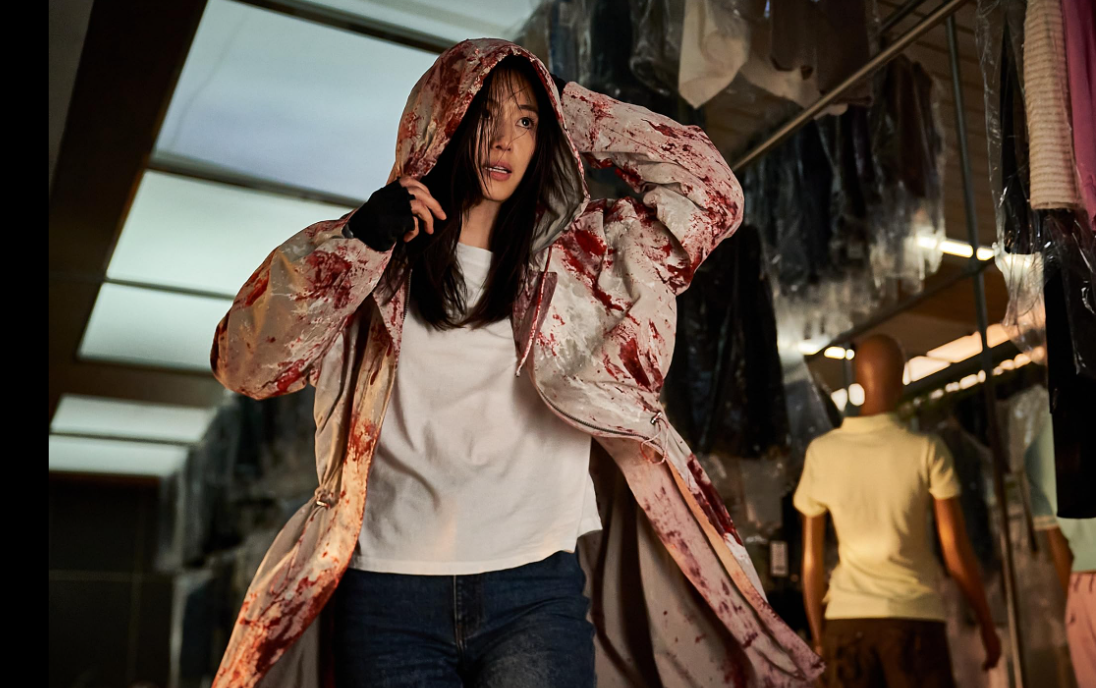
Colony (Korean: 군체)
Zombie maestro Yeon Sang-ho (Train to Busan) returns with Colony, a claustrophobic kind of outbreak thriller premiering in the midnight section at Cannes.
Set inside a sealed biotech facility, the film follows survivors trapped during a rapidly mutating viral outbreak. As the infected evolve in unpredictable ways, tensions inside the quarantine zone rise just as quickly as the body count.
This zombie film stars Jun Ji-hyun (Assassination) and Koo Kyo-hwan (Peninsula), and paired Yeon Sang-ho, I’m hoping we get a really great zombie thriller to add to the arsenal.
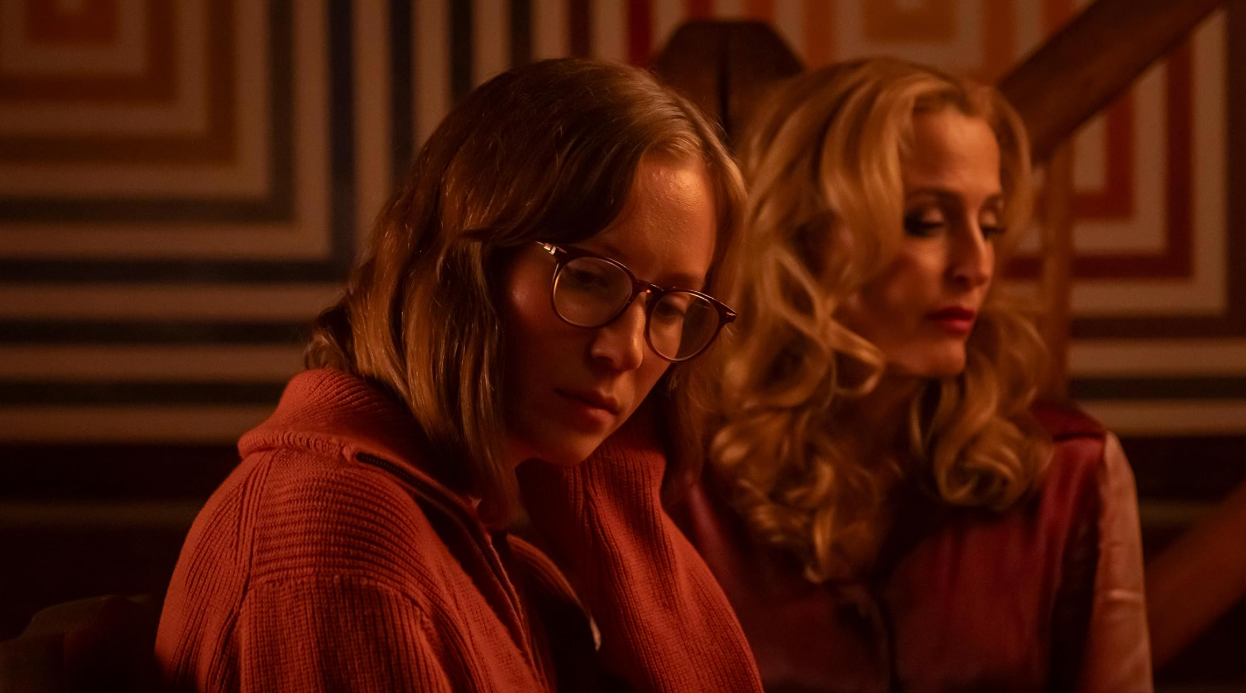
Teenage Sex and Death at Camp Miasma
Yes, the title alone already earns a spot on this list.
Written and directed by Jane Schoenbrun (I Saw the TV Glow), this meta-slasher follows a queer filmmaker hired to direct a reboot of a long-running horror franchise. Her fixation on the film’s reclusive “final girl” actress leads both women into an increasingly surreal and psychosexual spiral.
Starring Hannah Einbinder (Hacks, Seekers of Infinite Love) and Gillian Anderson (The X-Files, The Fall, Hannibal), this Un Certain Regard entry sounds as though it might be one of the boldest, and strangest, films of the entire festival.
While Cannes isn’t traditionally known for its horror under any circumstances, this year’s lineup continues to show that bold, genre-bending storytelling absolutely has a place on the Croisette.
iHorror will keep you updated on these films’ theatrical and/or streaming releases!
Movies
Which Poster Did It Better?

We have a fun question for you: Who did it better?
Did you ever notice how similar the 1992 poster for Peter Jackson’s Dead Alive is to Wes Craven’s Scream that came out in 1996? They aren’t identical, but they could be considered spiritual sisters.
Not much is known about the Dead Alive poster. It appears to have its lead actress, Diana Peñalver, front and center with eyes wide open and mouth agape. It was a shocking image for a one-sheet at the time, but it was fitting for the film, which used over 300 liters of fake blood in the final scene.
Dead Alive was also controversial. In the UK and Australia, it was shown in its entire 104-minute run. But it had to be cut down to 94 minutes when it hit the German and American markets. Originally titled Braindead, it was renamed Dead Alive in those countries.


As for the Scream poster, we know it’s Drew Barrymore‘s face; she also has her mouth agape and her eyes wide open like Peñalver‘s.
In a classic on-theme misdirect, Barrymore appears to have a major role in Scream, given how prominent she is in the poster. In reality, she is only onscreen for 13 minutes.
Scream’s photo was taken by an unknown photographer. It doesn’t capture Dead Alive’s comedy element, but Scream wasn’t exactly a straight comedy. Its humor was more in the meta references.

Movies
‘Axes and Os’ Is Now Streaming — A Fresh Valentine Slasher With a Savage Creature Feature Twist

It’s happening.
Indie horror fans have a new killer obsession—Axes and Os, the wildly original Valentine-themed slasher that blends classic stalk-and-slash thrills with a monstrous creature-feature surprise. The film is now streaming and delivering blood, laughs, and a brutal new horror icon.

Love Hurts — Literally
Set during a chaotic Galentine’s getaway, Axes and Os follows four young women who escape to a quiet small town for a weekend of romance, friendship, and fun—only to find themselves hunted by the legendary Valentine’s Day Ax Killer, Luther Dremel.
But this isn’t just another masked slasher story. When one of the girls undergoes a shocking transformation, the hunted becomes the hunter, and a brutal showdown erupts that turns the holiday of love into a full-on survival nightmare—a literal fight to the death.

A Cast Packed With Genre Favorites and Rising Stars
Axes and Os features horror icon Jamie Bernadette alongside rising star Cass Huckabay, who won two Best Actress awards during the film’s festival run. Madison M. Bowman and Sara Wimmer round out the ensemble, delivering both laughs and scares designed to appeal to a wide range of genre fans. Brandon Krum brings terrifying intensity as the relentless Axeman, Luther Dremel.

A Fresh Spin on Slasher Tradition
While Axes and Os pays tribute to classic slashers, it flips the formula with a creature-feature twist that sets it apart from typical holiday horror fare. Think traditional masked killer meets monstrous transformation—romance colliding with rage, friendship colliding with fear. The film blends humor, gore, and heart, striking a tone somewhere between Ready or Not, The Final Girls, and classic ’80s slashers—while still delivering modern indie edge.

A Festival Darling With 11 Award Wins
During its festival run, Axes and Os quickly became a standout on the indie horror circuit, bringing home 11 awards, including six Best Feature Film wins, three Best Director awards, and two Best Actress awards for Cass Huckabay. Notable wins include The Freak Show horror film festival, Spooky Empire Horror Film Festival, and the Nashville horror film festival.

The film’s mix of genre-bending horror, strong performances, and crowd-pleasing tone earned praise from festival juries and audiences alike, helping build early buzz ahead of its streaming release.
Why Horror Fans Should Care
Holiday slashers are having a moment again, but Axes and Os brings something rare: a true genre mashup with a female-driven cast, festival pedigree, and a killer premise that doesn’t play it safe.
With festival awards, strong early audience reactions, and a bold creature-driven finale, Axes and Os is poised to become a cult favorite for Valentine’s Day horror marathons.
Now Streaming
Axes and Os is now available to stream on Prime Video and Screamify
Love is in the air. So is the blood.
Four females on a Galentine’s weekend are hunted by legendary ax murderer LutherDremel, until one female turns out to be something otherworldly and battles the iconic axeman.
[This is a sponsored article]



Shudder’s May Is the Best Month They’ve Had in a While.

Resident Evil Drops First Teaser Trailer

The Vampire Lestat Is Playing a Real Concert in NYC — And Yes, It’s Exactly as Wild as It Sounds

‘Don’t Die’ Is a Good Friday Night Horror Film And That Is Enough.

This Week in Horror: The ‘Resident Evil’ Trailer, a ‘Weapons’ Prequel, and Nicolas Cage Has Unfinished Business

Content Is Now on Digital. Watch It Twice.

The History of Deals with the Devil: From Faust to The Witch

‘ZombieCON Vol. 1’ Gets the Con Right. The Zombies Arrive When They Want To.

_CIVILIAN Is the Micro-Series That Proves You Don’t Need Much to Make Something That Matters

Evil Dead Burn Looks Like the Most Violent Family Reunion You’ll Ever Attend

The Severance Writer Found a New Building to Lock People In

Jessica T Deveraux Got Possessed At Her Own Bar

Panic Fest 2026 Review: ‘Creature Of The Pines’ Is An Interesting Found Footage Horror That Walks A Beaten Path

Breaking Down the First Minute of ‘The Vampire Lestat’ Official Trailer: What It Reveals About Season 3
Evil Dead Burn Looks Like the Most Violent Family Reunion You’ll Ever Attend

Horror Coming to Streaming in May 2026: Shudder Is Doing the Most and Netflix Finally Showed Up
_CIVILIAN Is the Micro-Series That Proves You Don’t Need Much to Make Something That Matters

The Vord Review: The Mythology Is Free. Everything Else Costs Something.

‘Wait For It’: A Film Set in the ‘Leslie Vernon’ Universe!
This Week in Horror: The ‘Resident Evil’ Trailer, a ‘Weapons’ Prequel, and Nicolas Cage Has Unfinished Business

HHN35, Jack vs Oddfellow: Place Your Bets!
The Severance Writer Found a New Building to Lock People In
-
 News6 days ago
Resident Evil Drops First Teaser Trailer
-
 News7 days ago
The Vampire Lestat Is Playing a Real Concert in NYC — And Yes, It’s Exactly as Wild as It Sounds
-
 News5 days ago
This Week in Horror: The ‘Resident Evil’ Trailer, a ‘Weapons’ Prequel, and Nicolas Cage Has Unfinished Business
-
 Indie Horror2 days ago
_CIVILIAN Is the Micro-Series That Proves You Don’t Need Much to Make Something That Matters
-
 News21 hours ago
Evil Dead Burn Looks Like the Most Violent Family Reunion You’ll Ever Attend
-
 News5 days ago
The Severance Writer Found a New Building to Lock People In
-
 Short Films4 days ago
‘Wait For It’: A Film Set in the ‘Leslie Vernon’ Universe!
-
 Editorial5 days ago
HHN35, Jack vs Oddfellow: Place Your Bets!
You must be logged in to post a comment Login